

More news on this day
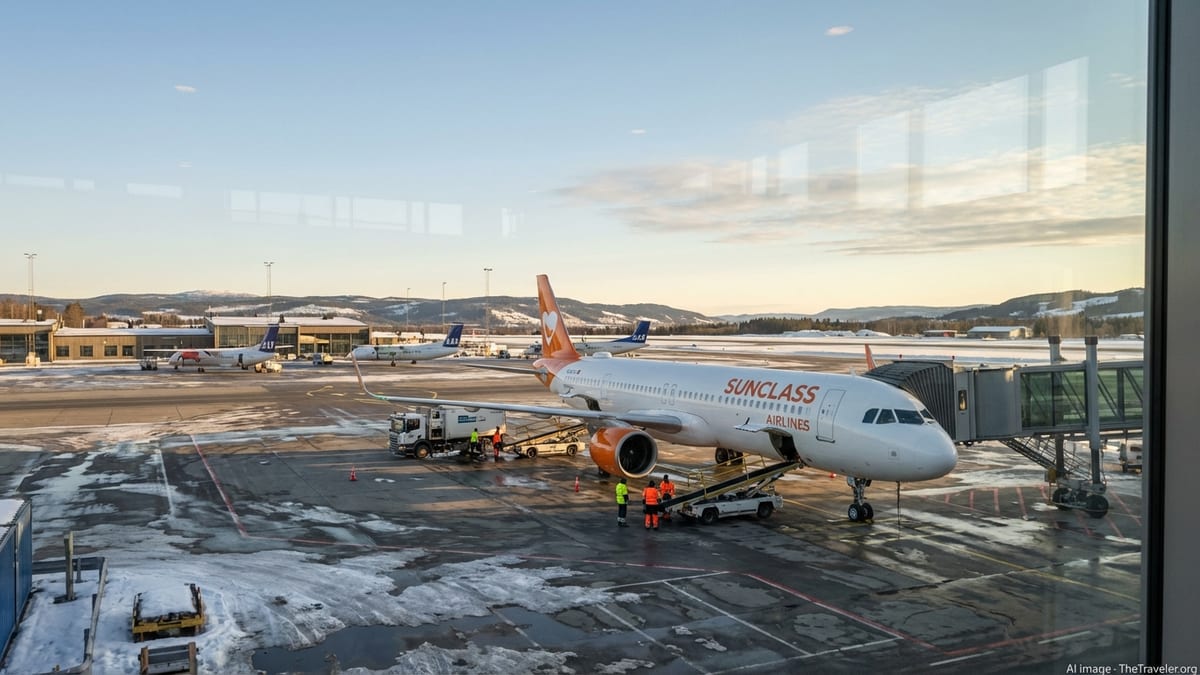
Sunclass Airlines has joined the European Regions Airline Association (ERA) as its newest airline member, opening a fresh chapter for Nordic regional and leisure aviation at a time when connectivity, sustainability and tourism recovery are all under intense scrutiny across Europe.
A Strategic New Member for Europe’s Regional Lobby
The European Regions Airline Association confirmed this week that Denmark-based Sunclass Airlines has become its latest airline member, adding one of the Nordic region’s most prominent charter carriers to its roster. The move reinforces ERA’s ambition to represent the full spectrum of regional operators, from scheduled feeders to integrated tour-operator airlines that link peripheral communities with key tourism markets.
ERA, which advocates for more than 50 regional airlines and over 230 members in total, positions itself as a critical voice in policy debates in Brussels and national capitals on issues such as sustainable aviation fuel deployment, airport charging regimes and passenger rights rules. Welcoming Sunclass gives the association a stronger foothold in the fast-evolving Nordic market, where air travel is both a lifeline for remote regions and a focal point in climate discussions.
For ERA, bringing in a carrier with Sunclass’s scale and charter expertise is also a signal that leisure-focused operators are increasingly central to the future of regional connectivity. While many of its existing airline members focus on scheduled services linking secondary cities and hubs, the association has been broadening its base to reflect how charter and hybrid models contribute to economic development in outlying regions.
The announcement comes as ERA steps up advocacy around the implementation of Europe’s ReFuelEU Aviation Regulation and the broader “Fit for 55” climate package, arguing that regional and smaller leisure airlines must not be disadvantaged by one-size-fits-all rules. Sunclass’s operational profile and Nordic network are expected to give additional weight to these arguments.
Sunclass Airlines: A Nordic Charter Powerhouse
Sunclass Airlines, part of the Nordic Leisure Travel Group, operates an extensive charter network serving holiday destinations from seven base airports and 24 additional secondary airports across Denmark, Sweden, Norway and Finland. The carrier concentrates on connecting Nordic travelers with Mediterranean resorts, Canary Island gateways and selected longer-haul sunshine destinations, often from provincial airports that lack year-round scheduled links.
Trading under its current name since 2019, Sunclass builds on decades of heritage under well-known leisure brands including Thomas Cook Airlines Scandinavia, MyTravel Airways and Premiair. Its transformation from a legacy tour-operator airline into a modern Nordic charter specialist has been accompanied by a renewal of its Airbus narrowbody fleet and the introduction of more efficient aircraft to support lower emissions per passenger.
The airline’s business model is tightly integrated with the tour operators, hotels and retail services of Nordic Leisure Travel Group. Package holidays, in-house hotel concepts and inflight retail are managed as a single value chain, giving Sunclass detailed visibility on demand patterns and the economic impact of air links on destination regions. That end-to-end view of tourism flows, from booking to arrival at resort, is expected to enrich ERA’s policy work around connectivity and regional development.
By carrying high volumes of passengers in concentrated seasons from relatively small catchment areas, Sunclass plays a distinctive role in the Nordic aviation ecosystem. Many of the airports it serves rely on its charter program to sustain employment, support local travel agencies and keep outbound tourism accessible to residents who would otherwise face long surface trips to major hubs.
A New Voice for Nordic Regions in Brussels
Sunclass’s accession to ERA gives Nordic regional stakeholders an additional voice in European-level debates over how to balance climate goals with the need to preserve connectivity for sparsely populated areas. Across Denmark, Sweden, Norway and Finland, geography, long distances and harsh winter conditions make air travel a critical infrastructure component, even as politicians and consumers scrutinise its carbon footprint.
Through ERA, Sunclass will be able to contribute practical insight into charter-heavy seasonal operations, from winter ski flights to southern sun routes, and the implications of new regulations for fares, route viability and fleet investment. For example, sustainable aviation fuel blending mandates and airport environmental charges can have a disproportionate effect on long, leisure-focused sectors that operate with narrow seasonal margins.
The airline’s network of bases and secondary airports also aligns closely with ERA’s emphasis on territorial cohesion in Europe. Routes from secondary Nordic cities to leisure destinations may not appear “essential” in the way lifeline domestic services do, but local authorities often view them as vital for keeping communities attractive to residents, maintaining outbound travel choice and sustaining small tourism businesses that package trips around direct charter flights.
In policy forums, Sunclass is expected to underline the risk that uniform rules on charges, slot allocation or consumer compensation can unintentionally undermine these links. By working through ERA, it can advocate for transition pathways that keep leisure travel affordable while airlines invest in cleaner aircraft, better load factors and lower-carbon fuels.
Fleet Modernisation and Digital Transformation Strengthen the Case
The carrier’s decision to deepen its role in sector-wide advocacy comes against a backdrop of ongoing fleet and digital upgrades. Sunclass has been investing in newer Airbus narrowbody aircraft, including A321neo models brought into the fleet through leasing arrangements, which offer improved fuel burn and range performance compared with older jets. These aircraft are well suited to medium and longer leisure routes from the Nordics, where efficiency gains are amplified over greater distances.
On the technical operations side, Sunclass has embraced digital tools to manage its assets more intelligently. A five-year agreement with specialist provider flydocs, signed in 2025, brought in digital records management and lifecycle asset management solutions, giving the airline real-time visibility over airworthiness documentation and lease-return conditions across its fleet.
By consolidating maintenance records and using predictive analytics to plan shop visits and component changes, Sunclass aims to reduce disruption on peak-season itineraries and cut unnecessary costs. Those savings, in turn, help fund continued fleet renewal and operational improvements that contribute to lower emissions per passenger, an increasingly important consideration for climate-conscious Nordic travelers.
Within ERA’s membership, such digitalisation and maintenance strategies are likely to be shared as best practice. Many regional and charter airlines are grappling with similar challenges: tight labour markets for engineers, supply chain constraints and rising costs for parts. Sunclass’s experience integrating digital asset management into a high-season charter operation could inform broader industry efforts to modernise regional aviation in a cost-effective way.
Reinforcing ERA’s Nordic Footprint and Collaboration
Sunclass joins ERA at a moment when Nordic carriers are rethinking alliances, networks and representative structures. Over recent years, regional and specialist airlines from the region have increasingly sought membership in pan-European bodies to ensure their needs are not overshadowed by larger network groups when regulations are drafted.
ERA itself has been intensifying its activities in the Nordics, engaging with airlines, airports and policymakers on issues ranging from air traffic management modernisation to the rollout of sustainable aviation fuels at smaller airports. Recent ERA events and working groups have placed renewed emphasis on how remote and northern communities can be included in the net-zero transition without suffering a loss of accessibility.
In this context, Sunclass’s broad Nordic footprint and close relationship with local tourism industries make it a valuable bridge between national debates and European institutions. The airline works with authorities and airports across multiple countries, giving it a cross-border perspective on how differing tax regimes, environmental rules and infrastructure investments shape travel patterns.
ERA is expected to draw on that perspective as it presses its case that regional connectivity should be treated as a strategic asset. From coordinating de-icing procedures and winter resilience to addressing capacity bottlenecks at popular holiday airports, a stronger Nordic cohort within the association could help incubate regional initiatives with Europe-wide relevance.
Implications for Regional Airports and Tourism
For regional and secondary airports across the Nordics, Sunclass’s membership of ERA could translate into more focused advocacy on their specific challenges. Many such airports see sharp seasonal peaks driven by charter flights, followed by long off-peak periods with modest traffic. Regulatory changes that increase operating costs or depress passenger demand can therefore have an outsized impact on their financial health.
By feeding their concerns into ERA’s policy work, Sunclass may help shape arguments for tailored solutions on areas such as state aid, environmental fee structures and investment in ground infrastructure. This could include support for on-airport sustainable aviation fuel storage, more energy-efficient terminal facilities and upgraded de-icing equipment that reduces local environmental impact.
Tourism bodies in both the Nordics and destination markets will be watching how the new partnership evolves. Charter flights remain a backbone of European holiday travel, particularly for family and package segments, and their recovery since the pandemic has been an important driver of visitor numbers to coastal and island regions. Ensuring that these flows remain reliable and affordable, while progressively decarbonising operations, is likely to be a shared focus for Sunclass, ERA and destination partners.
For travelers, the short-term impact of the airline’s membership in ERA may be invisible. Over time, however, the decisions taken in Brussels and national capitals on everything from slot rules to green taxes will shape the availability and price of direct flights from Nordic regional airports to popular holiday spots. Sunclass’s presence within ERA gives those passengers an indirect but important voice in how those policies are crafted.
Positioning Nordic Aviation in the Net-Zero Transition
Sunclass’s entry into ERA also underlines the prominent role Nordic aviation is playing in Europe’s broader push toward net-zero emissions by 2050. Governments and industry in the region have been among the most active in trialling sustainable aviation fuels, exploring electric and hybrid aircraft for short routes and promoting more efficient airspace management.
ERA has argued that regional and smaller carriers can be innovation testbeds, provided that regulatory frameworks recognise their specific constraints. Sunclass’s operations, spanning medium-haul leisure flights from remote areas and high-frequency services from larger bases, offer a useful laboratory for assessing how different decarbonisation measures perform in real-world conditions.
As pressure mounts on airlines to demonstrate credible climate strategies, the combination of newer aircraft, digital maintenance tools and participation in sector-wide decarbonisation efforts positions Sunclass as a visible example of how charter and leisure carriers can adapt. Its involvement in ERA’s working groups on environment and operations is likely to feed data and operational experience into broader discussions on what a fair transition for regional aviation looks like.
For Nordic policymakers, having Sunclass seated alongside other regional operators within ERA strengthens the case that northern and peripheral regions should be considered explicitly in EU climate and transport policies. From the perspective of TheTraveler.org’s readers, it is another sign that the future of flying to and from the Nordics will be shaped as much in committee rooms as in control towers, and that airlines are seeking collective solutions rather than navigating these pressures alone.