

More news on this day
Erbil International Airport in northern Iraq has been at the center of recent regional tensions, prompting questions from travelers about whether flights are operating, which services are disrupted, and how safe it is to transit the Kurdish city’s main air gateway.
Get the latest news straight to your inbox!
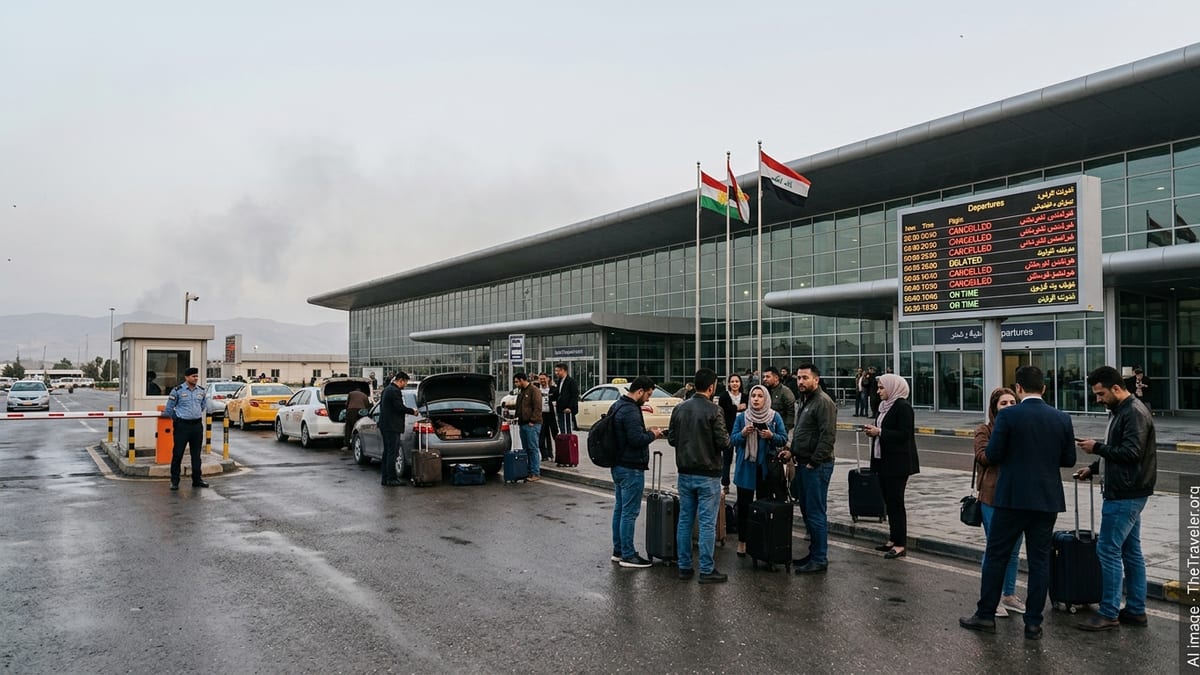
Is Erbil International Airport Open or Closed Today?
Publicly available information from regional aviation advisories and news coverage indicates that Iraq’s airspace has experienced repeated temporary closures through March 2026, affecting all major airports, including Erbil International Airport (EIA). A nationwide airspace shutdown in early March led to a total suspension of commercial flights for at least 72 hours, with carriers cancelling or diverting services into and out of Erbil.
Subsequent reports suggest that airspace restrictions have shifted between full closure and partial reopening, with intermittent windows where limited flights operate under enhanced security and routing constraints. These changes respond to evolving security conditions and air defense activity rather than airport infrastructure alone.
For travelers, this means Erbil International Airport cannot be considered reliably “fully open” in the usual sense. Operations may resume for certain periods, but schedules remain highly fluid and subject to rapid change. Anyone planning to fly via Erbil in the coming days should assume there is an elevated risk of last minute suspensions and diversions.
The most accurate snapshot of whether the airport is open at a given moment comes from real time flight-status tools and airline communications. Travelers are advised to verify their specific flight on the day of travel rather than relying on general assumptions that the airport is open or closed.
Flight Status, Delays and Cancellations
Flight disruption at Erbil International Airport has been driven less by routine operational issues and more by security events and airspace decisions. Drone and missile activity around Erbil, including strikes on facilities near the airport and on the wider Kurdistan Region, has repeatedly forced suspensions of passenger traffic and prompted airlines to reassess the safety of overflying northern Iraq.
International carriers serving Erbil have adjusted their schedules day by day, cancelling frequencies, consolidating services, or temporarily suspending routes. Passengers booked on long haul connections through hubs in the Gulf and Turkey have reported missed onward connections and extended layovers as flights into Erbil were delayed or rerouted at short notice.
Same day delays of several hours have become common whenever interception activity is reported near the airport or when regional tensions spike. Even when runways and terminal facilities remain physically intact and technically operational, airspace closures and precautionary security holds can ground flights until risk assessments are updated.
To manage this uncertainty, travelers are urged to check flight status repeatedly in the 24 hours before departure, using their airline’s app or call center. Where possible, flexible tickets and travel insurance that cover security-related disruption can help offset the cost of involuntary overnights and missed connections.
Security Situation and Official Travel Advisories
Erbil has long marketed itself as a comparatively stable destination within Iraq, but the recent wave of regional conflict has altered the risk picture, at least in the short term. Open source reporting from international and regional media describes Erbil International Airport and nearby military facilities as recurring targets for drone and missile fire linked to broader confrontation involving Iran, United States assets and allied groups.
Imagery and eyewitness accounts published in late February and early March showed smoke rising from areas in and around the airport after strikes, as well as subsequent explosions attributed to interception of incoming drones. Some attacks have reportedly caused casualties among security personnel and damage to infrastructure associated with foreign military deployments adjacent to the civilian airfield.
In response to these developments, many governments have upgraded their travel advisories for Iraq as a whole, often designating the country as a high risk destination and warning against non-essential travel. The Kurdistan Region, including Erbil, is frequently highlighted as being directly affected by aerial attacks and the closure of Iraq’s airspace.
Travelers are strongly encouraged to consult the latest advisory from their own foreign ministry or state department before departure. These notices typically outline recommended security measures, areas to avoid, and the level of consular support that can be expected in the event of an incident.
Helpline Numbers and Where to Seek Assistance
Because the situation at Erbil International Airport is fluid, the first point of contact for most passengers is their airline. Reservation hotlines, online chat channels, and dedicated disruption teams can confirm whether flights are operating, rebook affected travelers, and clarify baggage and ticketing rules when routes are suspended for security reasons.
Major international carriers that normally serve Erbil, such as large Gulf and Turkish airlines, maintain 24 hour customer service numbers and regional offices in hubs outside Iraq. In addition, many offer automated notifications through mobile apps and text messages, which are often the fastest way to learn of gate changes, delays or cancellations triggered by sudden airspace restrictions.
Within Iraq and the Kurdistan Region, the airport operator, local ground-handling companies, and travel agencies based in Erbil also act as information points. Phone numbers for these entities are typically listed on ticket receipts and booking confirmations, and can provide on the ground perspectives on how long a closure or security hold is expected to last.
Travelers whose trip is organized through a tour operator or corporate travel desk should also contact those intermediaries. Many have contingency plans for evacuations, rerouting through alternative airports, or temporary accommodation when Erbil services are suspended unexpectedly.
Practical Advice for Travelers Heading to or from Erbil
Given the combination of security threats and shifting airspace rules, travel through Erbil International Airport currently requires a more cautious and flexible approach than in calmer periods. Passengers are advised to avoid tight connections, allow additional time at the airport for extra security procedures, and prepare for the possibility that flights may be delayed, diverted or cancelled with minimal advance warning.
Carrying essential items such as medications, a change of clothes and power banks in hand luggage is sensible, as is ensuring that all important documents are backed up digitally. Access to mobile data or reliable Wi Fi is crucial to receive real time updates from airlines and to rearrange plans if schedules change abruptly.
Those already in Erbil should stay alert to local news and official announcements about security incidents and road closures that might affect access routes to the airport. In periods of heightened tension, some travelers choose to move closer to the airport or to stay with hosts or hotels that can provide transportation even when public services are disrupted.
For travelers still in the planning phase, postponing non-essential trips or considering alternative routings through other regional hubs may be prudent until Iraq’s airspace stabilizes and Erbil International Airport returns to more predictable operations. While commercial flights do continue at times, the pattern of repeated short notice interruptions suggests that caution and flexibility remain essential for anyone relying on EIA in the near term.