

More news on this day
Travelers looking beyond Greece’s blockbuster islands are increasingly turning to Agistri, a compact Saronic Gulf hideaway that pairs laid-back beach life with quick connections for island-hopping adventures from Athens.
Get the latest news straight to your inbox!
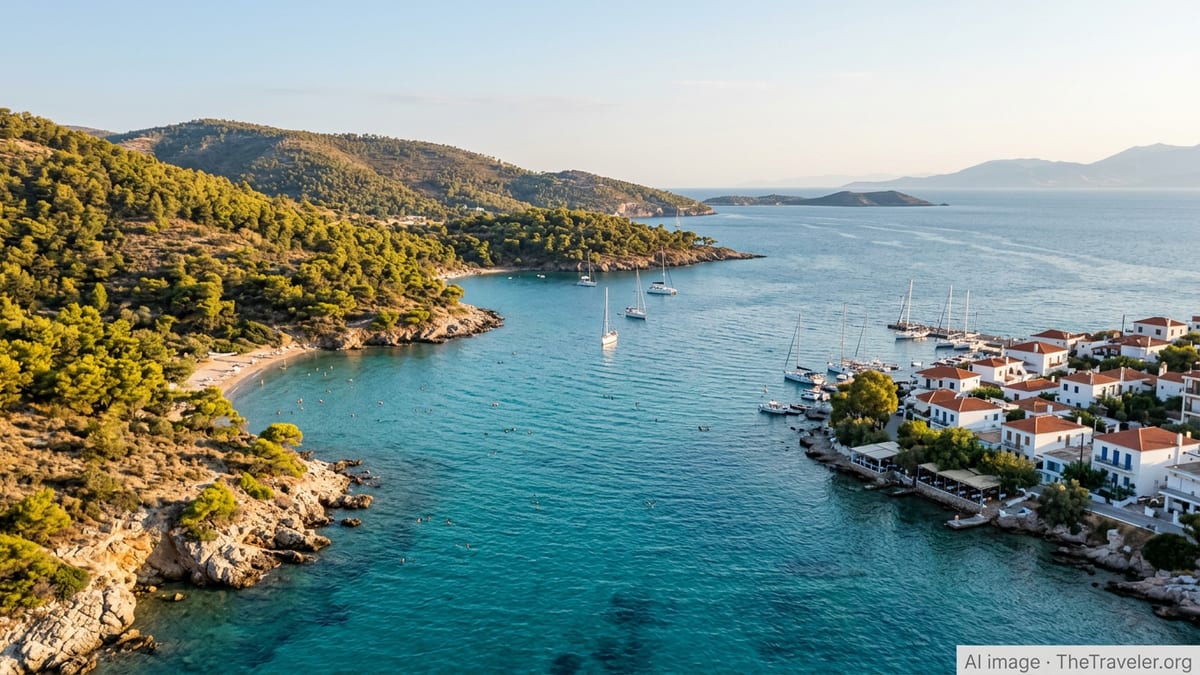
A Pine-Covered Retreat Within Easy Reach of Athens
Agistri sits in the Saronic Gulf, a short ferry ride from the port of Piraeus and just off the better-known island of Aegina. Publicly available information shows that in 2026, a mix of conventional ferries and high-speed hydrofoils link Agistri with Athens’ main port several times a day, making it one of the most accessible island escapes from the capital for both day-trippers and longer-stay visitors.
The island is small, with a handful of main settlements including Skala and Megalochori, but it is heavily wooded compared with many Greek destinations. Pine forest reaches down towards coves and pebble beaches, creating a markedly greener landscape than is typical in the Cyclades. Recent travel coverage highlights Agistri’s appeal as a quieter alternative for visitors who want a village atmosphere and swimmable waters without long travel days or packed beaches.
Reports also indicate that services run year-round, although frequency rises sharply between late spring and early autumn. This steady connectivity has helped Agistri develop as a weekend and short-break destination for Athens residents, who arrive for a change of pace, sea air and easy access to swimming spots that remain calm even in high summer.
Slow-Travel Beaches and Outdoor Experiences
Agistri has built a reputation for relaxed, nature-based tourism rather than large-scale resorts. Travel guides describe clear waters and low-key beach bars at Dragonera on the western side of the island, where pine trees reach almost to the shoreline. The area is known for snorkeling, with rocky sections and sea grass providing good visibility and marine life close to shore.
Further south, Aponisos stands out as one of Agistri’s signature swimming areas. Public descriptions portray a small islet linked to Agistri by a short causeway, forming a lagoon of shallow, turquoise water that is popular with families and couples. Access is typically managed by a local beach operation, which provides loungers and umbrellas, reinforcing the destination’s image as a curated but still low-key swimming spot.
Beyond the beaches, Agistri is drawing interest from hikers and cyclists. Trail-mapping platforms describe a coastal and hillside route from the main settlements down to Dragonera and onward to Limenaria and Aponisos, passing through forest and low scrub with moderate elevation gain. This network of tracks allows visitors to combine swimming with short hikes that reveal views across the Saronic Gulf to Aegina and the Peloponnese.
Compact Villages and a Low-Key Nightlife
The main arrival points on Agistri are the ports of Skala and Megalochori, each with a small seafront strip. According to recent travel accounts, Skala tends to attract more first-time visitors, with a sandy beach, family-friendly accommodations and tavernas lining the waterfront. Megalochori, also referred to as Myloi, retains a more traditional character, with whitewashed houses, narrow lanes and a quieter evening atmosphere.
Accommodation on the island remains predominantly small-scale, with guesthouses, apartments and modest hotels rather than large complexes. This has helped preserve the island’s residential feel, where everyday life continues alongside tourism. Reports from visitors describe evenings centered on simple pleasures: seafood dinners, walks along the harbor and drinks at a small number of bars rather than a dense club scene.
For many travelers, this balance is a key part of Agistri’s appeal. It offers enough infrastructure to be comfortable, including grocery stores, cafes and bike or scooter rentals, but avoids the crowds and high prices associated with Greece’s most famous islands. The island’s size also means that most areas can be reached within a short drive, cycle or taxi ride, reducing the need for complex planning once on the ground.
Island-Hopping Links Across the Saronic Gulf
Agistri is increasingly promoted as part of wider Saronic Gulf itineraries that combine several islands in one trip. Travel-planning platforms and tour operators describe itineraries where visitors depart Piraeus for Agistri, continue by local boat to nearby Aegina, and in some cases extend onward to Poros or smaller islets such as Moni. These routes allow travelers to experience different settings, from Agistri’s pine-backed coves to Aegina’s archaeological sites and busier harborfront.
Ferry-booking services report that the crossing from Aegina to Agistri can take as little as 10 to 20 minutes on local boats, facilitating same-day combinations of the two islands. Piraeus to Agistri journey times vary by vessel type, generally ranging from under an hour on fast hydrofoils to around 90 minutes on conventional ferries, which can offer outdoor decks and views of the Saronic Gulf along the way.
Organized day cruises from Athens also feature Agistri as a key stop. Itineraries marketed for 2025 and 2026 highlight full-day excursions that link Agistri with Aegina and swimming stops off uninhabited islets, positioning the island as both a standalone destination and a convenient gateway to a cluster of easily reached Greek islands.
Planning a Relaxed, Responsible Escape
Recent guidance from regional mobility and tourism planning initiatives points to a growing focus on managing vehicle use and promoting more sustainable forms of transport on smaller Greek islands, including Agistri. Public documents mention efforts to limit congestion in compact settlements, encourage walking and cycling, and maintain the quality of public spaces for residents and visitors alike.
For travelers, this translates into practical decisions such as leaving cars on the mainland, using local buses or taxis for longer hops, and exploring shorter distances on foot or by bicycle. Many accommodations and rental outfits now highlight bike-friendly routes to beaches and viewpoints, aligning with wider European trends towards low-impact coastal tourism.
As bookings for summer 2026 gather pace, travel platforms recommend securing peak-season ferry tickets and central accommodation in advance, particularly for July and August weekends when Athenians frequently head to the Saronic islands. Outside those months, Agistri typically remains quieter, appealing to visitors who prioritize mild weather, open hiking trails and a slower rhythm over high-season buzz.
With a blend of accessible travel, calm swimming spots and straightforward connections to neighboring islands, Agistri is emerging as a compelling choice for those seeking a gentler introduction to Greek island life, where relaxation and easy island-hopping can comfortably fit into a few days away from Athens.