

More news on this day
Irish holidaymakers heading for sun in Turkey, Egypt and the United Arab Emirates in 2026 are being urged to scrutinise official travel advice, amid heightened regional tensions, changing entry rules and mounting disruption across Middle Eastern airspace.
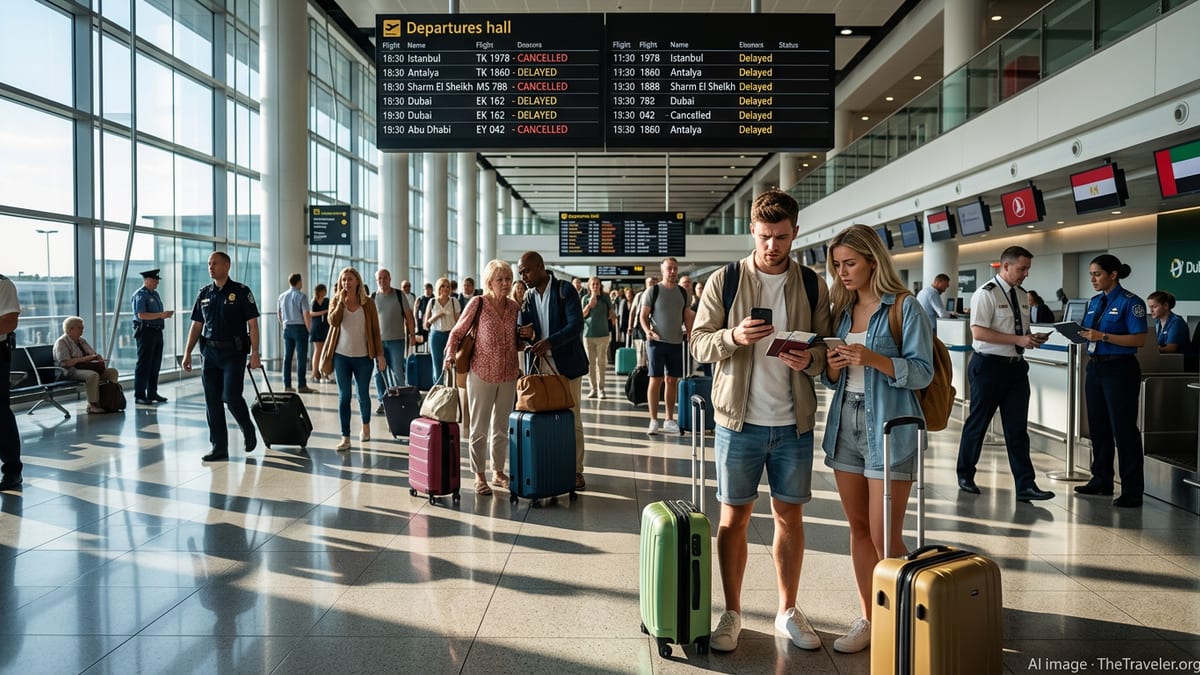
Gulf crisis reshapes travel risk for Irish visitors to the UAE
The most immediate concern for Irish travellers is the evolving security crisis in the wider Gulf, which has led to partial airspace closures, mass flight cancellations and a strong official message from Dublin to avoid new trips into the region. Following US and Israeli strikes on Iran and retaliatory missile and drone attacks, authorities across the Middle East have restricted or closed airspace, directly affecting major hubs such as Dubai and Abu Dhabi that are central to Irish long-haul travel.
The Department of Foreign Affairs has sharply tightened its language on the region, advising Irish citizens not to travel to the Gulf for now and telling those already in affected countries, including the United Arab Emirates, to shelter in place and remain in close contact with Irish embassies. Airlines operating between Dublin and Gulf hubs have suspended or severely curtailed services, leaving thousands of passengers worldwide stranded and limiting options for onward connections to Asia and Australia.
Irish officials have confirmed they are actively planning contingencies for citizens stuck in the UAE, including the possibility of busing groups overland to Oman, where airspace is less restricted, for charter flights home if scheduled services cannot resume quickly. Travellers are being warned not to attempt self-organised land exits through neighbouring states without official guidance, due to the risk of further strikes and rapidly changing local security controls.
While tourist resorts and malls in Dubai and Abu Dhabi largely remain open, hotels have been instructed by local authorities to extend stays for stranded visitors, often at state expense or reduced rates. For Irish holidaymakers considering trips later in 2026, officials stress that bookings involving Gulf stopovers should be made with maximum flexibility and that travellers must monitor Foreign Affairs updates right up to the day of departure.
Security snapshots: Turkey and Egypt under closer scrutiny
Beyond the immediate Gulf crisis, Irish travellers are being reminded that popular holiday destinations Turkey and Egypt carry longstanding security concerns that can flare with little warning. Turkish cities and coastal resorts have experienced previous terror incidents, while border areas near Syria and Iraq, and parts of the southeast, remain particularly sensitive due to ongoing military operations and political tensions.
Irish and other European governments continue to advise against travel to areas close to the Syrian border and to any zones under active security operations, even as mainstream package destinations such as Antalya, Bodrum and Marmaris remain open and busy. Travellers are urged to stay away from political gatherings, avoid demonstrations and maintain a low profile in major cities like Istanbul and Ankara, where protests or security operations can disrupt public transport and tourist hotspots at short notice.
In Egypt, the broad message from Western governments remains to exercise increased caution, reflecting the threat from terrorism and sporadic unrest. The Sinai Peninsula away from heavily guarded Red Sea resorts, border regions with Libya and Sudan and sections of the Western Desert are typically subject to stronger warnings, including advice not to travel without specialist operators or, in some areas, not to travel at all.
Holiday favourites such as Sharm el Sheikh, Hurghada and Marsa Alam generally remain open under tight security, but tour groups often move in controlled convoys and hotel compounds are heavily guarded. Irish visitors are being advised to book only with reputable operators, heed local security briefings on excursions, and be prepared for visible security checks around airports, tourist sites and hotels.
Practical checks: visas, passports and health requirements
Entry rules for Turkey, Egypt and the UAE continue to evolve, and Irish travellers are encouraged to double check requirements directly with airlines and official sources shortly before departure. Turkish authorities have in recent years expanded electronic visa and visa-free options for many European visitors, but conditions can differ depending on passport type and intended length or purpose of stay, so travellers should not assume past rules still apply.
Egypt generally requires Irish tourists to obtain a visa, either in advance or on arrival depending on current policy, with additional scrutiny possible for those planning extended stays or travel beyond main resort areas. In the UAE, short-stay Irish visitors normally receive a visa or entry stamp on arrival, but officials warn that this presumes valid travel documents, a confirmed onward or return journey and proof of accommodation. In all three countries, remaining passport validity of at least six months beyond the date of entry is widely recommended to avoid last minute boarding problems at Dublin Airport.
Health authorities also stress that routine vaccinations should be up to date before travel to Turkey and Egypt, and that travellers should consider additional protection against illnesses such as hepatitis A and typhoid, especially when planning to eat street food or travel outside main resort areas. In Egypt in particular, summer heat can be extreme, and Irish tourists unused to high temperatures are advised to prioritise hydration, limit midday exposure and ensure their travel insurance covers emergency medical evacuation should serious illness occur.
For the UAE, where medical facilities are generally of high standard but expensive, robust health insurance with clear emergency coverage is essential. Travellers transiting through Gulf hubs on the way to Asia or Australia are reminded that they remain subject to local laws and regulations even on short stopovers, including strict rules on prescription medicines and zero tolerance policies on certain controlled substances.
Insurance gaps and consumer rights during disruption
The turbulence across Middle Eastern airspace in early 2026 has exposed gaps in many Irish travellers’ insurance policies, particularly around war, terrorism and government-imposed airspace closures. Standard travel insurance often excludes losses arising directly from conflict or acts of war, meaning that compensation for cancelled flights or abandoned holidays can be limited when disruption is linked to military action rather than technical faults or normal airline operations.
Consumer specialists advise Irish holidaymakers to study policy small print before booking trips that involve Turkey, Egypt or Gulf stopovers, paying particular attention to exclusions for war, terror incidents and official travel advisories. Some higher-end policies may offer broader cover for curtailment or additional accommodation costs when governments change advice after a trip has started, but these products are typically more expensive and subject to strict conditions.
Under European regulations, passengers whose flights are cancelled are entitled to care, including meals and accommodation when stranded, and to rerouting or refunds where airlines suspend services. However, airlines are usually not obliged to pay additional cash compensation when cancellations are caused by extraordinary circumstances such as airspace closures or security incidents. This distinction has become critical for Irish passengers caught in recent Gulf disruptions, many of whom are reliant on airlines for rebooking but receiving no extra compensation for the inconvenience.
Travel agents and industry bodies in Ireland are urging customers to book package holidays, which may offer stronger consumer protections if Foreign Affairs advice changes before departure. Where official guidance is upgraded to advise against travel to a destination included in a package, holidaymakers may be entitled to reschedule, re-route or receive a refund, even when airlines insist flights are still technically operating.
Staying informed: official advice for Irish citizens in 2026
With the regional security picture shifting day by day, officials in Dublin emphasise that the single most important step for Irish citizens is to monitor the Department of Foreign Affairs website and official social media feeds closely, both before booking and in the days leading up to travel. The department operates a registration system for citizens in higher-risk regions, allowing consular staff to reach people quickly with updates and, if necessary, evacuation plans.
Irish citizens already in Turkey, Egypt or the UAE are advised to keep their phones charged, maintain regular contact with family at home and follow the instructions of local authorities, tour operators and hotel management. In the UAE and across the wider Gulf, where the security situation is more volatile, citizens are routinely urged to shelter in place, avoid unnecessary journeys, stay away from military or strategic sites and avoid public gatherings that could be seen as political.
For those yet to travel, government and industry voices alike recommend flexible bookings, refundable hotel rates and a willingness to rethink itineraries if official guidance hardens. Holidaymakers considering journeys that connect through Gulf hubs on their way to Turkey, Egypt or further afield are being told to weigh alternative routings that avoid the region altogether until the airspace picture stabilises.
As Irish holidaymakers look ahead to the peak summer season of 2026, the message from diplomats, insurers and airlines is consistent: Turkey, Egypt and the UAE remain accessible in many circumstances, but trips now require careful planning, close attention to official warnings and a clear understanding that conditions can change with little warning.