

The Apostle Islands National Lakeshore in northern Wisconsin rewards travelers who plan around the moods of Lake Superior. Weather here changes quickly, seasons shape every activity, and conditions on the water often matter more than conditions on shore. Understanding how climate, wind, ice, and crowds interact is the key to seeing sea caves, landing on remote islands, and staying safe while you explore this wild corner of the Great Lakes.
Understanding Lake Superior’s Unique Weather
The Apostle Islands sit on the south shore of Lake Superior, which behaves more like an inland sea than a typical lake. Water temperatures stay cold even in high summer, which keeps air temperatures cooler than inland Wisconsin and fuels sudden fog, squalls, and steep, short-period waves. Calm, sunny conditions can shift to whitecaps and poor visibility in the span of an hour, especially in the outer islands where the lake is more exposed.
In late spring and early summer, average highs in the region can range from about the upper 50s to 60s Fahrenheit, warming into the upper 70s or low 80s during mid-summer before dropping back into the 60s by September. Nighttime temperatures often run several degrees colder, and a breeze off the lake can make it feel cooler than the forecast suggests. Surface water temperatures in May and June commonly remain in the 40s Fahrenheit, and even during August often stay below 60 except in the most sheltered bays.
Wind is one of the most important factors for trip planning. Typical summer winds in the Apostles are in the 5 to 20 knot range, with waves of one to four feet on open water, but thunderstorms or passing weather systems can push gusts far higher and build seas over six feet. Small Craft Advisories and Gale Warnings from the National Weather Service are your signal to stay off the water, regardless of how warm or pleasant it feels in town. On land, the same systems can bring heavy rain, rapid chill, and dangerous lightning to exposed beaches and campsites.
In winter, the lakeshore turns harsh. Average temperatures drop well below freezing, often into the single digits, and wind chill can send perceived temperatures into the negative range. Snowfall is heavy, and the shoreline becomes a constantly shifting mix of ice, slush, and open water. Even when nearby towns feel manageable, the combination of lake wind, drifting snow, and spray freezing on surfaces can create backcountry conditions that require full winter gear and cautious decision-making.
Best Seasons and When to Go
For most visitors, the prime Apostle Islands season runs from late June through early September. During this window, air temperatures are warmest, island services and boat tours operate on their fullest schedules, and conditions for kayaking, camping, and hiking are generally more forgiving. July and August bring the most reliable warm days, but also the highest prices and the largest crowds on boats and in Bayfield accommodations.
Spring and fall are shoulder seasons that reward flexibility. Late May and early June can offer quiet trails and openings at popular campgrounds, but the lake is still very cold and fog can be persistent. Autumn, particularly from late September into early October, brings striking fall color on the mainland hills and islands. Cooler temperatures and shorter days mean packing extra layers, but bugs taper off, and popular viewpoints such as the sea cave overlooks along the mainland feel more peaceful.
Winter is a specialized niche season, best suited to experienced cold-weather travelers who are comfortable with rapidly changing conditions. Access to the islands themselves is limited because ferry and shuttle operations are highly seasonal, and the lake ice is often unstable. Instead, visitors tend to focus on mainland hikes, snowshoeing, and, in rare years when conditions allow, trips out onto the frozen lake surface to view the famous ice caves.
Within any season, timing your trip around local events and weather patterns matters. For paddling-focused travel, mid to late summer offers the warmest water you are likely to see, although it remains cold by most swimming standards. For photography, sunrise and sunset light can be spectacular in any season when skies are clear, casting warm tones on the sandstone cliffs and lighthouses. If your goal is solitude, midweek visits in June or September often provide the best balance between manageable temperatures and fewer people.
Planning Around Ice Caves and Winter Conditions
The Apostle Islands ice caves, which form along the mainland cliffs near Meyers Beach, are one of the most dramatic and unpredictable winter attractions in the Great Lakes. They open to the public only when thick lake ice, low wind, and stable weather combine to meet strict safety thresholds set by park managers. In recent decades, full openings have been rare and short-lived, and years can pass without conditions ever becoming safe enough to allow visitors to walk out from shore.
When the ice caves do open, as they are expected to in mid-February 2026 if conditions remain stable, the event draws thousands of people over a relatively short window. Visitors typically hike two to six miles round trip over frozen Lake Superior, crossing uneven ice with cracks, ridges, and occasional standing water. There is no shelter or potable water once you leave the shoreline, cell service is limited, and wind can increase quickly, so treating this as a serious winter backcountry outing is essential.
Anyone considering a winter visit should be prepared with insulated, waterproof boots, traction devices for walking on slick ice, and layered clothing suitable for temperatures well below freezing plus wind chill. Park guidance emphasizes staying away from overhanging icicles, avoiding crawling into tight openings, and recognizing that ice is never perfectly safe even when access is officially open. Access may close with little warning if warm temperatures, strong winds, or shifting ice undermine stability.
Logistics also change when the caves open. Parking at Meyers Beach can be restricted or closed, with visitors directed to satellite lots and shuttle systems operated by local agencies. There is usually a separate fee for the ice caves event, collected by the National Park Service, in addition to any local parking or shuttle charges. Because conditions are so variable, travelers should build flexibility into their winter plans, treating a successful ice cave visit as a bonus rather than a guarantee.
Summer on the Water: Kayaking, Boating, and Cruises
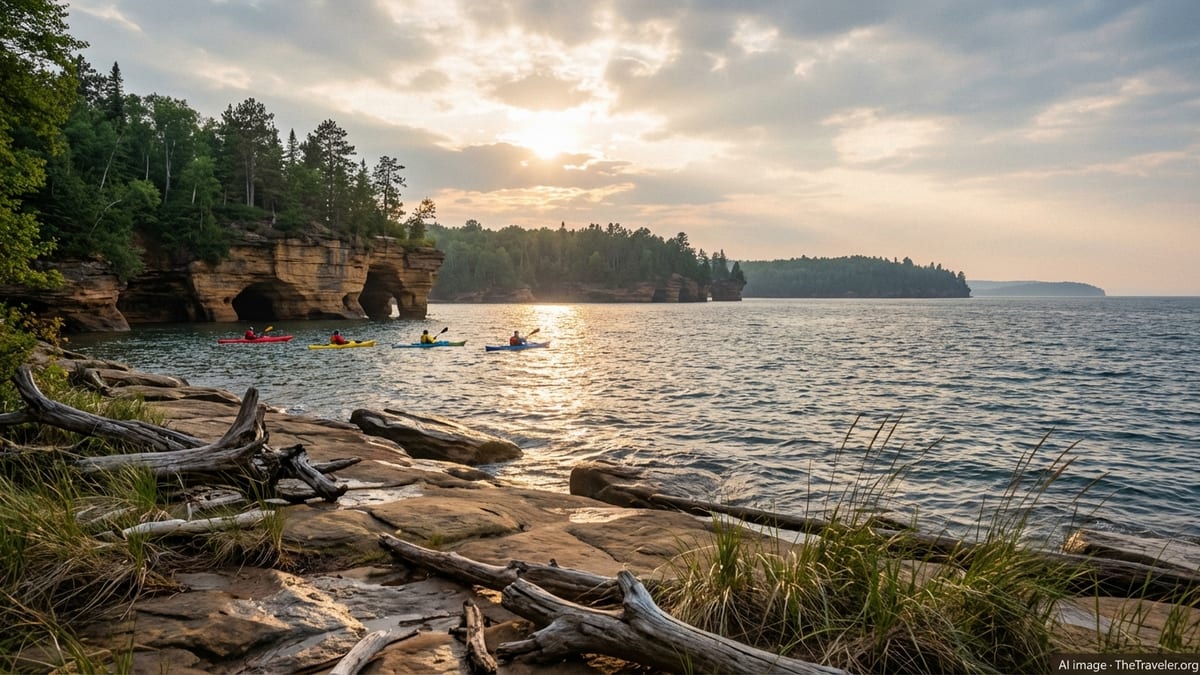
Summer is when most travelers experience the Apostle Islands from the water, whether by sea kayak, small private boat, or commercial cruise. Calm mornings and warm afternoons can make the lake look inviting, but the combination of cold water and quickly building wind demands respect. Even in late July and August, surface temperatures in much of the lake often stay below 60 degrees Fahrenheit, which means that an unexpected capsize without proper clothing can lead to cold shock and hypothermia far faster than newcomers anticipate.
For sea kayakers, a closed-cockpit touring kayak with proper flotation, a spray skirt, and a life jacket worn at all times is the standard recommendation. Open-cockpit recreational kayaks, canoes, and stand-up paddleboards are not advised for exposed routes or for visiting sea caves, where waves reflect off sandstone walls and create confused, bouncing water. Guided trips led by local outfitters can be a smart option for first-time visitors, especially around the cave systems and outer islands where navigation and weather judgment are more complex.
Boaters and paddlers alike should plan their days around the marine forecast instead of just checking the land-based weather in Bayfield. Paying attention to wind speed, direction, and the potential for thunderstorms helps determine which routes are reasonable and which shorelines offer safer landing options. Many experienced visitors plan early starts, covering longer, more exposed stretches in the morning and leaving more protected waters for the afternoon, when wind and waves are more likely to build.
For those who prefer not to captain their own craft, sightseeing cruises and water taxis offer a less strenuous way to reach the islands and view lighthouses and cliffs. Even on these boats, though, dressing in layers is wise. Open decks can feel significantly colder than town, especially when the vessel is moving at speed into a lake breeze. Having a hat, light gloves, and a windproof shell on hand can turn what might otherwise be a chilly outing into a comfortable one.
Camping, Hiking, and Staying Comfortable on Land
Backcountry-style camping on the Apostle Islands and day hiking on the mainland are shaped by the same weather patterns that govern lake travel. July and August typically provide the most comfortable nighttime temperatures for camping, but conditions can still swing from hot afternoons to cool, damp evenings in a matter of hours. Shoulder months like May, June, and September are cooler and often quieter, yet they demand more insulation and wet-weather gear.
On the islands, many campsites sit near the shoreline, where wind off the lake can either be a blessing on humid days or a source of significant chill. A robust three-season tent, ground tarp, and adequate sleeping bag are important, as is a packable insulating layer for evenings. Because storms can arrive quickly, campers should secure tents and gear against gusty conditions and consider how rising waves might affect landing areas used by water taxis or private boats.
Hiking on the mainland offers rewarding views of cliffs, forests, and the lake, particularly from trails near Meyers Beach and along other parts of the Bayfield Peninsula. In late spring and early summer, trails can be muddy and bugs such as mosquitoes and blackflies may be active, so lightweight long sleeves, insect repellent, and sturdy footwear are valuable. In autumn, trails can be slick with leaves, and shorter days mean carrying a small headlamp is prudent, even for outings you expect to finish before sunset.
Regardless of season, visitors should think in terms of self-sufficiency. Some trailheads and island camps have limited services, and cell coverage can be inconsistent. Bringing extra water, snacks, and a basic first-aid kit, as well as paper maps or downloaded offline maps, helps ensure you can manage minor issues without outside help. While the Apostles are not remote by wilderness standards, they are exposed, and the weather can make seemingly short distances feel much longer.
Packing Smart for Variable Conditions
Packing for the Apostle Islands is less about fashion and more about layering, versatility, and protection from cold and wet conditions. Even if your trip is scheduled for peak summer, you will want clothing that can handle temperatures from the low 50s into the 80s Fahrenheit, along with wind that can change how those numbers feel. A simple system of moisture-wicking base layers, an insulating mid-layer such as fleece or light puffy jacket, and a waterproof, windproof shell works in every season with only small adjustments.
Footwear might be the single most important gear choice. For summer hiking and general travel, waterproof or quick-drying hiking shoes with good traction are recommended, because roots, rocks, and muddy segments are common. If you plan to paddle, neoprene booties or water shoes paired with wool or synthetic socks can keep your feet warmer in cold water. In winter or during any ice-related visit, fully insulated, waterproof boots combined with traction devices designed for slick surfaces become essential safety equipment rather than just comfort items.
Accessories make a large difference in comfort. A warm hat, sun hat or cap, and light gloves should be considered standard for all but the hottest midsummer days. The open water and reflective sandstone amplify sun exposure, so sunglasses with good UV protection and broad-spectrum sunscreen are important. Because weather is changeable, a small dry bag or waterproof pack liner will protect spare layers, electronics, and maps from unexpected squalls or spray while boating.
On the safety side, a properly fitted life jacket is mandatory for anyone going on the water. Dressing for immersion rather than air temperature is a guiding principle on Lake Superior; in practice, this may mean wearing a wetsuit or drysuit under your paddling gear, even when the sun is out. Basic navigation tools, such as a map and compass or a GPS unit with offline charts, add a layer of security, particularly if fog develops or you move away from well-traveled channels.
Reservations, Permits, and Seasonal Logistics
Because the Apostle Islands are both popular and relatively limited in terms of access points and services, advance planning is as important as packing the right clothing. Campground and backcountry campsite reservations for the islands are typically required during the primary hiking and paddling season, and quotas can fill early for high-demand summer dates. Making reservations as soon as your travel dates are firm, especially for July and August, significantly increases your chances of securing preferred locations and ferry times.
Boat tours, guided kayak trips, and water taxis also operate on seasonal schedules that peak in summer and scale back in spring and fall. Shoulder-season travelers should confirm operating dates and daily departures before finalizing accommodations, particularly if they are relying on a specific tour or taxi to access their chosen island or see the sea caves. In winter, regularly scheduled boat services are often paused, which effectively shifts most exploration to the mainland until open-water operations resume.
Permits and fees can vary by activity. Beyond camping and standard park entry-related costs, special events such as ice cave openings sometimes involve a separate per-person daily fee. Local shuttles, parking providers, and outfitters operate under their own pricing, which is subject to change with demand and conditions. Factoring these additional costs into your budget ahead of time avoids surprises and enables more accurate comparisons between guided and self-directed options.
Seasonal closures and alerts are another crucial piece of trip planning. Trails, docks, or areas near sensitive wildlife habitat can be closed temporarily, especially during certain nesting seasons or after storms. Checking for updated advisories just before departure helps you adjust your plans while you still have time to shift to alternative islands, trails, or dates rather than discovering restrictions on arrival.
The Takeaway
The Apostle Islands reward careful planners with experiences that feel far more remote and dramatic than their location in northern Wisconsin might suggest. Weather and seasons are not background details here; they are central to every decision about where you go, how you get there, and what you pack. Treating Lake Superior with the respect due an inland sea, and recognizing how quickly conditions can shift, transforms a beautiful trip into a safer and more confident adventure.
By aligning your visit with the right season for your priorities, preparing for temperatures cooler than the forecast inland, and building flexibility into your schedule, you can greatly increase your chances of smooth crossings, scenic hikes, and rewarding time at camp. Whether your goal is a calm summer paddle beneath red sandstone cliffs, a quiet fall hike through glowing maples, or a rare midwinter walk to frozen ice caves, thoughtful planning gives you the best odds of catching the Apostles at their most spectacular.
FAQ
Q1. When is the best time of year to visit the Apostle Islands?
The most popular period is late June through early September, when temperatures are warmest and most tours, ferries, and camp services are operating at full capacity.
Q2. How cold is the water in summer, and do I really need special gear?
Even in late summer, Lake Superior often stays below about 60 degrees Fahrenheit, so a life jacket is essential and a wetsuit or drysuit is advisable for longer paddles or open-water routes.
Q3. How often do the Apostle Islands ice caves open in winter?
The ice caves are a rare event and only open when thick ice, minimal wind, and stable weather align, which has happened in relatively few winters over recent decades.
Q4. What kind of clothing should I pack for a July trip?
Plan for cool mornings and evenings as well as warm afternoons: quick-drying layers, a light insulating jacket, a waterproof shell, and a hat and gloves for wind on the water.
Q5. Is it safe for beginners to kayak around the sea caves?
The sea caves can involve confused, reflecting waves and sudden changes in conditions, so many first-time visitors choose guided trips with experienced local outfitters rather than going alone.
Q6. Do I need reservations for camping on the islands?
Yes, in the main season island campsites typically require advance reservations, and popular areas may book up early for midsummer weekends and holidays.
Q7. What is the weather like in May and September?
May and September often bring cooler temperatures, more variable weather, and fewer crowds; visitors should expect chilly nights, possible fog, and the need for warmer layers.
Q8. Can I count on walking to the islands on winter ice?
No, lake ice is highly unpredictable and often unsafe; in years when the ice caves open, access is usually limited to the mainland cliffs rather than crossings to the islands.
Q9. How should I plan for sudden storms on Lake Superior?
Check the marine forecast before heading out, avoid paddling or boating under Small Craft Advisories or Gale Warnings, and build extra time into your schedule to wait out bad weather.
Q10. Are there family-friendly options if we do not want intense outdoor adventure?
Yes, scenic boat cruises, short mainland hikes to overlooks, beach stops on more sheltered islands, and ranger-led programs in summer all offer relaxed ways to experience the park.