

Churchill, Manitoba sits on the remote southwest shore of Hudson Bay, where polar bears, beluga whales and the northern lights shape an intensely seasonal travel experience. Planning a successful trip here means understanding how the weather, wildlife cycles and limited infrastructure all work together. With thoughtful preparation, this remote frontier town becomes one of the most memorable journeys in North America.
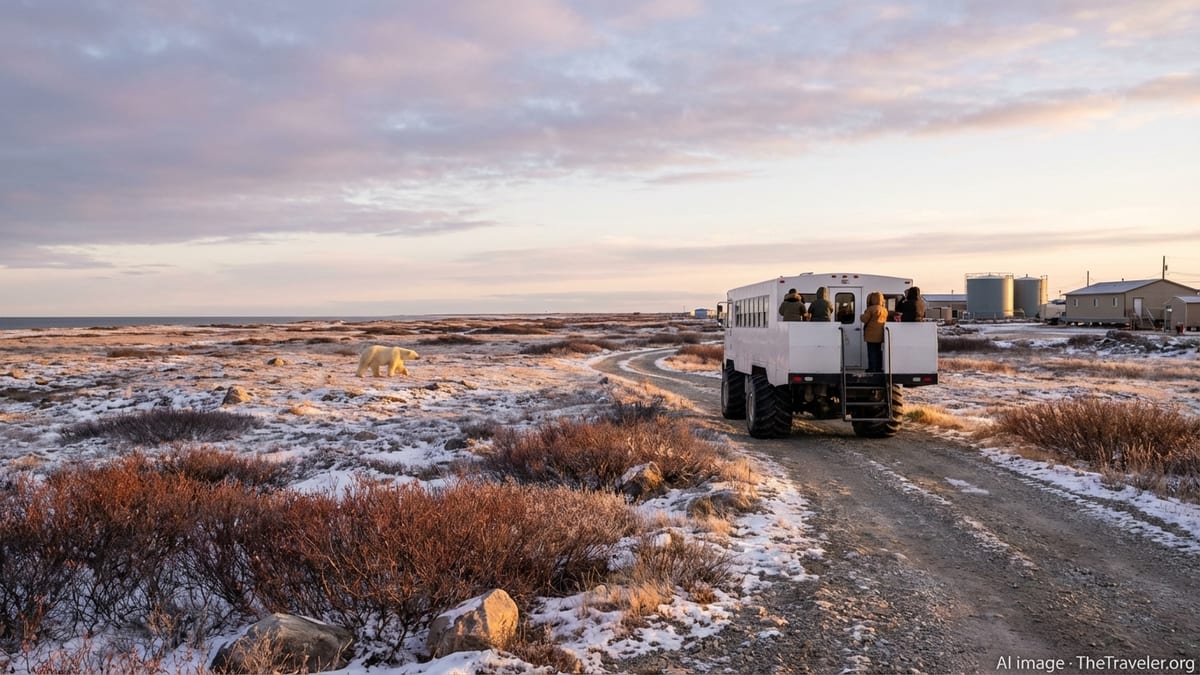
Understanding Churchill’s Subarctic Weather
Churchill lies in a subarctic climate zone, with long, cold winters and short, cool summers that change quickly. Visitors are often surprised by how fast conditions can shift from sunshine to fog, rain, snow and strong winds, sometimes in the same day. Even in the warmer months, evenings can be cold enough to require insulated layers, while autumn and winter bring temperatures that feel far below freezing once the wind is factored in.
During summer, from roughly June through August, daytime temperatures often hover in the low to mid teens Celsius, with occasional warmer spells that make it feel like a mild northern summer. As September arrives, temperatures drop and the first frosts and snowfalls are common, painting the tundra in reds and golds before winter takes over. By October and November, when polar bear viewing is at its peak, air temperatures are frequently below freezing and the wind can drive the perceived temperature far lower.
Wind chill is one of the most important realities to account for in Churchill. Strong winds blowing in off Hudson Bay strip away the layer of warm air near the skin and can make a mild reading on the thermometer feel dangerously cold. On autumn tundra excursions, a temperature that looks manageable on paper may feel severe out on open ground. Planning your clothing around the worst likely wind chill rather than the forecast air temperature is one of the simplest ways to stay safe and comfortable.
Winter in Churchill, especially from late November through March, brings deeply cold conditions, long nights and frequent aurora displays when skies are clear. Daytime highs can sit well below freezing and nights can plunge much lower. Snow and ice accumulate on streets and walkways, making sturdy, insulated boots with good traction essential. Travelers who come prepared for genuine Arctic cold, rather than a typical Canadian winter, are far more likely to enjoy being outside under the northern lights or out with dog sled teams.
When to Go: Matching Seasons to Your Interests
Choosing the right time to visit Churchill depends almost entirely on what you want to experience. There is no single “best” month; instead, each season highlights different aspects of the region’s wildlife and landscape. Because the town is small and access is limited, dates can sell out well in advance, particularly when polar bears are most visible, so clarifying your priorities early is critical.
Autumn, especially from the middle of October to late November, is prime polar bear season. As Hudson Bay begins to refreeze, hundreds of bears congregate along the coast, waiting for the ice to form so they can return to hunting seals. This is when classic tundra vehicle tours operate most intensively, and when you are most likely to see bears sparring, resting on the snow or moving along the shore. Accommodation, flights and tours are in highest demand at this time, and prices typically reflect that.
Summer, usually from early July into late August or early September, belongs to the beluga whales. Thousands of belugas move into the Churchill River estuary, where shallow, relatively warm waters provide an ideal nursery for calves. Boat excursions, zodiacs and sometimes kayaking or snorkel experiences allow visitors to see these social, vocal whales at close range. At the same time, it is often possible to spot polar bears along the coast or on nearby islands, though they tend to be more scattered and less predictable than in autumn.
Winter and early spring attract travelers focused on the northern lights and deep-winter experiences. From about January to March, cold, clear nights offer excellent chances to see aurora borealis, while daylight hours can be filled with dog sledding, cultural visits and photography on the frozen landscape. There are fewer visitors at this time compared to polar bear season, and the experience is quieter, though it still requires careful planning for weather and limited services.
Booking Tours, Guides and Logistics
Churchill’s wildlife is best experienced with experienced local guides and licensed operators, both for safety and to minimize disturbance to animals. Polar bear viewing typically takes place from custom-built tundra vehicles or specialized lodges positioned on the migration routes. These tours are tightly regulated, and a handful of operators control most capacity in peak weeks, so it is common for trips in late October or early November to sell out many months, or even a year, in advance.
Beluga whale excursions in summer are run by boat and zodiac operators based in town, some of which also offer kayaking or snorkeling options when conditions permit. Because tides, currents and wind affect how and where boats can operate, having flexible expectations helps. Many travelers build in extra days to account for weather delays and to allow time to rebook outings if conditions turn poor on a particular day.
Access to Churchill is by air or rail, since there is no road connection to the rest of Manitoba. Most visitors fly from Winnipeg, with flights often timed to connect with major Canadian and international routes. Small aircraft and northern weather can be an unpredictable combination, especially in autumn, so missed connections and overnight delays are not unusual. The alternative is the long-distance train from Winnipeg, which takes about two days and offers scenic views but is equally sensitive to weather and track conditions.
Because of these variables, travel insurers often recommend policies that cover delays, interruptions and cancellations. Many tour companies build contingency plans into their itineraries, but independent travelers should also leave buffer days at the start and end of their trip. In a place where storms and strong winds are part of everyday life, flexibility is not a luxury so much as a practical necessity.
Packing Smart for Polar, Summer and Shoulder Seasons
Efficient packing for Churchill is less about volume and more about layers. Regardless of season, visitors should plan for a moisture-wicking base layer, insulating mid layers and a windproof, waterproof shell. In autumn and winter, that shell is often a heavy parka rated for serious cold, while in summer, a lighter shell that blocks wind and rain may be enough, combined with fleece or down pieces that can be added as temperatures drop.
For autumn polar bear trips, thermal base layers, insulated pants, a substantial parka, insulated boots, thick mittens or gloves, a warm hat and a neck gaiter or scarf are fundamental. Many specialist tour operators provide Arctic-grade boots and parkas for their guests, but independent travelers should double-check what is included before departure. Chemical hand and foot warmers are inexpensive, pack small and add a layer of comfort during long hours of still photography on the tundra.
In summer, clothing needs to handle a wider range of temperatures. Lightweight hiking pants, breathable shirts, a fleece or light down jacket and a waterproof shell usually serve well. Even at the height of beluga season, evenings can be chilly on the river, so a hat and light gloves are wise. Mosquitoes and blackflies can be an issue in some summer weeks, so insect repellent and, for those who are particularly sensitive, a head net can make time outdoors much more pleasant.
Year round, sturdy, waterproof footwear with good traction is essential. Streets and trails can be muddy, icy or snowy depending on the month, and tundra vehicles often involve climbing steps that may be slick. Travelers who plan to focus on photography should carry extra batteries, as cold weather drains them quickly, as well as microfiber cloths to keep lenses clear of condensation and snow. Sunglasses are useful in every season, both for summer glare off water and for the reflective brightness of fresh snow and ice.
Safety, Wildlife Etiquette and Local Protocols
Churchill’s identity as the “polar bear capital” is not just a tourism slogan. Bears move through the area for much of the year, and both residents and visitors live with that reality. The town and provincial authorities run a dedicated Polar Bear Alert Program that monitors bear movements, educates the public and intervenes when animals come too close to the community. Patrols operate during bear season, deterrents such as noise and lights are used to encourage bears to move away, and problem individuals can be temporarily held in a secure facility until sea ice returns.
For visitors, safety starts with simple habits. Walking after dark outside central, well lit areas is discouraged, and locals will often advise against “quick shortcuts” on the edges of town. Many accommodations offer vehicle transfers in the evenings. Residents commonly leave some doors unlocked so that anyone who unexpectedly encounters a bear has a place of immediate refuge. Heeding local advice about where and when it is safe to walk is one of the most important things you can do.
On guided excursions, strict protocols govern how close vehicles can approach wildlife and how people should behave around animals. Guests are typically asked to keep voices down, avoid sudden movements, remain inside designated viewing areas and never feed or try to attract bears, foxes or birds. Beluga whale tours follow guidelines around boat speeds and distances to reduce stress on the whales, particularly when calves are present. Respecting these measures protects both animals and humans and helps ensure Churchill’s wildlife encounters remain sustainable.
The town’s safety culture extends beyond formal rules. During autumn in particular, you may hear loud sounds like cracker shells used as non lethal deterrents to move bears away from populated zones. This can be startling at first, but it is a sign that authorities are actively managing encounters. Traveling with reputable guides, asking questions and staying aware of your surroundings will keep risks low and allow you to focus on the privilege of observing Arctic wildlife in its natural environment.
Adapting to Climate Change and Shifting Seasons
Climate change is subtly reshaping the calendar in Churchill, affecting both sea ice formation and animal behavior. Warmer average temperatures influence when Hudson Bay freezes and breaks up, which in turn can shift the peak weeks when polar bears gather most densely along the shore. Some recent seasons have seen ice forming later in autumn than in past decades, leading to changes in tour scheduling and bear distributions.
For travelers, this means that long held rules of thumb about “guaranteed” sightings in particular weeks are evolving. Tour companies now monitor seasonal changes closely and adjust departure dates, locations and daily itineraries as conditions dictate. Flexible planning, including some openness about which exact days you will be on the tundra or on the water, increases your chances of high quality wildlife viewing even as the climate continues to change.
Beluga whales are also affected by changing sea ice and water temperatures in the broader region, though the estuary around Churchill remains a key summer gathering point. Some years see whales arriving a little earlier or staying a little later, which can enhance or compress the season depending on conditions. Similarly, snow cover, freeze thaw cycles and cloud patterns influence northern lights visibility, with clear, cold nights generally favored for aurora viewing.
Staying in touch with your tour operator in the months leading up to your departure is wise. They can offer the latest on sea ice formation, bear movements, whale sightings and aurora conditions, along with any adjustments they are making. In a dynamic northern environment, up to date local knowledge is often more valuable than historical averages alone.
On the Ground: What to Expect in a Remote Town
Churchill is a small, isolated community with a year round population of roughly a thousand people. Services are more limited than in southern Canadian destinations, and supply chains depend on periodic shipments and the rail line. Visitors should arrive expecting simple, functional accommodation, a modest selection of restaurants and cafes and only a handful of shops. What Churchill lacks in urban amenities, it makes up for in character, hospitality and proximity to wild landscapes.
Most lodging in town caters directly to wildlife watchers, and many properties bundle their rooms with tours, meals and local transfers. During polar bear season in particular, booking early is essential, since the number of quality rooms is finite and major departures often coincide across tour companies. Summer and winter are somewhat quieter, yet it is still prudent to reserve well ahead due to the town’s small size.
Getting around Churchill usually involves a mix of walking, shuttle vehicles and tour transport. The town itself is compact, but weather and safety considerations mean you will not always want to walk between locations, particularly after dark in autumn. Local taxis and hotel shuttles help fill the gaps. Out on the land, expect to travel by tundra vehicles fitted with large tires and elevated viewing decks, by boats and zodiacs on the river or, in winter, occasionally by dog sled or snow machine.
Connectivity is improving but remains less robust than in big cities. Mobile coverage can be patchy outside town and during remote excursions, and internet speeds may be slower than you are used to at home. Travelers who need to stay connected for work should plan accordingly, while those seeking a digital break often find the limited connectivity encourages them to focus more fully on the landscape and wildlife around them.
The Takeaway
Churchill rewards travelers who prepare carefully and approach the region with respect for its climate, wildlife and community. Understanding the seasonal rhythms of polar bears, beluga whales and the northern lights allows you to choose the window that aligns with your priorities, whether that means prime bear viewing in late autumn, intimate beluga encounters in high summer or quiet nights under winter auroras.
Weather awareness and realistic expectations about logistics are central to enjoying this northern journey. Robust clothing, layered packing, flexible travel plans and a willingness to adapt to last minute changes will serve you well. Working with experienced local guides not only elevates your chances of exceptional sightings, it also supports community based tourism and conservation efforts in a region on the front line of climate change.
Above all, Churchill is a place where the barriers between human settlement and the Arctic wild feel unusually thin. With thoughtful planning around weather, tours and seasonal timing, you can experience that edge in a way that is safe, sustainable and profoundly memorable.
FAQ
Q1. When is the best time of year to see polar bears in Churchill?
The most reliable polar bear viewing typically occurs from mid October through late November, when bears gather along the Hudson Bay coastline waiting for the sea ice to form.
Q2. When should I visit Churchill for beluga whales?
Beluga whales are most commonly seen in large numbers from early July through August, when thousands enter the Churchill River estuary to feed, socialize and care for their calves.
Q3. How cold does it actually feel during polar bear season?
Air temperatures in October and November often hover around or below freezing, but strong winds can make it feel far colder, especially out on open tundra decks.
Q4. Do I need a guided tour to see polar bears safely?
Yes. For safe and ethical viewing, visitors should join licensed tundra vehicle or lodge based tours with experienced guides who follow strict wildlife and safety protocols.
Q5. How far in advance should I book my Churchill trip?
For peak polar bear weeks, many travelers reserve packages six months to a year ahead. Summer beluga trips and winter aurora visits usually offer a bit more flexibility but still benefit from early booking.
Q6. What kind of clothing is essential for an autumn or winter visit?
Plan on thermal base layers, insulating mid layers, a windproof and waterproof parka, insulated boots with good traction, warm mittens or gloves, a hat and neck protection.
Q7. Is Churchill safe to walk around during polar bear season?
The town operates active bear patrols and safety programs, but visitors should follow local guidance, avoid walking alone after dark and use offered vehicle transfers whenever recommended.
Q8. How do I get to Churchill without a road connection?
Most visitors fly from Winnipeg on scheduled services, while others take the long distance train from Winnipeg, or combine flying one way and rail the other for a varied experience.
Q9. Will I have mobile service and internet access in Churchill?
Basic mobile and internet service is available in town, though coverage can be patchy on excursions and speeds may be slower than in major cities, especially during peak visitor periods.
Q10. Do I need special travel insurance for Churchill?
It is wise to choose a policy that covers weather related delays, missed connections and itinerary changes, since flights and trains can be disrupted by storms, wind or extreme cold.