

More news on this day
As cruise bookings surge out of U.S. ports and recent reports highlight outbreaks of illness and security concerns at sea, travel experts say passengers are increasingly focused on practical steps they can take to stay safe from the moment they book to the day they disembark.
Get the latest news straight to your inbox!
Check Health Risks and Sanitation Records Before You Sail
Recent seasons have brought a noticeable rise in gastrointestinal illness reports on cruise ships operating from the United States, with norovirus frequently cited as a cause. Data published by the U.S. Centers for Disease Control and Prevention’s Vessel Sanitation Program shows multiple outbreaks on ships sailing to and from American ports in 2024 and 2025, underscoring how quickly infections can spread in enclosed environments.
Publicly available information indicates that the CDC lists current and past outbreaks by ship name, date and suspected cause, along with the proportion of passengers and crew who reported symptoms. Travelers can also review sanitation inspection scores for vessels serving U.S. ports, which give a snapshot of how a ship is performing on issues such as food handling, potable water management and overall cleanliness.
Health specialists recommend that passengers with underlying conditions speak with a medical professional well before departure about vaccinations, motion sickness remedies and any medications they may need at sea. Bringing an adequate supply of prescription drugs in original containers, along with copies of essential medical documents, can reduce complications if the ship’s doctor or a port clinic needs to provide care.
Travelers are also encouraged to build personal hygiene routines into their cruise plans. Regular handwashing with soap and water, using hand sanitizer in high-traffic areas, avoiding buffet items that appear poorly maintained and promptly reporting symptoms such as vomiting or diarrhea to onboard medical staff are repeatedly cited in public health guidance as simple but effective measures.
Prepare for Security and Crime Risks Onboard
While the vast majority of cruises proceed without serious incidents, official crime statistics compiled under the U.S. Cruise Vessel Security and Safety Act show that allegations of assault, theft and missing persons continue to be recorded on ships embarking and disembarking in American ports. These figures, released quarterly by the U.S. Department of Transportation, provide a baseline view of the types of incidents that can occur at sea.
Security guidance from consumer advocates and maritime safety organizations consistently emphasizes situational awareness. Passengers are advised to keep cabin doors locked, use cabin safes for passports and valuables, and avoid sharing stateroom numbers publicly or on social media. Common sense precautions on shore, such as staying in well-populated areas, traveling in groups and limiting displays of expensive jewelry or electronics, apply equally on board and in port.
Families and groups often find it useful to establish clear meeting points and communication plans in case someone becomes separated in busy public areas. Many ships provide internal messaging through their mobile apps or cabin phones, and learning how those tools work early in the voyage can save time during a crowded embarkation or post-show rush.
Alcohol consumption can also play a role in onboard incidents, according to coverage in U.S. media outlets that track cruise safety trends. Travelers are frequently advised to monitor their intake, keep an eye on their drinks and remain cautious about leaving bars or lounges with strangers, mirroring safety recommendations commonly given for nightlife on land.
Understand Fire Drills, Muster Stations and Emergency Procedures
High-profile maritime accidents in recent years, including fires on passenger vessels in U.S. waters, have renewed attention on how quickly emergencies can escalate in confined spaces. Reports from the National Transportation Safety Board and other investigative bodies have highlighted lapses in overnight watchkeeping and emergency preparedness as contributing factors in some incidents, reinforcing the importance of basic safety procedures for both crew and passengers.
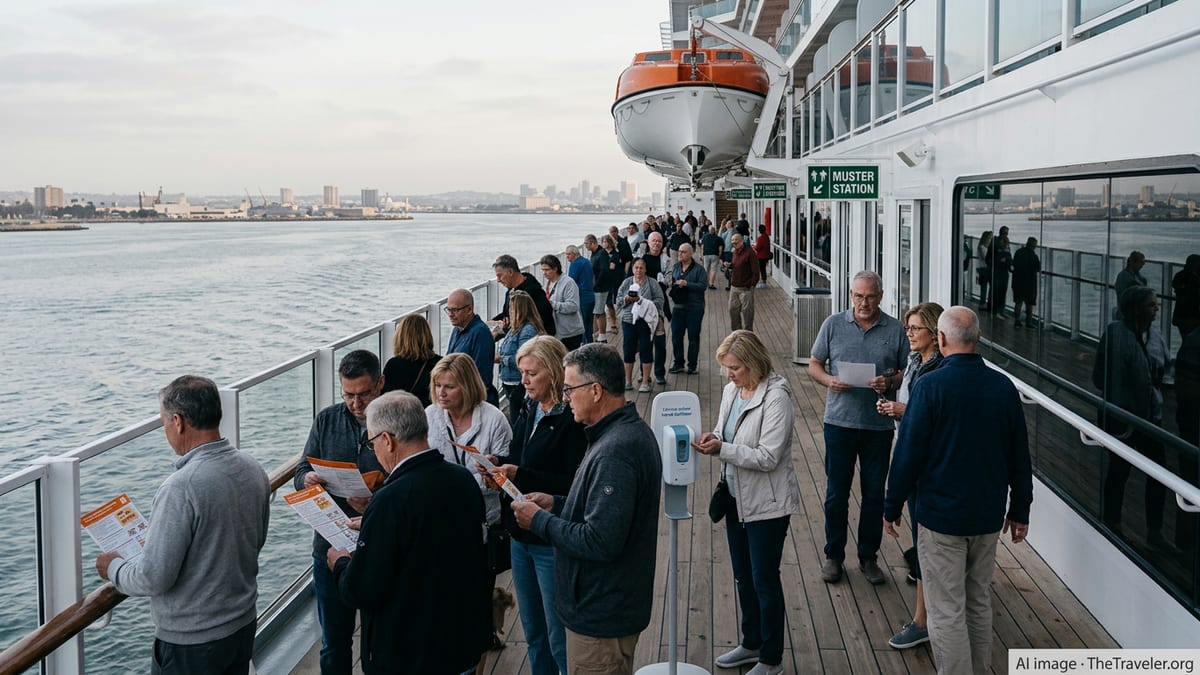
Once on board, travelers are required to participate in a muster drill that covers life jacket use, muster station locations and evacuation routes. Safety briefings typically outline how alarms sound, what emergency announcements may say and which stairwells or corridors to use in an evacuation. Observers note that treating this drill as essential rather than optional entertainment can significantly improve a traveler’s ability to respond if something goes wrong later in the voyage.
Passengers are encouraged to walk from their cabins to their assigned muster stations early in the trip, taking note of illuminated exit signs and counting the number of doors between their room and the nearest stairwell in case smoke limits visibility. Guidance from maritime safety specialists also suggests sleeping with sturdy shoes, a flashlight and a basic grab bag containing identification and medications within reach.
Travel media coverage increasingly advises travelers to pay attention to safety signage posted near cabin doors and in corridors, which usually summarize evacuation instructions and life jacket locations. Understanding these details in calm conditions makes it easier to act quickly in an actual emergency, when elevators may be unavailable and crew directions need to be followed immediately.
Protect Your Health in Crowded, Enclosed Environments
The combination of enclosed spaces, shared dining areas and high passenger turnover has long made respiratory and gastrointestinal infections a concern on cruise ships. Recent reporting on the 2024 and 2025 winter seasons describes clusters of norovirus and other illnesses across multiple lines, in some cases leading to heightened cleaning protocols, adjusted itineraries and calls for stricter hygiene practices among passengers.
Public health information available to travelers stresses that even outside of headline-generating outbreaks, basic precautions can reduce the risk of becoming ill. These include frequent handwashing, avoiding touching the face, refraining from self-serve buffet items when unwell, and staying away from crowded venues when experiencing symptoms that could indicate a contagious infection.
Ventilation and air quality have also come under scrutiny since the pandemic era. Cruise operators departing from U.S. ports have publicized upgrades to filtration systems and cleaning routines across ships in their fleets. While specific standards can vary, passengers can take small steps such as opening balcony doors when permitted, spending time in open-air decks and limiting extended stays in tightly packed indoor venues during peak hours.
Most travel insurers now offer coverage tiers that address medical care at sea and emergency evacuation, and insurance industry commentary indicates a continued rise in demand for these policies. Travelers are urged to review policy details closely, paying particular attention to pre-existing condition clauses, coverage for shipboard medical visits and arrangements for care in foreign ports if disembarkation is required.
Plan for Safer Shore Excursions and Independent Exploring
For many travelers, the highlight of a U.S.-based cruise is time spent ashore, whether on organized excursions or independent exploration in port cities and nearby attractions. Safety advisories from government agencies and travel organizations point out that risks can shift once passengers step off the gangway, where local infrastructure, weather and crime patterns come into play.
Before booking excursions, passengers are advised to review operator credentials, group sizes and cancellation policies, especially for activities such as snorkeling, zip-lining or off-road touring. Media accounts of excursion-related incidents have drawn attention to the importance of using life jackets, checking equipment condition and understanding physical requirements before committing to more demanding outings.
Travel guidance consistently recommends monitoring weather forecasts and seasonal patterns for each port, particularly in hurricane-prone regions or during colder months in Alaska and the Pacific Northwest. Packing appropriate footwear, layered clothing and sun protection helps reduce the chance of injuries or heat-related illness while walking on uneven surfaces or spending long hours outdoors.
Finally, passengers are encouraged to carry only essential identification, payment cards and cash while ashore, leaving passports and nonessential valuables secured in cabin safes. Sharing itineraries and expected return times with traveling companions, as well as factor in potential delays when planning independent trips away from the port, can help ensure that a day’s adventure ends with an on-time, stress-free return to the ship.