

More news on this day
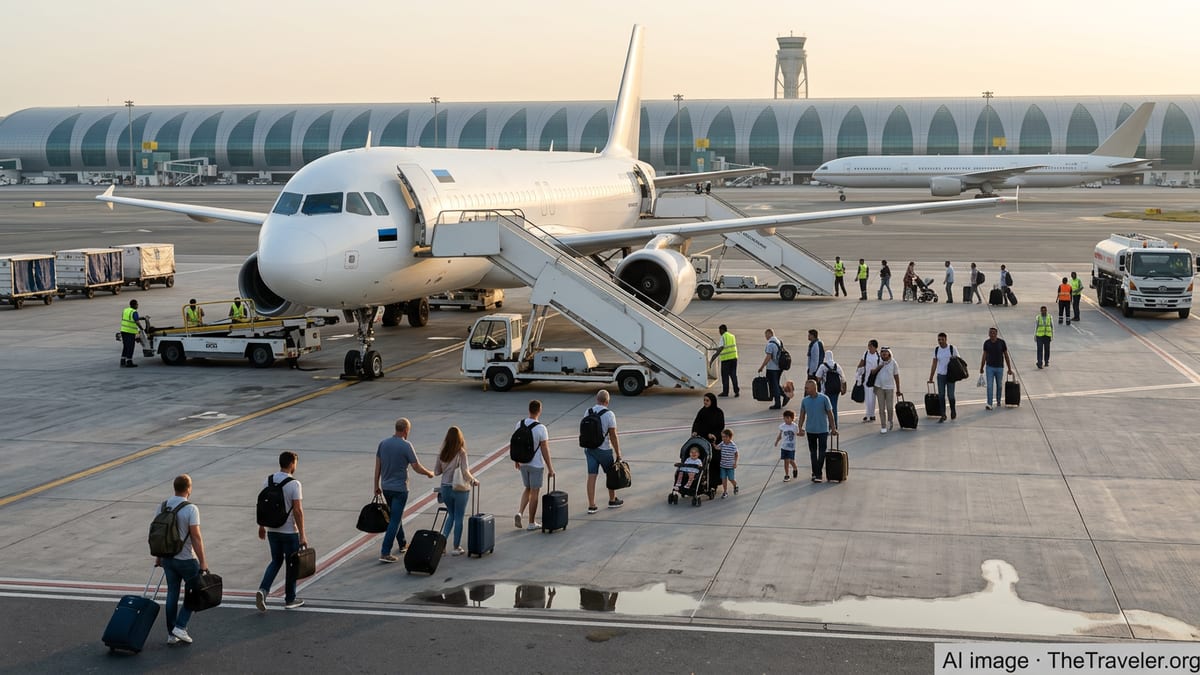
Estonia has completed a rapid airlift of 1,084 people from Dubai on seven special flights, as coordinated European Union repatriation operations begin to reconnect travelers with home and lay groundwork for a cautious restart of Middle East tourism flows.
Final Estonia Flights Cap Intense Week of Evacuations
Estonia’s Ministry of Foreign Affairs confirmed on Monday that the last of seven special repatriation flights from the Middle East have reached their destinations, ending a week of around-the-clock operations centered on Dubai. The missions were mounted after widespread airspace closures and security concerns disrupted commercial schedules across the region.
Foreign Minister Margus Tsahkna said the airlift brought home 1,084 people, including Estonian citizens, their family members of other nationalities, and other European Union nationals who were able to secure seats. Infants were counted separately, underscoring how many families had been caught mid-holiday or in transit when flights were abruptly grounded.
The final two services departed Dubai on Sunday evening, routing to Tallinn and Riga in coordination with regional carriers. Earlier rotations had already brought planeloads of passengers back to Estonia and neighboring Latvia, with charter and scheduled operators drafted in under government contracts to move people as fast as airport slots and safe corridors allowed.
Officials described a fast-moving operation that had to adapt to shifting flight permissions and congestion at Gulf hubs as thousands of stranded travelers from across Europe sought a way out at the same time.
Regional Carriers and EU Coordination Underpin the Airlift
The Estonian operation relied on a web of partnerships with airlines and travel companies that were able to pivot quickly into evacuation mode. The Foreign Ministry highlighted support from Novatours and Estravel on the ground, while airBaltic, Heston Airlines and FlyDubai provided critical lift on routes between Dubai, Tallinn and Riga.
With many regular flights suspended or heavily curtailed, these repatriation services were often slotted into narrow windows of available airspace. Crews and consular staff worked against tight turnaround times, juggling last-minute passenger lists as people dashed to airports from resorts and business trips across the Gulf.
Estonian diplomats also coordinated closely with other EU states to share spare seats and align schedules. Citizens from multiple member countries, along with residents holding Estonian permits, were funneled onto flights based on need and proximity to eventual onward travel options once back in the bloc.
That collaborative approach mirrored similar efforts by Latvia and Croatia, which organized their own Dubai departures during the same period. Together, the flurry of European repatriation flights turned Dubai into a temporary staging point for the return of stranded tourists and expatriates across the continent.
Stranded Tourists Describe Long Nights and High Fares
Passengers arriving in Tallinn and Riga over the weekend painted a picture of anxious hours spent in airport terminals and hotel lobbies while waiting for confirmation of seats. Many spoke of waking before dawn to check airline apps, then rushing to packed check in areas once word spread that a repatriation flight had opened for bookings.
Some travelers said families with young children and elderly passengers were prioritized at boarding, a decision welcomed by those who had watched toddlers and infants spend days in transit lounges. Others noted that, while the flights were not cheap, they saw little alternative given the scarcity of options and fast-changing security guidance.
Debate has already begun across several European countries about the pricing and public subsidies behind these emergency services. Estonia used state support to bring fares down from initial charter quotes, but passengers still shouldered a significant share of the cost. Similar arguments have arisen in Finland, Ireland and elsewhere as governments balance budget discipline with expectations that they will rescue citizens abroad.
Despite the expense, many returning tourists said they believed governments had an obligation to organize at least a basic route home in extraordinary circumstances, even if travelers were asked to contribute.
Dubai Emerges as a Repatriation Hub
Dubai’s role as a global connecting hub made it a natural focal point for European evacuations once the wider Middle East airspace disruptions took hold. With most scheduled Emirates services suspended for several days, the airport shifted to handling limited repatriation and cargo traffic along carefully approved corridors.
Pop up check in desks, manual rebooking queues and improvised customer service stations became common sights as airlines attempted to process thousands of disrupted itineraries. Passengers bound for Europe found themselves re routed through Dubai from other Gulf and Levant destinations, then onward on special flights laid on in cooperation with their home governments.
For Estonia and its Baltic neighbors, Dubai’s extensive route map and ground capacity offered the best chance of consolidating citizens scattered across countries such as Qatar, Saudi Arabia, Oman, Bahrain, Jordan and Kuwait. Consular staff steered people toward the Emirate by whatever means were still available, from remaining regional services to long overland journeys followed by short hop flights into the United Arab Emirates.
Aviation observers say the experience has underlined both the strengths and vulnerabilities of the current hub and spoke model in international air travel. When a crisis hits a major hub, the shock waves can ripple across continents in a matter of hours.
Cautious Path Toward a Middle East Travel Restart
As repatriation operations begin to wind down, attention is turning to the gradual and uneven restart of regular air services across the Middle East. Airlines are adding back flights where safe corridors are confirmed, but schedules remain volatile and subject to sudden change depending on security assessments.
Travel analysts expect a staggered recovery, with point to point routes that avoid sensitive airspace likely to resume first. Tour operators are revising itineraries, pushing back departure dates and steering customers toward destinations with more reliable lift for the coming weeks.
For Estonia, the completion of its Dubai airlift has removed the most urgent pressure while leaving nearly 400 citizens still spread across the wider region. Officials say they will continue to assist those travelers on a case by case basis using remaining commercial options, rather than additional charter flights, unless conditions deteriorate again.
The broader European effort has shown how quickly governments can pivot to crisis mode to protect their nationals abroad, but it has also exposed gaps in coordination, communications and contingency planning. As airlines and tourism boards look to rebuild confidence in Middle East travel, how authorities address those lessons will shape both policy and passenger expectations long after this latest round of repatriation flights has touched down.