

More news on this day
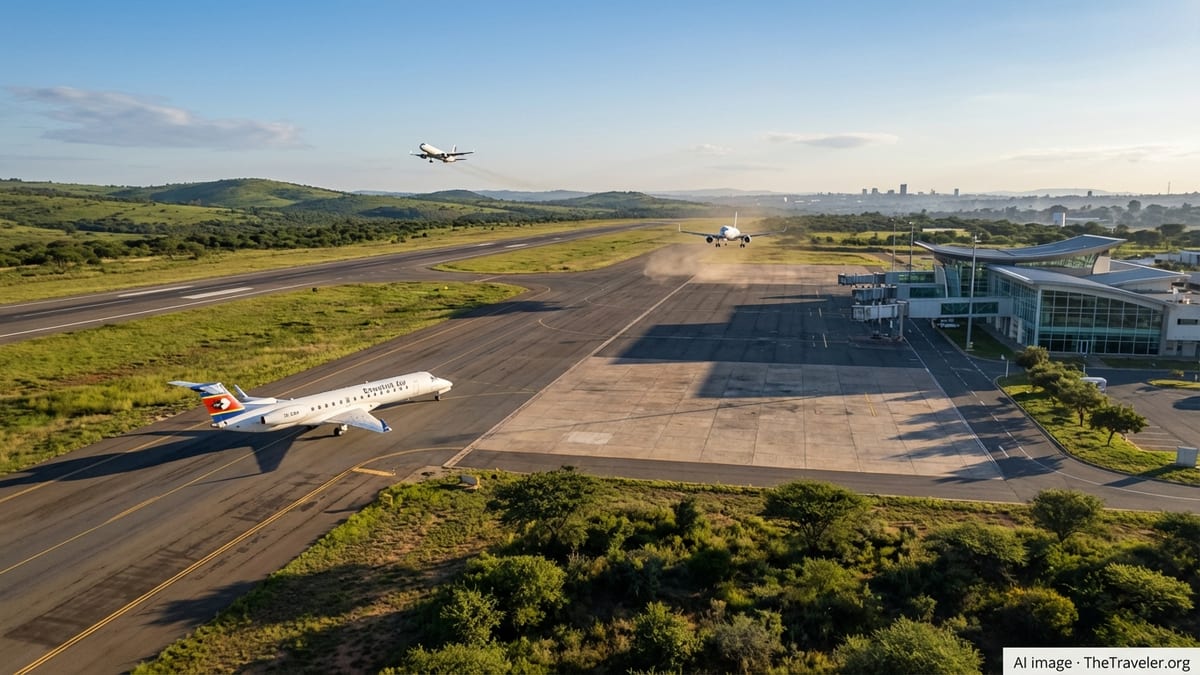
Eswatini and Zambia are preparing for a tourism shake-up as Eswatini Air readies a new direct route connecting King Mswati III International Airport near Manzini with Lusaka in 2026, promising faster links between southern Africa’s emerging safari and culture hubs.
A Strategic New Corridor Between Lusaka and Eswatini
The planned nonstop service between Manzini’s King Mswati III International Airport and Lusaka will mark Eswatini Air’s first move into the Zambian market, extending its young regional network beyond South Africa and Zimbabwe. Industry officials in both countries say the route is expected to launch during 2026, following regulatory approvals and final schedule design, and will initially operate several times a week to test demand on what has so far been an underserved city pair.
Today, most travellers between Eswatini and Zambia route via Johannesburg, adding hours of transit time and extra costs. Current schedules typically involve at least one stop and travel times of four to seven hours, depending on connections. By cutting out that detour, the new nonstop service will substantially shorten journey times and create the first direct air bridge between the two countries.
For Eswatini Air, which has been steadily building its presence from its Manzini hub since 2023, Lusaka represents both a logical next step and a signal of broader regional ambition. Aviation analysts say the carrier is positioning itself as a nimble player on short and medium-haul routes that can connect smaller but fast-growing tourism and business markets in southern Africa.
The move also aligns with Eswatini’s national strategy to use air connectivity to unlock visitor growth, diversify source markets and support investment in hospitality, transport and conservation ventures that depend on reliable access.
Lusaka’s Growing Role as a Regional Tourism Gateway
Lusaka has long been Zambia’s commercial heart, but in recent years the capital has also carved out a role as a key transit point for safari and adventure tourism. From Lusaka, travellers connect on to iconic destinations such as South Luangwa National Park, Lower Zambezi, Kafue and the Victoria Falls area, which straddles the border between Zambia and Zimbabwe.
Tourism operators in Zambia say a direct Eswatini link will make it easier to package multi-country itineraries that combine Zambia’s wildlife and river experiences with Eswatini’s cultural, scenic and community-based tourism offerings. Industry insiders expect to see more “circuit” itineraries marketed to long-haul visitors from Europe and the Middle East, flying into one hub and out of the other without backtracking through Johannesburg.
The new route is also seen as a chance for Lusaka to deepen its role as a regional meeting and conference destination. Improved connectivity with Eswatini is likely to appeal to corporate and government travellers attending summits and trade events that rotate around the Southern African Development Community region.
By the time the route opens in 2026, Zambia’s own regional network is projected to be denser, with Lusaka linked to more secondary hubs across southern and eastern Africa. That evolving web of connections will enhance the value of Eswatini Air’s entry by giving passengers more options for onward travel.
Eswatini Positions Manzini as a Southern Africa Hub
At the other end of the route, Eswatini officials are working to position King Mswati III International Airport as a compact but efficient regional hub. The modern airport, located about 50 kilometres from Manzini, already handles regular services to Johannesburg, Cape Town, Durban and Harare, primarily with Embraer regional jets designed for shorter runways and quick turnarounds.
The planned Lusaka service would add a fifth international destination and create new one-stop opportunities via Manzini, such as same-day connections between Zambia and South Africa’s coastal cities or Zimbabwe. Tourism planners say this hub-and-spoke structure can help spread visitors more evenly across the region and take pressure off larger, congested airports.
Eswatini’s tourism assets extend well beyond its airport. Travellers arriving from Lusaka will have relatively quick access to the country’s rolling highveld landscapes, community-run cultural villages, craft markets, and protected areas such as Mlilwane Wildlife Sanctuary and Hlane Royal National Park. The hope among local operators is that seamless air access will encourage visitors to stay longer and explore beyond traditional day-trip circuits from neighbouring South Africa.
Manzini’s growing air links are also expected to support investment in hotels, transport services and guided experiences. Stakeholders describe the Lusaka route as a catalyst that could justify upgrades to accommodation around the airport and in surrounding towns, aimed at both leisure and business travellers.
Tourism Stakeholders Anticipate New Multi-Country Itineraries
Across both countries, tourism boards, lodge owners and tour operators are already sketching out new product ideas built around the 2026 launch. One emerging concept pairs a few days in Eswatini’s cultural heartland with river safaris on the Zambezi, while another packages hiking and community visits in Eswatini with high-end photographic safaris in Zambia’s premier wildlife reserves.
Travel trade representatives say the ability to move visitors quickly between Lusaka and Manzini will make it easier to sell southern Africa as a varied yet coherent destination, particularly to first-time travellers who want to experience both wildlife and culture within a limited time frame. Multi-stop trips that once required complex ticketing and long layovers could be streamlined into clearer, more attractive itineraries.
The new route is also expected to support niche segments such as birdwatching, volunteer tourism and educational exchanges. Universities and conservation organisations operating in both Zambia and Eswatini have highlighted the benefits of faster, more predictable travel for joint research projects, training programmes and youth exchanges.
Industry bodies in both countries are calling for early marketing collaboration, including joint roadshows, shared promotional campaigns and familiarisation trips for tour operators and travel media, so that demand is in place when the inaugural flights take to the skies.
Regulatory Steps, Timing and Capacity Plans
Before passengers can board, Eswatini Air and its government partners must clear several regulatory hurdles. These include securing final traffic rights between the two countries, ironing out slots and airspace arrangements, and aligning airport services such as ground handling and security screening with the expected passenger flows. Aviation officials in Eswatini and Zambia have signalled support for the expansion and indicated that discussions are underway to finalise the operational framework.
Industry observers expect the route to begin with a modest number of weekly frequencies, likely operated by Embraer ERJ-family regional jets configured for around 50 passengers. This would allow the airline to match capacity with demand while testing different departure times to serve both business and leisure markets. If load factors are strong, additional frequencies or seasonal adjustments could follow.
There is also attention on pricing. With current journeys between Eswatini and Lusaka often involving multiple tickets and higher cumulative fares, a nonstop option that is competitively priced could quickly win over both corporate accounts and independent travellers. However, analysts caution that fuel costs, currency volatility and aircraft utilisation will all influence the final fare levels.
For now, the 2026 launch timeline gives both tourism sectors a clear horizon to plan against. As Eswatini Air prepares to add Lusaka to its route map, expectations are rising that a once obscure travel corridor could soon become a sought-after link in southern Africa’s evolving tourism network.