

More news on this day
Ethiopian Airlines is set to deepen domestic connectivity across Ethiopia with the inauguration of three new airports and the launch of scheduled passenger services to Negele Borena, Gore Metu and Debre Markos by mid-April 2026, a move that underscores the flag carrier’s ambitious Vision 2035 growth strategy and the government’s wider push to open up remote regions to investment, tourism and social services.
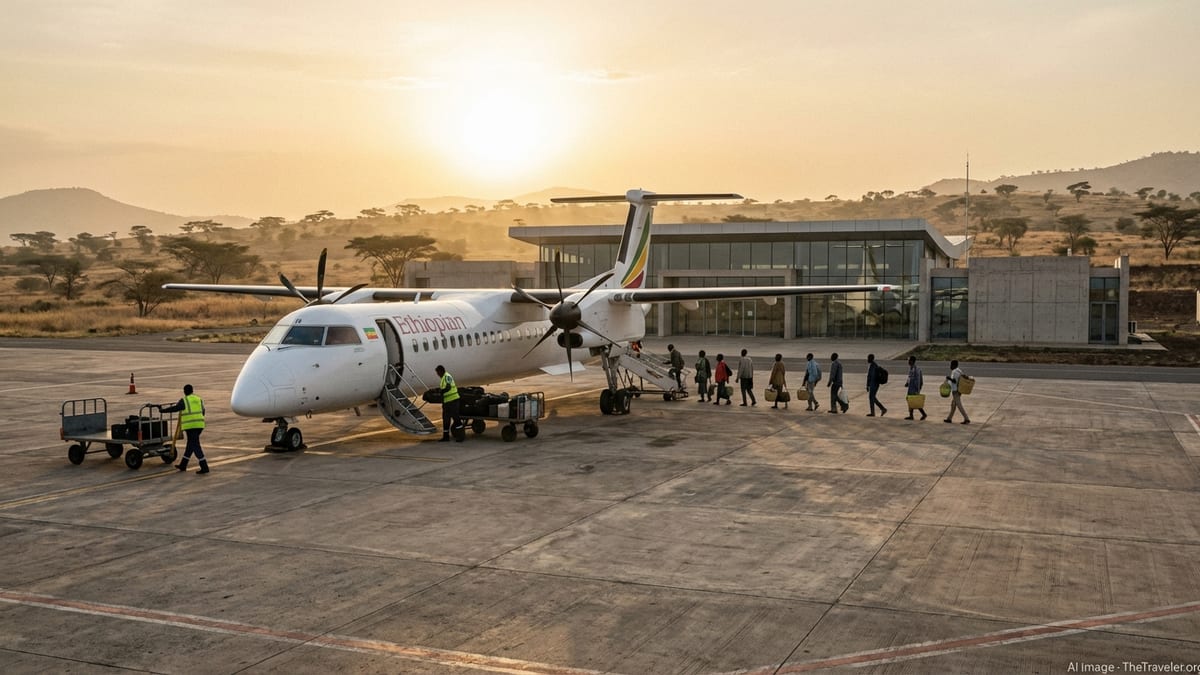
New Airports to Open in Negele Borena, Gore Metu and Debre Markos
In a statement issued in Addis Ababa on 18 February 2026, Ethiopian Airlines confirmed plans to inaugurate three new domestic airports in Negele Borena, Gore Metu and Debre Markos, with passenger flights to start by mid-April 2026. The carrier described the development as a significant milestone in its efforts to strengthen internal connectivity and integrate more regions into the national economy.
The airline plans to operate three weekly passenger services to each of the new destinations, using its domestic fleet to connect them to Addis Ababa and onward routes across Ethiopia. With Negele Borena in the south, Gore Metu in the southwest and Debre Markos in the northwestern highlands, the three additions are geographically dispersed, giving the network broader national coverage and shortening surface travel times for millions of residents.
The launch of these airports will lift Ethiopian’s domestic network from 23 active destinations after the opening of Yabello in 2025 to 26 by the time operations ramp up this year. The airline frames this expansion as part of a multi-year roadmap in which new and upgraded airports are used as catalysts for trade, tourism and social development in regions that have historically been harder to reach.
A Strategic Boost to Ethiopian’s Vision 2035 Growth Roadmap
The three-airport expansion fits squarely into Ethiopian Airlines’ Vision 2035 strategic plan, which seeks to position the group among the world’s leading aviation companies through aggressive network growth and infrastructure development. The plan includes lifting annual passenger traffic to tens of millions, expanding the fleet to more than 250 aircraft and deepening the carrier’s role as a regional connector across Africa.
Domestic growth is a central pillar of that strategy. In recent years, Ethiopian has outlined a roadmap to increase its internal network from just over 20 destinations to at least 26, supported by a pipeline of new airports such as Yabello, Gore Metu, Mizan Aman, Debre Markos and Negele Borena. Each facility is built or upgraded in close coordination with federal and regional authorities and is expected to support both passenger services and, in some cases, cargo and logistical operations.
The inauguration of Negele Borena, Gore Metu and Debre Markos also comes as Ethiopian invests in a parallel portfolio of major infrastructure projects. These include the transformation of the Addis Ababa Bole domestic terminal, which doubled its capacity, and the start of construction on Bishoftu International Airport, a planned mega hub near the capital that is expected to become one of Africa’s largest airports when completed.
Connecting Underserved Regions and Cutting Travel Times
By adding Negele Borena, Gore Metu and Debre Markos to its map, Ethiopian is targeting regions where road journeys to Addis Ababa or other large cities can be arduous and time consuming. Regular air links are expected to reduce travel times from days to a matter of hours, particularly during the rainy season, when parts of the road network can become difficult to navigate.
Negele Borena, in Ethiopia’s south, plays a strategic role as a commercial center for livestock, agriculture and cross-border trade with neighboring Kenya. An airport there is expected to facilitate the movement of traders, investors and development professionals, while creating a more reliable conduit for perishable agricultural products and humanitarian goods.
Gore Metu and Debre Markos occupy similarly important positions in the southwest and northwest. Gore Metu serves a fertile agricultural corridor known for coffee and other high-value crops, while Debre Markos links the Amhara region’s highland communities to the capital. Aviation analysts say that scheduled services here should improve access to markets, health care and education, while also making it easier for domestic tourists and diaspora visitors to reach family and heritage sites.
Economic and Social Impact Beyond the Runways
Local governments and business leaders are positioning the new airports as more than transport projects. In each of the three locations, the facilities are expected to anchor broader economic zones that could attract agro-processing plants, logistics hubs, hotels and service businesses. Experience from other new domestic airports in Ethiopia suggests that improved air access tends to raise land values, spur construction and encourage small entrepreneurs to open shops, restaurants and guesthouses.
Ethiopian Airlines executives have repeatedly linked domestic expansion to inclusive growth, arguing that connecting remote areas to the national air network amplifies the impact of public investments in roads, schools and hospitals. Easier movement of doctors, teachers, engineers and civil servants is seen as particularly important in vast regions where journeys by road can be costly or insecure.
Socially, regular flights can also reinforce national cohesion by making it easier for people from different regions and communities to travel, study and do business across the country. For diaspora Ethiopians returning for family events or religious festivals in provincial towns, the presence of a nearby airport can turn a rare journey into something more frequent and manageable.
Building on Momentum from Yabello and Other New Airports
The decision to add three more domestic airports follows a period of intense infrastructure activity for Ethiopian Airlines. In August 2025 the carrier inaugurated a new airport at Yabello in the southern Oromia region, introducing three weekly flights operated by De Havilland Dash 8-400 aircraft and adding the town as the 23rd domestic destination in its network.
The Yabello project, built at a cost of more than one billion Ethiopian birr, included a new runway, access roads and a temporary passenger terminal. It was widely viewed as a test case for a new generation of lean but scalable regional airports that can be upgraded over time as traffic grows. The experience there is informing planning and construction at Gore Metu, Negele Borena and Debre Markos, where Ethiopian and government partners are seeking to balance cost efficiency with safety and passenger comfort.
Alongside Yabello, Ethiopian has invested in upgrading terminals at Gode, Jinka, Bale Robe and other regional airports in recent years. These projects have modernized security screening, added self-service check-in kiosks and expanded departure halls, bringing domestic facilities closer to the standards passengers expect from the airline’s international operations.
Integration with Addis Ababa and the Future Bishoftu Mega Hub
The three new domestic airports will primarily feed traffic into Addis Ababa Bole International Airport, which functions as the nerve center of Ethiopian’s network. The recent expansion and renovation of Bole’s domestic terminal, completed in 2024, doubled its built-up area and capacity, enabling it to handle more than 200 daily flights to 22 or more domestic destinations with improved passenger flow and upgraded screening systems.
In January 2026 Ethiopian and the federal government broke ground on Bishoftu International Airport, a massive new hub being built about 40 kilometers from Addis Ababa. Designed to handle tens of millions of passengers annually once fully completed, Bishoftu is expected to eventually take over as the airline’s main base of operations and function at the center of an “airport city” with maintenance, hospitality and commercial facilities.
Aviation planners say that the domestic network growth now underway, including the addition of Negele Borena, Gore Metu and Debre Markos, will be critical to feeding traffic into both Bole and the future Bishoftu hub. Strong domestic spokes allow Ethiopian to consolidate passengers from smaller cities onto long-haul international flights, reinforcing Addis Ababa’s status as a gateway between Africa, the Middle East, Europe, Asia and the Americas.
Operational Plans and Passenger Experience on New Routes
According to the airline’s announcement, Ethiopian intends to begin with three weekly flights to each of the new airports, with schedules structured to enable same-day connections to and from major domestic and international services in Addis Ababa. As with other short-haul Ethiopian routes, the services are likely to be operated by De Havilland Q400 turboprops, which are well suited to regional airfields and high-altitude operations.
Passengers using the new airports can expect the same core service standards now offered across Ethiopian’s domestic network, including digital booking channels, through-ticketing for onward connections and access to the upgraded domestic terminal facilities at Bole. Over time, as traffic builds, Ethiopian may adjust frequencies, introduce additional departure banks or increase seat capacity in line with demand.
For local communities, the launch of services will place new emphasis on airport accessibility, ground transport links and last-mile connectivity. Regional authorities are already working on road improvements and signage to ensure that residents and visitors can reach the terminals safely and efficiently, mirroring steps taken around Yabello and other recently inaugurated airports.
Challenges and Next Steps in Ethiopia’s Domestic Aviation Push
Despite the optimism surrounding the three new airports, Ethiopian Airlines faces a complex operating environment at home. Fluctuations in fuel prices, currency constraints, security considerations in certain regions and the need for continuous investment in air traffic management all shape the pace and scale of domestic expansion. Ensuring that new airports are adequately staffed, maintained and integrated into national transport planning will remain a central challenge for both the airline and the government.
Analysts also note that building sustainable traffic on new routes requires time and coordinated policy support. Competitive airfares, predictable schedules, the development of tourism products and incentives for investors can all influence whether new services reach their potential. Ethiopian’s track record of gradually scaling up frequencies and capacity, coupled with the government’s focus on infrastructure-led development, offers some grounds for confidence.
As Negele Borena, Gore Metu and Debre Markos prepare to join the network by mid-April 2026, the success of these projects will be closely watched across Africa’s aviation sector. If they deliver on expectations, the three airports will not only expand travel options for Ethiopian passengers but also strengthen the country’s broader bid to transform air transport into a key engine of national growth.