

More news on this day
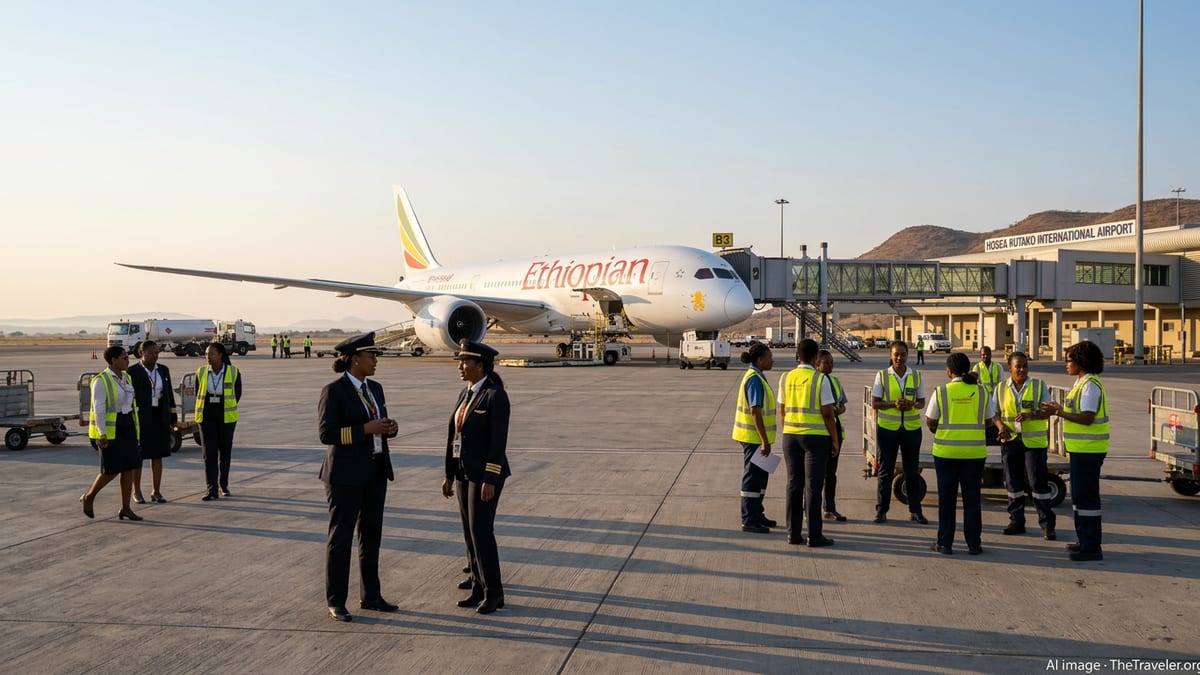
Ethiopian Airlines marked International Women’s Day 2026 by dispatching all-female operated flights to eight international destinations, with Namibia’s president welcoming one of the landmark services at Hosea Kutako International Airport outside Windhoek.
Historic International Women’s Day Operation Spans Four Continents
Ethiopian Airlines, Africa’s largest carrier, celebrated International Women’s Day on March 8 by staffing entire flight operations exclusively with women on routes linking Addis Ababa to eight cities across Africa, the Middle East, Europe and Asia. The initiative covered cockpit and cabin crew as well as dispatch, ramp operations, load control and ground handling, according to the airline’s leadership.
The 2026 program builds on a decade of annual all-female operated flights, but this year’s scale marks a new record for the company. Executives framed the expanded operation as both a symbolic gesture and a concrete demonstration of the growing depth of female talent within the airline’s technical and leadership ranks.
Ethiopian Airlines Group chief executive Mesfin Tasew told guests at a ceremony in Addis Ababa that the flights were designed to showcase women’s roles across every stage of the operation, from flight planning and engineering support to customer service. He highlighted that women now represent a significant proportion of the carrier’s workforce and hold leadership positions in key operational departments.
The special flights departed the airline’s hub at Addis Ababa Bole International Airport bound for destinations including Windhoek, Nairobi, Dubai and key European and Asian gateways, carrying thousands of passengers on services billed as milestones for African women in aviation.
Namibia Places Women in Aviation in the National Spotlight
In Namibia, the arrival of Ethiopian’s all-female crewed service turned Hosea Kutako International Airport into a focal point for Women’s Day celebrations. President Netumbo Nandi-Ndaitwah led a high-level delegation of ministers, aviation officials and women leaders who gathered on the apron to greet the crew as the aircraft taxied to the terminal.
Addressing guests and passengers after the flight’s arrival, the president praised the initiative as a powerful example of regional cooperation advancing gender equality. She noted that the partnership between African airlines and governments can help open doors for young women pursuing careers in science, technology and aviation.
The event at Hosea Kutako featured a ceremonial water salute for the inbound aircraft, followed by a reception inside the terminal where crew members met aviation students and girls from Windhoek-area schools. Airport officials said the visibility of an all-female flight deck and technical team was especially meaningful in a country working to expand women’s participation in specialized professions.
Namibia’s aviation authorities also used the occasion to highlight their own efforts to recruit and train more female air traffic controllers, engineers and airport managers, positioning the country as an emerging advocate for gender balance in the wider Southern African aviation sector.
A Growing Pipeline of Female Pilots, Engineers and Leaders
Ethiopian Airlines has long been regarded as a standard-bearer for women’s advancement in African aviation, and this year’s Women’s Day operation underscored steady gains in its internal talent pipeline. The carrier reports a rising number of female pilots, including captains on long-haul jets, along with women serving as aircraft technicians, maintenance engineers, ground operations managers and station heads.
Company officials say structured scholarship schemes, targeted recruitment and mentorship programs have been critical to drawing more young women into flight training and engineering academies. Partnerships with schools and universities in Ethiopia and neighboring countries are aimed at encouraging girls to pursue studies in mathematics, physics and aviation-related fields.
Senior figures within the airline stressed that gender diversity is viewed not only as a social responsibility but also as a contributor to operational resilience. By broadening its recruitment base, Ethiopian aims to build a deeper pool of specialized skills at a time when the global industry faces shortages of pilots and maintenance personnel.
The all-female flights have become one of the airline’s most visible platforms for celebrating those efforts, offering a real-world snapshot of progress while signaling that opportunities in the cockpit and hangar are open to the next generation of women across Africa and beyond.
Passengers Experience a Milestone Moment in the Skies
For passengers on the International Women’s Day services, the journey itself formed part of the celebration. Announcements from the flight deck highlighted the all-female teams, and many travelers described a festive atmosphere on board, with cabin crews sharing information about the careers represented among the staff working their flight.
Some flights featured brief onboard presentations about the history of women in aviation and Ethiopian Airlines’ own milestones, from its first female pilots to the expansion of mixed-gender maintenance crews and leadership roles. Travelers were encouraged to engage with crew members about their professional paths, turning routine segments into informal mentoring moments for aspiring young passengers.
At airports along the route network, terminals were decorated with International Women’s Day visuals and messages in both local languages and English. Arrival gates in cities from Windhoek to Dubai became impromptu photo backdrops as passengers posed with the crews who had just completed their historic sectors.
Travel industry observers noted that the visibility created by these passenger-facing initiatives can be as impactful as internal policies, particularly in markets where many girls have never personally met a woman pilot or aircraft engineer. For tourism boards and airport authorities, the flights also provided an opportunity to align their own branding with themes of inclusion and opportunity.
Aviation and Tourism Leaders Call for Lasting Change
Beyond the celebratory mood, officials from both Ethiopia and Namibia emphasized that one day of high-profile flights cannot substitute for long-term structural change. Speakers at events in Addis Ababa and Windhoek pointed to persistent gaps in training access, financing and workplace support that continue to limit women’s participation in highly technical aviation roles.
Industry associations called for sustained investment in aviation academies, regional scholarship funds and cross-border internship programs that would allow young women to gain experience in airline operations, airport management and air navigation services. Several leaders urged airlines and regulators to collect and publish gender-disaggregated data on hiring, promotion and pay as a way to track progress and highlight remaining barriers.
For Ethiopian Airlines, the 2026 International Women’s Day initiative served as both a celebration of how far the airline has come and a public commitment to push further. Executives reiterated targets to keep increasing the share of women in leadership roles and to ensure that future expansions of the fleet and route network are matched by an inclusive approach to staffing and training.
As the special flights completed their rotations and returned to Addis Ababa late on March 8, aviation watchers noted that the day’s operations had done more than set a symbolic record. By placing women at the controls and in the decision-making seats across eight international routes, Ethiopian Airlines offered a glimpse of what a more balanced future for global aviation could look like, from the tarmac at Bole to the arrivals hall at Hosea Kutako International Airport.