

More news on this day
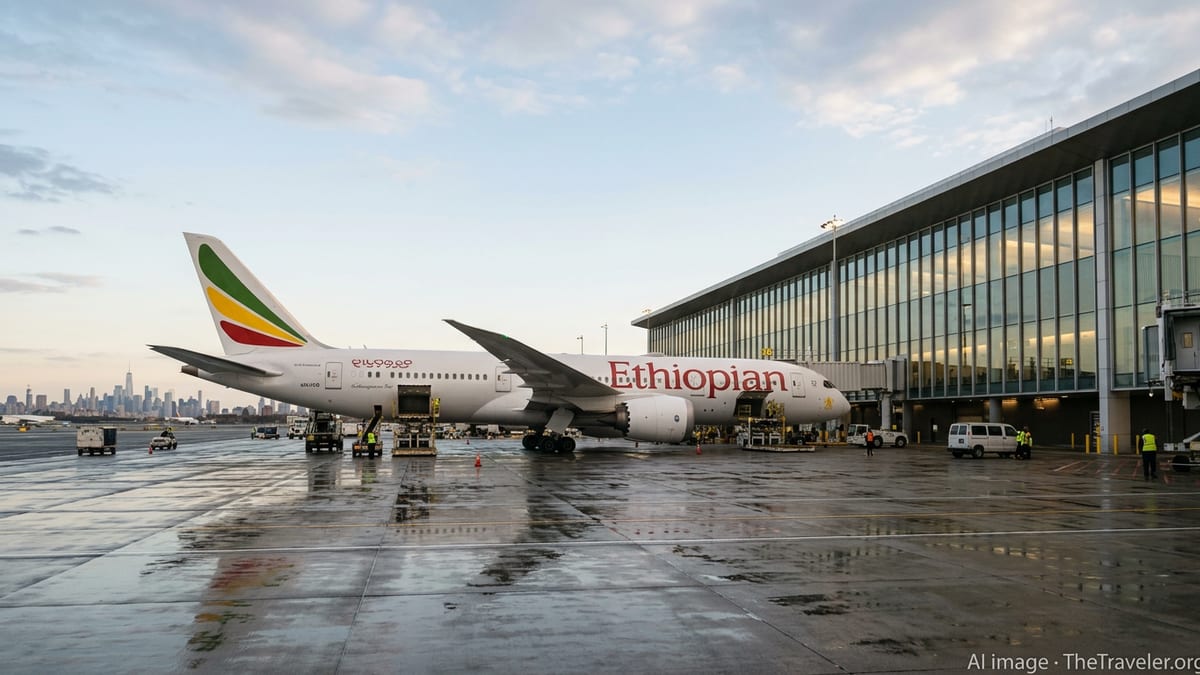
Ethiopian Airlines is set to deepen its New York footprint by joining forces with John F. Kennedy International Airport’s New Terminal One, a partnership that is poised to reshape air travel between Africa and the United States through upgraded facilities, increased capacity and more seamless connections.
Get the latest news straight to your inbox!
A New Gateway Between Addis Ababa and New York
The collaboration brings together Africa’s largest carrier and one of the most ambitious airport redevelopment projects currently underway in the United States. Publicly available information shows that the New Terminal One is a central pillar of the Port Authority of New York and New Jersey’s 19 billion dollar transformation of JFK into a world class global hub, with the new facility scheduled to open its first phase in 2026.
Ethiopian Airlines already operates nonstop services linking Addis Ababa with New York, positioning the Ethiopian capital as a major transfer point for passengers traveling between cities across Africa and destinations in North America. By moving into the New Terminal One once it opens, the airline is expected to match its growing long haul fleet with a ground experience designed around modern widebody operations.
The move is particularly significant for travelers from West, East and Southern Africa who route through Addis Ababa to reach the United States. A consolidated, next generation terminal at JFK is expected to reduce congestion, streamline connections and improve on time performance compared with the current multi terminal layout, where African carriers are split between different buildings and infrastructure standards.
For New York, the partnership strengthens JFK’s role as a primary North American gateway to the African continent. Passenger volumes on Africa U.S. routes have been recovering and, in some markets, surpassing pre pandemic levels, and the presence of a well connected African hub carrier in a flagship terminal positions the airport to capture more of that demand.
Inside JFK’s New Terminal One Vision
The New Terminal One project is designed as a 2.4 million square foot international terminal, replacing the current Terminal 1 and the former Terminal 2 site with a single, larger facility. According to project information released by the developer consortium, the terminal will feature spacious check in halls, advanced security screening, naturally lit departure concourses and a curated mix of retail and food outlets tailored to long haul travelers.
Plans call for widebody capable gates equipped for next generation aircraft such as the Airbus A350 and Boeing 787, both already central to Ethiopian Airlines’ long haul strategy. This alignment between airside infrastructure and fleet profile is expected to help the carrier optimize turnaround times and aircraft utilization on the Addis Ababa New York route and beyond.
The terminal’s layout is being developed to improve passenger flows at each stage of the journey, from immigration and customs to baggage reclaim and onward connections. For travelers arriving from Africa, this should translate into shorter walking distances, more intuitive wayfinding and less time spent queuing at key pinch points that have historically affected some parts of JFK.
In addition, the New Terminal One is planned with upgraded sustainability features such as energy efficient building systems and resource conscious design elements. While individual airline initiatives may vary, the overall terminal environment is intended to support carriers that are investing in newer, more fuel efficient fleets and enhanced environmental performance.
Implications for Africa U.S. Connectivity
Ethiopian Airlines has steadily built one of the most extensive African networks, serving dozens of cities across the continent from its Addis Ababa hub. That network feeds long haul services to North America and Europe, giving travelers from secondary African cities one stop access to major global markets. Integrating these flows into JFK’s New Terminal One is expected to strengthen the overall Africa U.S. corridor.
Improved ground facilities at New York could encourage schedule refinements and capacity adjustments on the Addis Ababa route over time. With additional gate availability and modernized passenger handling systems, there is scope for increased frequencies or the use of higher capacity widebodies during peak seasons, depending on demand trends and aircraft availability.
The partnership also intersects with broader geopolitical and economic ties between the United States and African nations. As trade, investment and diaspora travel expand, reliable air connectivity becomes a critical enabler. Enhanced transfer options through Addis Ababa and a streamlined arrival experience at JFK may help attract both business travelers and leisure tourists who previously favored connections through European hubs.
For African airports feeding traffic into Ethiopian’s network, the New York upgrade serves as a marketing tool and a practical improvement. Being able to promote seamless travel to a modern, flagship terminal in New York could support tourism campaigns and route development efforts in markets ranging from East African safari gateways to West African business centers.
Competitive Landscape at New York JFK
The New Terminal One is emerging as a cluster for long haul international carriers, including several serving Africa and the broader Global South. Publicly available project materials list airlines such as Royal Air Maroc, Egyptair, Gulf Air, Turkish Airlines and others among the carriers that have already committed to operating from the new facility.
This concentration of non U.S. airlines in a single modern terminal is expected to intensify competition on transatlantic and transcontinental routes. For Ethiopian Airlines, operating alongside other major global carriers could heighten pressure to differentiate on schedule, pricing, onboard product and ground experience, but it also offers more opportunities for interline and codeshare traffic within a shared terminal footprint.
From a passenger perspective, the clustering of multiple African and Middle Eastern carriers under one roof may simplify multi segment journeys that involve combining tickets across different airlines. While specific commercial partnerships vary, having check in, security, departures and arrivals housed in one facility can reduce connection times and stress for travelers navigating complex itineraries.
At the same time, JFK’s redevelopment includes enhancements at other terminals serving U.S. and alliance carriers, which means competition for Africa bound travelers will remain robust across the airport. The combination of upgraded facilities and airline network strategies will likely determine how market share evolves as the New Terminal One comes online.
What Travelers Can Expect When the Terminal Opens
The first phase of the New Terminal One is planned to open in 2026, with additional construction stages extending into the late 2020s. As operations ramp up, Ethiopian Airlines passengers can expect a gradual transition from existing facilities at JFK into the new building, with airlines typically coordinating moves to minimize disruption.
Once the move is complete, travelers flying between Addis Ababa and New York should experience a more consistent journey from curb to gate. This is expected to include expanded security lanes, upgraded premium check in zones for eligible passengers, improved seating and power access in departure areas, and modernized boarding processes suited to large widebody aircraft.
Arriving travelers from Africa are likely to see updated immigration halls, more organized baggage claim areas and clearer connections to ground transportation options serving Manhattan and the wider New York region. For those continuing to other U.S. destinations on separate tickets, the reconfigured roadway network and ground transport center associated with the broader JFK redevelopment are designed to ease transfers between terminals and to rail or road links.
Although specific airline lounge plans and detailed interior designs continue to evolve, the overarching goal of the New Terminal One project is to deliver a higher standard of comfort and reliability than many travelers currently associate with JFK. As Ethiopian Airlines settles into this new environment, the partnership stands to redefine the experience of flying between Africa and the United States for a growing number of passengers.