

More news on this day
Ethiopian Airlines has unveiled ambitious plans to launch the first nonstop flights between Africa and Australia by 2028, outlining a network that would directly link its Addis Ababa hub with Perth, Sydney and Melbourne in what industry observers are calling a historic shift in global aviation flows.
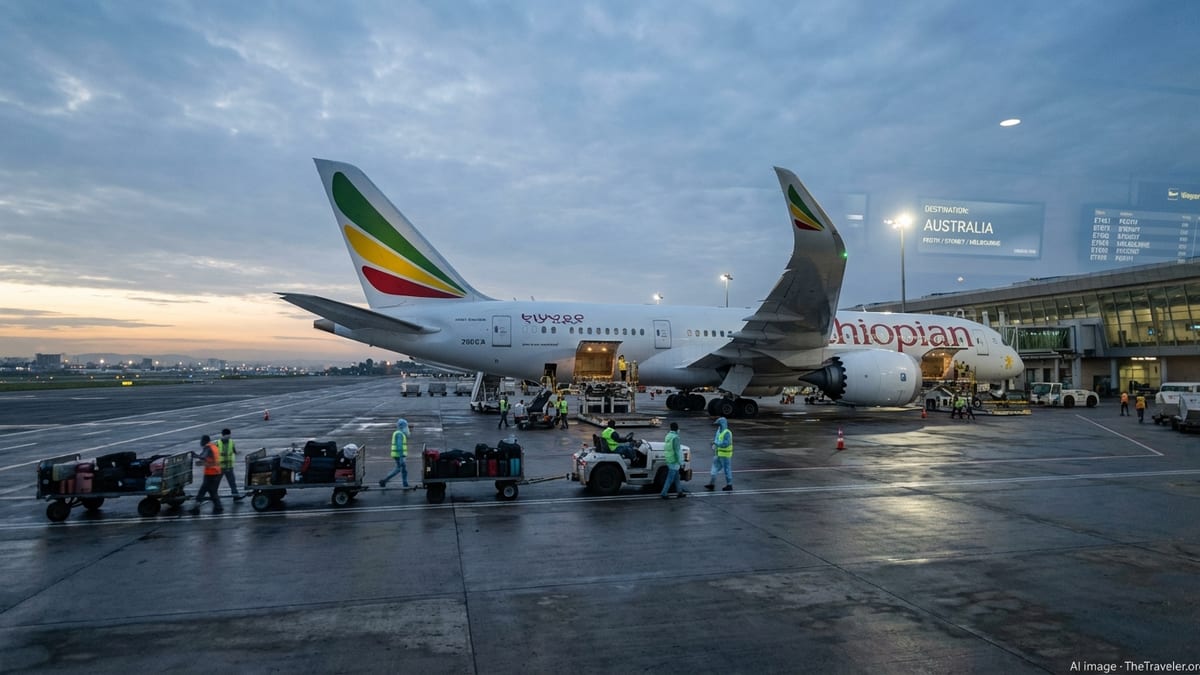
A Landmark First in Africa–Australia Connectivity
The proposed nonstop services would mark the first time in commercial aviation history that Africa and Australia are linked by direct passenger flights, eliminating the need for connections through traditional Middle East or Asian hubs. While schedules and exact launch dates have not yet been finalized, the airline has signalled a target window of 2028, subject to aircraft deliveries and regulatory approvals.
Today, passengers travelling between Australia and most African destinations rely on one or two stops through cities such as Dubai, Doha, Singapore or Johannesburg. Flight data shows no nonstop options currently exist between Addis Ababa and Perth, Sydney or Melbourne, underscoring the transformational nature of the Ethiopian plan. Industry analysts say the move would dramatically shorten journey times and strengthen Addis Ababa’s role as a pan-African hub.
The announcement comes as global carriers increasingly target so called long thin routes, leveraging new generation widebody aircraft that can operate ultra long sectors efficiently. For Ethiopian Airlines, already one of Africa’s largest and fastest growing network carriers, the Australia services represent both a symbolic milestone and a strategic expansion into one of the last major intercontinental markets without direct African links.
Inside Ethiopian’s 2028 Vision for Perth, Sydney and Melbourne
Ethiopian’s plan, outlined in recent industry reports and trade commentary, centers on establishing Addis Ababa as the primary African gateway for three of Australia’s busiest international gateways: Perth in Western Australia, and Sydney and Melbourne on the east coast. While the airline has not yet published timetables, the target is to sequence departures to maximize onward connectivity across its African and Middle Eastern network.
The introduction of Perth is expected to be the first step, capitalizing on the city’s geographic advantage as Australia’s westernmost long haul hub. Direct flights between Addis Ababa and Perth would open one stop connections to more than 60 African destinations served by Ethiopian, including key markets such as Nairobi, Lagos, Johannesburg and Accra, in addition to secondary cities that are currently time consuming to reach from Australia.
Routes to Sydney and Melbourne, Australia’s largest international gateways by passenger volume, would follow as additional long range aircraft join Ethiopian’s fleet. Aviation planners say these east coast services would be tailored to capture both point to point demand between Australia and Ethiopia and connecting flows to East, West and Central Africa, as well as to parts of the Middle East and India via Addis Ababa.
Although final frequencies and launch order may evolve over the coming two years, the airline’s intent is clear: to position itself as the primary bridge between two continents that, despite their relative proximity on the map, have historically lacked direct air links.
New Generation Aircraft Make Ultra Long Routes Viable
A key enabler of the planned nonstop Australia services is Ethiopian Airlines’ investment in new generation long haul aircraft, particularly the Airbus A350 and Boeing 787 9 Dreamliner. Both types combine extended range with significantly improved fuel efficiency, allowing airlines to operate ultra long sectors that would have been uneconomical a decade ago.
Industry coverage of the Ethiopian plan notes that the carrier is counting on additional A350s and stretched Dreamliners to provide the performance required for nonstop flights between Addis Ababa and cities such as Perth and Melbourne. These routes would rank among the longer intercontinental pairings in the world, comparable in distance to existing ultra long haul services linking Australia with Europe and North America.
Cabin comfort will be an important selling point. Ethiopian’s long haul fleet typically offers lie flat business class seating and modern inflight entertainment systems across cabins, features that have become increasingly important as passengers weigh nonstop convenience against the option of breaking long journeys with a connection. The airline is expected to align its product for the Australia routes with competitors already serving the market via intermediate hubs.
The carrier’s fleet strategy dovetails with broader trends in global aviation, where airlines are using more efficient twin engine widebodies to stitch together secondary city pairs on a nonstop basis. For African aviation, where connectivity has often lagged other regions, the Ethiopia Australia plan is viewed as a sign of growing technical and commercial ambition.
Strategic Bets on Trade, Tourism and Diaspora Travel
Beyond the operational challenge, Ethiopian’s move into Australia is driven by shifting economic and demographic ties between the two regions. Trade between Australia and a number of African countries has quietly expanded in recent years, supported by mining, energy, education and agribusiness links. Direct flights from Addis Ababa would create faster corridors for executives, specialists and project teams moving between the continents.
Tourism boards on both sides are also watching the development closely. Australian travellers have shown increasing interest in African safari destinations, cultural tourism and adventure travel, typically accessing them today via Middle Eastern or European hubs. Nonstop Ethiopian flights would offer a new option: a single connection through Addis Ababa into iconic destinations in Kenya, Tanzania, Uganda, Rwanda and southern Africa.
In the other direction, Australia’s appeal as a long haul holiday destination for African travellers has grown on the back of its coastal cities, wildlife experiences and educational institutions. Direct routes could significantly reduce total journey times for students and visiting friends and relatives traffic, a segment that airlines regard as resilient even in periods of economic volatility.
Another driver is the African diaspora already living in Australia, particularly communities with heritage from East and Horn of Africa countries. Travel demand for family visits, cultural events and seasonal migration has long been channelled through indirect routings. Ethiopian’s network centric approach, funneling passengers through Addis Ababa, could consolidate that demand and give diaspora travellers a new flagship carrier of choice.
Perth’s Growing Role as a Nonstop Long Haul Gateway
The choice of Perth as one of Ethiopian’s anchor Australian destinations fits a pattern of airlines using Western Australia as a strategic springboard for long haul operations. The city has already become a key base for nonstop links to Europe and Africa, with carriers such as Qantas and others using its location to cut flying time and exploit more direct great circle routes.
Recent years have seen a steady expansion of Perth’s international footprint, including the return of nonstop services to Johannesburg and new routes to parts of Asia and the Middle East. Ethiopian’s proposed entry would add Africa’s largest network carrier to that roster, reinforcing Perth’s identity as a crossroads between Australasia, Africa and Europe.
From a passenger perspective, nonstop Addis Ababa Perth services would provide Western Australians with direct access to African markets without backtracking through east coast Australian hubs. For travellers in other Australian cities, Ethiopian is expected to work with local and regional partners to offer timed domestic connections into its Perth and east coast flights, reducing total travel time compared with traditional one stop routings via Asia or the Gulf.
Aviation experts say Perth’s time zone alignment with many Asian and Middle Eastern hubs also creates opportunities for Ethiopian to coordinate schedules that support same day connections in both directions, a key factor in winning over business travellers and premium leisure customers.
Regulatory Hurdles and Competitive Pressures
While enthusiasm around the Ethiopian Australia plan is high, the project still faces a series of regulatory and competitive hurdles. Any new nonstop routes will require bilateral approvals between Ethiopia and Australia, including traffic rights, security clearances and slot allocations at busy airports such as Sydney and Melbourne. Regulators are also likely to examine safety oversight, consumer protections and contingency planning for such long distance operations.
Competition will be fierce. The Australia Africa market is already served indirectly by major Gulf carriers, Asian airlines and South African operators, many of which have well established customer bases and loyalty programs. These carriers may respond to Ethiopian’s entry with targeted pricing, capacity adjustments or improved schedules designed to retain market share.
There is also the broader challenge of operating ultra long haul sectors in a volatile cost environment. Fuel prices, currency fluctuations and global geopolitical tensions can all impact the economics of nonstop flights, which have less flexibility to route around airspace closures or weather disruptions. Ethiopian’s planners will be modeling different scenarios to ensure the routes can be sustained beyond a headline grabbing launch.
Nevertheless, analysts point out that Ethiopian has shown resilience in expanding its international footprint over the past decade, growing its network despite regional uncertainties and global shocks. That track record, they say, improves the odds that the carrier can successfully navigate the complexities of opening a brand new intercontinental corridor.
Implications for African Aviation and Global Networks
If realized on the projected 2028 timeline, the nonstop services to Perth, Sydney and Melbourne would carry broader implications for African aviation. They would reinforce the emergence of Addis Ababa as a true intercontinental hub, complementing existing long haul routes to Europe, North America, the Middle East and Asia. For other African carriers, the move may serve as both inspiration and competitive pressure to strengthen their own long range capabilities.
The routes would also subtly redraw global traffic flows. Today, much of the Africa Australia traffic is funneled through Middle Eastern or Asian mega hubs, contributing to congestion and concentrating revenue in a handful of global airlines. A viable Addis Ababa Australia corridor would distribute that traffic more evenly, giving passengers additional choice and reducing reliance on traditional stopover points.
From a geopolitical perspective, stronger direct connectivity often precedes deeper diplomatic and commercial engagement. Observers note that air links can act as a leading indicator of future cooperation in areas such as education, technology, climate research and cultural exchange. Ethiopian’s move is therefore being watched not only by travel industry insiders but also by policymakers in both regions.
For now, the plan remains in the preparatory phase, with detailed schedules, aircraft assignments and partnership structures still to be disclosed. Yet the core message is unequivocal: by targeting 2028 for first ever nonstop services between Africa and Australia, Ethiopian Airlines is making a bold bet that demand between the two continents is ready to support a new era of direct, long haul travel.