

More news on this day
Ethiopian Airlines is set to restore its passenger service between Addis Ababa and Atlanta in May 2026, reconnecting Africa’s largest aviation hub with the world’s busiest airport and renewing a key link for both business and leisure travelers.
Get the latest news straight to your inbox!
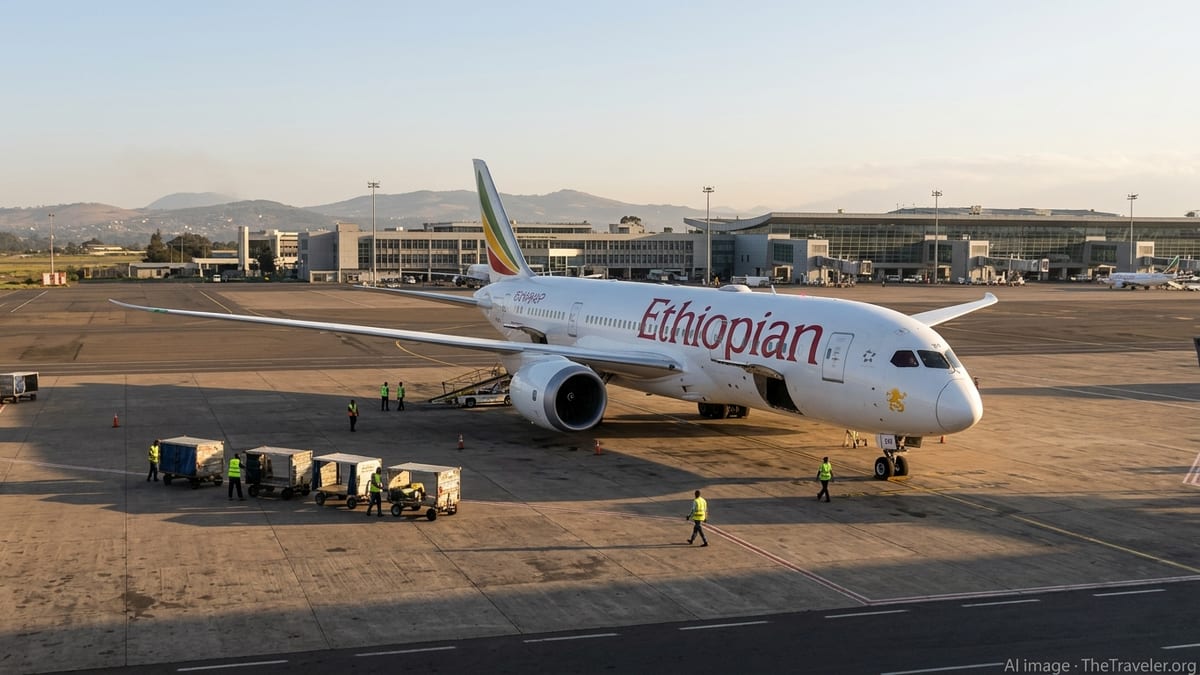
Route Resumption Reconnects Two Strategic Hubs
Publicly available information from the airline’s route updates indicates that Ethiopian Airlines will resume service on the Addis Ababa to Atlanta route from late May 2026, following a temporary suspension that begins in early February. The return of the service reestablishes a direct link, via a technical stop in Europe, between Addis Ababa Bole International Airport and Hartsfield–Jackson Atlanta International Airport, a pairing that has proven strategically important for trade, corporate travel and the African diaspora.
The Atlanta route originally launched in May 2023 as part of the carrier’s broader push to expand in North America. The service gave Ethiopian Airlines a presence at one of the most connected airports in the United States, offering onward access across the Southeast and beyond. Industry coverage shows that, after adjustments to frequency and aircraft type in 2024 and 2025, the airline opted for a short-term pause in early 2026 before announcing plans to bring the route back into its network.
Schedules published by specialist aviation outlets describe the route as operating several times per week, with westbound sectors routed through Rome Fiumicino due to performance considerations at Addis Ababa’s high-altitude hub. Even with the intermediate stop, the service is marketed as a single Ethiopian Airlines itinerary, positioning it as a competitive option against connecting itineraries via European and Middle Eastern hubs.
The restored connection is expected to reinforce Addis Ababa’s role as a transfer point between Africa and North America. For travelers in both directions, the presence of a branded, through-ticketed service to Atlanta reduces reliance on third-country hubs and underscores the airline’s ambition to maintain a diversified US footprint.
Business Travel, Trade and Investment Opportunities
The Addis Ababa–Atlanta link is positioned as a business-friendly route, serving corporate travelers moving between Africa’s fast-growing economies and the southeastern United States. Atlanta is home to major multinational headquarters across sectors such as logistics, aviation, technology and consumer goods, while Addis Ababa is a focal point for regional organizations, infrastructure projects and multinational operations in East Africa.
Analysts note that the connection supports trade corridors spanning manufacturing, agribusiness, pharmaceuticals and services. The combination of a large African hub and a high-frequency domestic network in the United States allows companies to move personnel more efficiently between secondary cities and key African markets, with a single connection in either Addis Ababa or Atlanta.
Reports on airline capacity trends highlight that African carriers, including Ethiopian Airlines, have been steadily rebuilding and in some cases expanding long-haul operations. The decision to bring back Atlanta aligns with that broader pattern, suggesting the airline expects renewed or growing demand from corporate contracts, interline partnerships and conference travel once the route reenters service.
Airport and tourism authorities have long emphasized the economic importance of long-haul links, citing benefits ranging from visitor spending to cargo flows. While detailed traffic forecasts have not been released, published commentary around the route resumption points to expectations that the Addis Ababa–Atlanta corridor will again contribute to business travel volumes and support future trade missions and industry events between the two regions.
Leisure Travel and Diaspora Connectivity
Beyond corporate demand, the route plays a notable role for leisure travelers and members of the African diaspora in the southeastern United States. Atlanta functions as a gateway for travelers from neighboring states such as Alabama, the Carolinas and Tennessee, many of whom rely on Hartsfield–Jackson for international connections. With the Ethiopian Airlines service returning, passengers gain a one-ticket option into a wide African network via Addis Ababa.
Travel industry analysis has highlighted a growing appetite for multi-country African itineraries, combining destinations such as Kenya, Tanzania, South Africa and Ethiopia. Ethiopian Airlines markets Addis Ababa as a convenient transfer point to these destinations, and the restoration of Atlanta service expands choices for US-based travelers planning safaris, cultural tours or visits to historical and religious sites.
For Ethiopian and broader East African communities living in and around Atlanta, the resumed connection offers a more direct pathway home, even with the short technical stop included. Observers note that diaspora travel is often resilient, driven by family visits, cultural events and remittances. A branded route operated by the national carrier can be a significant draw for these passengers, particularly when aligned with competitive fares and coordinated schedules for onward flights within Ethiopia.
Travel advisors report that stopover and extended-connection programs in Addis Ababa have become an additional selling point for the airline’s long-haul services. As the Atlanta flights return, travelers may again be encouraged to break their journey in Ethiopia’s capital, combining a visit to Addis Ababa’s museums, markets and emerging culinary scene with longer trips elsewhere on the continent.
Schedule, Aircraft and Onboard Experience
According to recent schedule filings summarized by aviation data providers, Ethiopian Airlines has alternated between different widebody types on the Addis Ababa–Atlanta route, including Boeing 787 Dreamliners and Boeing 777-200LR aircraft, depending on season and demand. The resumed service in 2026 is expected to follow a similar pattern, offering a mix of business and economy cabins configured for long-haul travel.
The airline’s long-haul product typically includes lie-flat or angle-flat seats in the premium cabin, personal entertainment screens throughout the aircraft and regionally influenced catering. While specific details for the 2026 season have not been fully outlined, the service is anticipated to remain consistent with the carrier’s standard intercontinental offering, which is designed to appeal to both corporate travelers and long-haul tourists.
Publicly available information on prior operations indicates that flight timings have been structured to connect efficiently with morning and late-evening banks at the Addis Ababa hub. This approach enables passengers from across East, West and Southern Africa to feed into the Atlanta flights and makes it easier for US-based travelers to reach secondary African destinations with minimal layover times.
Industry observers suggest that adjustments to frequency and aircraft type will likely continue as the route matures. Monitoring of booking data and seasonal peaks, including summer holidays and major conference periods, is expected to guide Ethiopian Airlines as it fine-tunes capacity between Addis Ababa and Atlanta.
Implications for Ethiopian Airlines’ US Network
The resumption of Atlanta service comes at a time when Ethiopian Airlines is recalibrating its North American strategy. Published factsheets and network overviews show that the carrier continues to maintain strong operations to Washington Dulles and other US gateways, while also exploring new opportunities in Asia and Europe. Bringing Atlanta back into the schedule restores a presence in the southeastern United States and diversifies its US entry points.
Aviation analysts point out that competition on Africa–US routes remains intense, with European and Middle Eastern carriers offering multiple one-stop options between major cities. By operating its own branded service to Atlanta, Ethiopian Airlines strengthens its position as a connector between Africa and North America, especially for travelers who value staying on a single airline across the entire journey.
The decision also reflects broader growth plans tied to Ethiopia’s long-term aviation infrastructure projects. Public reporting on the planned Bishoftu mega-hub near Addis Ababa notes that, once completed, the new airport is expected to support more long-haul routes and greater payloads to distant destinations such as North America. Maintaining and rebuilding demand on city pairs like Addis Ababa–Atlanta could help position the airline to take advantage of that expanded capacity in the next decade.
For now, the return of the Addis Ababa–Atlanta route in 2026 signals renewed confidence in transatlantic demand linking East Africa and the southeastern United States. As schedules open for sale and travelers plan future trips, the route is poised to again serve a mix of business, leisure and diaspora passengers connecting through one of Africa’s most prominent hubs.