

More news on this day
Ethiopian Airlines is poised to link its fast-growing African network to John F. Kennedy International Airport’s New Terminal One, a move that is expected to reshape how passengers travel between the United States and the African continent as the massive new facility begins opening in phases from 2026.
Get the latest news straight to your inbox!
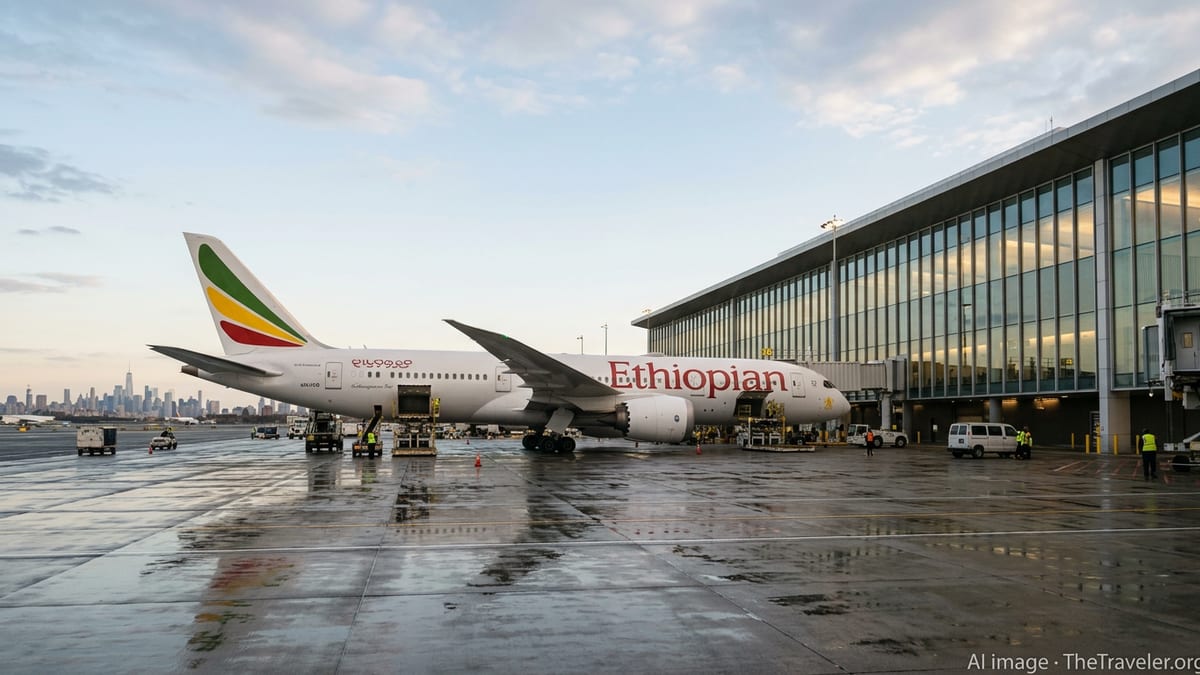
Africa’s Largest Carrier Aligns With JFK’s Next-Generation Hub
Ethiopian Airlines is widely described in industry coverage as Africa’s largest network carrier, connecting more than 60 African cities to its Addis Ababa hub and onward to global destinations. Publicly available schedules show the airline already serving New York with flights operating via African and European gateways, positioning it as a key player in transatlantic links to the continent.
The New Terminal One at JFK is being developed as a 2.6‑million‑square‑foot international hub with 23 gates and capacity for up to 20 million passengers a year, according to project documents and airport planning materials. The complex is replacing the existing Terminal 1 and the former Terminals 2 and 3, anchoring the airport’s south side as part of a multibillion‑dollar redevelopment program.
Reports on the project describe a facility designed around long‑haul international carriers, with large aircraft stands, upgraded security and automated check‑in, as well as expanded space for concessions and airline lounges. Ethiopian’s integration into this environment would place its U.S.–Africa services alongside a growing roster of global airlines that are committing to the terminal as their future New York base.
Industry analyses of U.S.–Africa connectivity suggest that consolidating long‑haul operators into a single, purpose‑built complex can shorten minimum connection times, simplify transfers and improve baggage reliability. Ethiopian’s move to New Terminal One is expected to plug its extensive African network more directly into New York’s international and domestic flows.
Rewiring the U.S.–Africa Travel Corridor Through New York
In recent years, travel between the United States and Africa has shifted from a patchwork of indirect routes to a more structured web of nonstop and one‑stop options via key hubs. Ethiopian Airlines has been central to that change, marketing Addis Ababa as a transfer point linking North America with West, East and Southern Africa on a single ticket.
By relocating to New Terminal One, Ethiopian is expected to gain access to newer gate areas, shared baggage systems and streamlined security and immigration facilities that are being designed to handle heavy long‑haul traffic. That could reduce friction for travelers who currently navigate multiple terminals at JFK when connecting between African flights and other international or domestic services.
From a network perspective, New York remains one of the most important U.S. gateways for African tourism, business travel and diaspora visits. Airline and airport planning reports indicate that improvements at JFK, combined with African carriers’ fleet expansions, are likely to support additional frequencies and new city pairs over the next decade.
Travel data analysts note that U.S.–Africa capacity has grown steadily, but passenger experience has not always kept pace, particularly at older terminals with constrained space. Ethiopian’s planned presence in a modernized New Terminal One is seen as a step toward aligning passenger comfort and reliability with the scale of demand on the corridor.
Inside New Terminal One’s Passenger Experience Upgrades
Architectural and project briefings describe New Terminal One as emphasizing light‑filled halls, higher ceilings and large glass façades, with check‑in areas designed to ease crowding at peak departure banks. Self‑service kiosks, biometric boarding options and upgraded security lines are planned to reduce queues for departing passengers.
The terminal layout is being configured to support widebody aircraft with generous gate spacing, dual boarding bridges where appropriate and larger hold rooms. For long‑haul operators such as Ethiopian, this is expected to translate into faster boarding and deplaning, as well as more predictable on‑time performance during busy evening and overnight departure waves.
Design documents and public presentations highlight an expanded retail and dining program that targets a mix of global brands and local New York concepts, along with wellness features such as quiet zones and enhanced natural light. For passengers on extended journeys between the United States and Africa, the ability to rest, dine and work comfortably between flights is increasingly viewed as a competitive factor.
Many of New Terminal One’s partner airlines are also planning larger lounges with showers, workspaces and upgraded food and beverage options. While individual lounge plans vary by carrier, the clustering of premium facilities in one complex is expected to raise the bar for connecting passengers who may spend several hours in transit at JFK.
Competitive Pressures and Strategic Positioning in New York
The decision by multiple long‑haul carriers to commit to New Terminal One has intensified competitive dynamics at JFK. Airlines such as Turkish Airlines, Royal Air Maroc, Egyptair, Air China and others have already been publicly linked to the project, underlining its role as a focal point for transatlantic, transpacific and South Atlantic traffic.
For Ethiopian Airlines, aligning with this group strengthens its position against both African competitors and European and Middle Eastern carriers that market one‑stop connections between U.S. cities and African destinations. Travel industry commentary notes that passengers often weigh total journey time, terminal experience and ease of transfer alongside ticket price when choosing a route.
JFK’s broader redevelopment, including new or upgraded facilities at Terminals 4, 6 and 8, is expected to reshape how alliance networks are organized in New York. Ethiopian’s eventual move from its current base toward New Terminal One would give the Star Alliance member a modern platform similar in ambition to new terminals seen in other major global hubs.
Analysts point out that as airlines converge in the new complex, opportunities for interline partnerships, coordinated schedules and shared ground services are likely to expand. That environment could make it easier for Ethiopian to deepen cooperation with existing partners and explore new commercial relationships that improve connectivity beyond New York.
What U.S.–Africa Travelers Can Expect When Flights Shift
While exact timelines and operational details will be confirmed closer to opening, publicly available information about New Terminal One and Ethiopian’s existing New York services provides early indications of what passengers might experience once flights are relocated.
Travelers can expect arrivals and departures to take place in a single, purpose‑built international facility, reducing the need to transfer between non‑connected terminals at JFK. Modernized customs and immigration areas, connected directly to new baggage halls, are designed to speed up the arrivals process, which has been a longstanding pain point for some long‑haul passengers.
On departure, the combination of more spacious check‑in zones, additional security lanes and larger gate areas is expected to lower congestion during peak evening and overnight departures to Africa and other international destinations. For connecting passengers, clearer wayfinding and centralized security checks should simplify movement between flights.
For Ethiopian Airlines, the move positions its U.S.–Africa services at the center of a high‑profile international gateway, aligning with the carrier’s long‑term strategy to grow as a global aviation group. For travelers, it signals a coming shift toward a more streamlined, connected and comfortable journey between New York and an expanding map of African cities.