

More news on this day
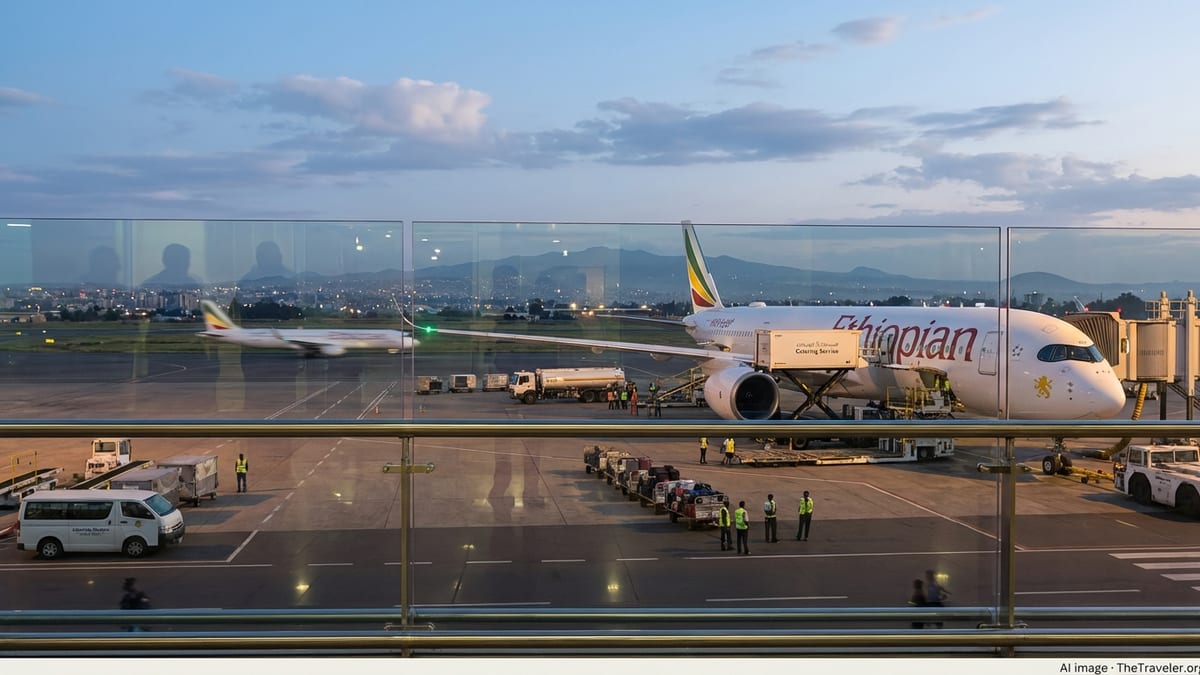
Ethiopian Airlines is preparing to enter the Australian market with planned flights from Addis Ababa from 2028, a strategic expansion that would give Africa’s largest carrier a presence on every inhabited continent and significantly deepen travel and tourism flows between Africa and Australia.
A Strategic Move Toward a Truly Global Network
Ethiopian Airlines has confirmed that it is working toward launching flights to Australia around 2028, a milestone that would extend the carrier’s network to all six inhabited continents. Group chief executive Mesfin Tasew has said the timeline depends on the delivery of new long-haul aircraft capable of operating ultra-long sectors from the airline’s Addis Ababa hub. His comments followed a series of network and fleet announcements in early 2026 that underline the airline’s ambitions to consolidate its status as Africa’s leading intercontinental carrier.
The Australia project has been under evaluation for years, but the latest signals from corporate leadership suggest it has moved from long-term aspiration to concrete planning. Executives see the route as a logical next step after rapid expansion into Europe, Asia and the Middle East, and as a way to diversify long-haul traffic flows that currently concentrate on Europe and North America. By 2028, Ethiopian expects to have additional Airbus A350 and Boeing 787 aircraft in service, providing the range and efficiency required for non-stop or one-stop services to Australia.
Industry data providers report that Ethiopian has already shortlisted potential Australian gateway cities, although the airline has not publicly named them. Aviation analysts expect a combination of business demand, airport incentives, and onward connectivity within Australia to shape the final choice. Whatever city or mix of cities is selected, the new flights are expected to tap into both corporate and visiting-friends-and-relatives traffic, as well as a growing leisure segment curious about African destinations.
From Addis Ababa to Australia: What the Planned Routes Could Look Like
While Ethiopian has not yet published schedules or confirmed aircraft types for an Australia launch, recent remarks from management and fleet plans provide a strong indication of how the route could be structured. The airline is focused on deploying new-generation long-haul jets with improved fuel burn and extended range, positioning the Airbus A350-900 and Boeing 787-9 as prime candidates for the mission. Both types already operate some of the carrier’s longest sectors and are central to its long-haul growth strategy through the latter half of the decade.
Travel and aviation specialists following the project say a non-stop Addis Ababa to Western Australia would likely be among the first services, with Perth often cited within the industry as a strong contender because of its geographical position and sizable African diaspora. Depending on aircraft performance and final regulatory approvals, Ethiopian could look at additional services to eastern gateways such as Sydney or Melbourne, potentially using a mix of non-stop and one-stop patterns to balance aircraft utilization and demand.
Current journeys between mainland Africa and Australia typically require at least one, and often two, stops via Gulf hubs or Asian gateways, adding hours to total travel time. Direct or more streamlined services via Addis Ababa would substantially shorten the journey for many passengers, especially those traveling to or from East, Central and Southern Africa. The airline is also exploring how prospective Australian flights would integrate with its partnerships and codeshares, leveraging allies in both Africa and the Middle East to feed traffic into the new routes.
Bridging Two Under-Served Hemispheres
The Africa–Australia corridor is relatively under-served compared with transatlantic or transpacific markets, despite deepening economic, educational and people-to-people ties. Mining investment, development cooperation, academic exchanges and a growing African diaspora in cities such as Perth and Melbourne have all contributed to rising demand, but passengers have long relied on circuitous routings via Doha, Dubai, Abu Dhabi, Singapore or other Asian hubs. Ethiopian’s planned services promise a new, African-centric bridge between the two regions.
By channeling traffic through Addis Ababa, Ethiopian aims to position itself as the primary connector between Australia and dozens of African destinations that currently lack efficient single-carrier options. The group already serves more than 170 destinations worldwide, with an especially dense network across East, West and Southern Africa. An Australian link would allow a traveler from Perth or Sydney to connect to cities such as Nairobi, Dar es Salaam, Lusaka or Harare on a single airline, using tight connections at the Ethiopian hub.
For Australia, the arrival of a major African carrier would complement existing connectivity provided largely by Gulf and Asian airlines. Aviation strategists note that this diversification is increasingly important for route resilience and competition. More direct access to Africa is particularly significant for secondary Australian markets seeking to attract visitors and investment from the continent, and for government agencies that have stepped up engagement with African states in recent years.
Tourism and Trade Opportunities on Both Sides
Tourism boards and travel operators in both regions are already eyeing the potential of a 2028 launch to reshape itineraries. For African travelers, Australia’s appeal spans city breaks, coastal escapes and educational opportunities, while Australians are showing growing interest in African safaris, cultural tourism, and adventure travel. Direct services via Addis Ababa would make it easier to package multi-country African trips, combining Ethiopia with popular destinations in Kenya, Tanzania, Rwanda, South Africa, Botswana and beyond.
Tourism officials expect that more convenient air links will translate into longer stays and higher spending, particularly among long-haul travelers who typically invest more per trip. African tourism ministries have been working to diversify source markets beyond Europe and North America, and Australia is increasingly seen as a high-potential market that can help balance seasonal peaks. At the same time, Tourism Australia and state-level agencies have been stepping up marketing in key African cities, highlighting Australia’s beaches, food and wine, and educational institutions.
Trade and investment flows are also set to benefit. Australian mining and engineering firms have substantial operations in Ethiopia, Kenya, Tanzania and other parts of East and Southern Africa, often requiring frequent travel for executives, technical staff and contractors. Direct or one-stop services on an African carrier would reduce travel time and simplify logistics for these companies. Business councils focused on Africa–Australia relations note that better air connectivity typically precedes surges in bilateral trade, as travel barriers for investors, buyers and sellers begin to fall.
Africa’s Super-Connector Strengthens Its Hub Strategy
The plan to serve Australia fits squarely within Ethiopian Airlines’ broader hub-and-spoke model centered on Addis Ababa. Over the past decade, the carrier has invested heavily in building its home base into one of Africa’s premier transfer points, with expanded terminals, modern lounges and a growing cargo village. The airline has consistently added new destinations in Europe, Asia, the Americas and within Africa, using carefully timed banks of arrivals and departures to maximize connections.
Recent years have seen the launch of routes to cities such as Warsaw, Porto and Hanoi, alongside strengthened services to Gulf and Asian hubs. Strategic joint ventures and codeshare agreements, including with carriers in the Middle East, have widened the reach of Ethiopian’s network beyond points it serves directly. By 2028, the airline expects its new multi-billion-dollar airport project at Bishoftu, south of Addis Ababa, to be well under way, eventually providing capacity for tens of millions of additional passengers each year and further enhancing the hub’s ability to support long-haul expansion.
An Australian link would be both symbolic and practical in this context. Symbolically, it would confirm the airline’s evolution into a truly global player, on par with major Middle Eastern and European network carriers that already span all inhabited continents. Practically, it would deepen the connectivity portfolio of the Addis Ababa hub, offering a new directional flow of traffic that balances north–south and east–west movements. This in turn could support higher aircraft utilization and more resilient route economics across the network.
Fleet Growth, Aircraft Deliveries and Operational Challenges
Turning the 2028 target into operational reality hinges on fleet availability and technical performance. Ethiopian has multiple orders and lease agreements in place for new-generation jets, including Boeing 737 MAX aircraft for regional and medium-haul operations and additional widebodies for long-haul services. Management has acknowledged that widebody deliveries coming toward the end of the decade are critical to opening ultra-long-haul sectors such as Australia, given the distance involved and the need for fuel-efficient operations.
Africa–Australia flights from Addis Ababa would rank among the longest in the airline’s network, testing everything from crew scheduling and maintenance planning to cabin product consistency. Route planners must also account for headwinds and seasonal variations, which can affect payload and range. Depending on the final aircraft mix and configuration, Ethiopian may employ a combination of non-stop and technical-stop services, or vary routings seasonally to optimize performance and demand.
Regulatory and infrastructure considerations add another layer of complexity. Any new route to Australia will require approval from the Australian Civil Aviation Safety Authority and coordination with airport operators over slots, terminal facilities and security screening. Bilateral air services agreements define how many flights and which cities can be served, and these may need adjustment as plans progress. Ethiopian is expected to work closely with both Ethiopian and Australian authorities in the lead-up to 2028 to ensure compliance with safety, biosecurity and border control requirements.
Competitive Landscape and Partnership Dynamics
When Ethiopian does commence services to Australia, it will enter a competitive environment dominated by Gulf and Asian carriers, as well as Australia’s own long-haul operators. Airlines based in Doha, Dubai and Abu Dhabi currently carry a significant share of Africa–Australia traffic via their hubs, while carriers in Singapore and Southeast Asia also play a major role. Ethiopian’s differentiator will be its deep African network and ability to offer end-to-end travel under a single brand for passengers whose origin or destination is on the African continent.
Partnerships are likely to be central to the route’s success. Ethiopian is a member of Star Alliance and already cooperates with a range of international airlines; securing or enhancing interline and codeshare agreements with Australian or regional carriers would help feed domestic traffic into its flights. Travel industry observers are watching closely to see whether additional joint ventures or lounge access agreements will be announced as the launch window approaches, especially in key Australian gateways.
Price and schedule competitiveness will also matter. To win market share from entrenched Gulf and Asian rivals, Ethiopian will need to offer timings that appeal to both business and leisure travelers, as well as fares that reflect the convenience of more direct routings. The airline’s recent investments in upgraded cabins, including lie-flat business class seats and improved in-flight entertainment, are aimed at attracting premium passengers who have grown accustomed to high service standards on long-haul journeys.
What Travelers and the Industry Should Watch Next
Although 2028 is still several years away, signals from Ethiopian Airlines suggest that planning for Australia is firmly under way behind the scenes. Travel agents, corporate travel managers and tourism operators are being advised to factor a potential Addis Ababa gateway into their medium-term strategies. As aircraft delivery schedules firm up and regulatory milestones are passed, the airline is expected to provide more detailed information on tentative launch dates, city choices and product offerings.
For travelers, one of the earliest indicators will be the appearance of provisional schedules in global distribution systems and on the airline’s own sales channels. These typically emerge many months before first flights, giving both leisure and business customers time to build the new option into their plans. Aviation regulators and airport authorities in Australia will also begin consultation processes on infrastructure, security and border arrangements once formal applications are lodged.
Between now and 2028, Ethiopian Airlines is likely to continue strengthening its African, Middle Eastern and Asian networks, ensuring that by the time Australia joins the map, a dense web of feeder routes is in place to support the new long-haul services. If the project proceeds on the current timetable, the first flights at the end of the decade will mark not only a significant milestone for the airline, but also a transformative moment for how passengers and businesses move between Africa and Australia.