

More news on this day
Ethiopian Airlines is preparing a significant expansion of its domestic network, confirming plans to inaugurate three new airports and launch regular passenger services to Negele Borena, Gore Metu and Debre Markos by mid-April 2026, a move set to deepen connectivity across Ethiopia’s fast-growing regions.
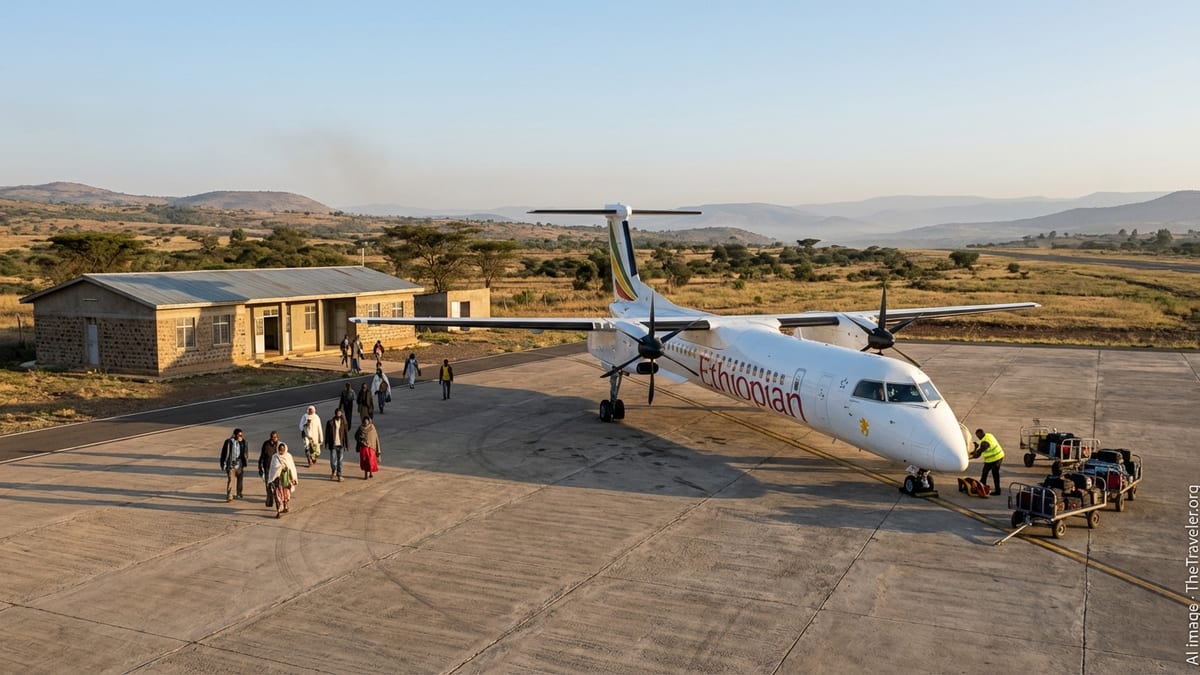
New Domestic Gateways in Negele Borena, Gore Metu and Debre Markos
The national carrier announced that construction and certification works are in their final phase at airports in Negele Borena in southern Ethiopia, Gore Metu in the west and Debre Markos in the Amhara region. Ethiopian Airlines has outlined mid-April 2026 as the target window to open the facilities for scheduled passenger traffic, with inaugural flights expected to take place within days of the official commissioning.
Each of the three new airports will initially be served by three weekly flights, operated by Ethiopian’s domestic fleet of turboprop aircraft tailored for short runways and regional sectors. The airline says the new links are designed to connect these historically underserved areas directly to Addis Ababa, cutting long road journeys to a matter of hours and giving residents quicker access to health care, education and government services in the capital.
Once operational, Negele Borena, Gore Metu and Debre Markos will lift Ethiopian Airlines’ domestic network to 26 destinations, consolidating its position as the largest domestic operator in Africa. The new openings follow the inauguration of Yabello airport in 2025, signaling a rapid buildout of secondary and tertiary airports across the country.
Strategic Fit with Ethiopian’s Vision 2035 Growth Plan
The domestic expansion is closely tied to Ethiopian Airlines’ Vision 2035 roadmap, which aims to nearly double the carrier’s fleet and sharply increase annual passenger numbers over the next decade. Executives have repeatedly stressed that long-term growth depends not only on intercontinental routes but also on a dense internal network that can funnel travelers from provincial towns into the Addis Ababa hub.
By opening three additional domestic airports in quick succession, Ethiopian is laying the groundwork for deeper market penetration inside the country, where rising incomes, urbanization and road congestion are driving demand for faster travel. The new routes will channel both point-to-point domestic passengers and those connecting onward to regional and long-haul services, reinforcing Addis Ababa’s status as a transfer hub for Africa and beyond.
Vision 2035 also emphasizes diversification into airport management, hospitality and maintenance services. Bringing new airports into the network creates additional opportunities to deploy these capabilities, from ground handling and catering contracts to potential hotel developments near key regional gateways. The Negele Borena, Gore Metu and Debre Markos projects are therefore seen internally as part of a broader aviation ecosystem rather than stand-alone infrastructure investments.
Boost for Regional Economies and Tourism Corridors
Officials in the regions hosting the new airports are positioning the projects as catalysts for local development. In Negele Borena and the wider Borena Zone, improved air access is expected to support livestock exports, cross-border trade with Kenya and emerging community tourism initiatives built around rift-valley landscapes and pastoral culture. Faster connections to Addis Ababa are also likely to attract new investment in logistics and agribusiness.
Gore Metu, situated in a fertile area of western Ethiopia, stands to benefit from better links for coffee, tea and horticultural producers seeking to move high-value, time-sensitive cargo. While the new airports are primarily designed for passenger traffic, they will also be able to accommodate limited belly cargo, giving exporters more reliable options during periods when road transport is disrupted by heavy rains or security concerns.
In Debre Markos, a university town and administrative center in the Amhara region, the airport is expected to underpin growth in education, conference tourism and services. The city sits along a corridor linking the Blue Nile gorge to Lake Tana and the historic route of northern Ethiopia, and tourism operators are already studying how direct flights could be integrated into multi-stop itineraries for domestic and international visitors.
Building on the Momentum of Yabello’s Opening
The push toward three new airports follows Ethiopian Airlines’ inauguration of Yabello airport in southern Oromia in 2025, which entered the network with three weekly flights and a newly built runway, access roads and a temporary terminal. That project was widely seen within the industry as a test case for the airline’s refreshed domestic strategy, combining modest infrastructure costs with measurable social and economic dividends.
Yabello’s experience has provided useful lessons for the next wave of openings. Passenger demand ramped up gradually as awareness grew among local communities and as tour operators and businesses adjusted their logistics to take advantage of the flights. Ethiopian has indicated that a similar phased approach will be used at Negele Borena, Gore Metu and Debre Markos, with the potential to increase frequencies in line with demand.
The successful delivery of Yabello also demonstrated what can be achieved when the airline, regional authorities and the federal government coordinate closely on land access, utilities and regulatory approvals. That same tripartite model is being replicated at the three upcoming airports, with local administrations responsible for roads and basic services while Ethiopian leads on aviation standards, ground operations and marketing.
Strengthening Connectivity in a Landlocked Country
For Ethiopia, which is landlocked and reliant on neighbors for seaport access, air transport plays a critical role in maintaining economic resilience and international linkages. Ethiopian Airlines’ domestic network functions as the backbone of this system, connecting provincial cities and remote communities into a unified national market and onward to global destinations through Addis Ababa.
The addition of Negele Borena, Gore Metu and Debre Markos will bring air travel within easier reach of hundreds of thousands more people, many of whom currently rely on roads that can be slow, crowded or seasonally impassable. Travel agents in Addis Ababa say they expect to see a rise in domestic leisure trips as flying becomes a viable alternative for families and small-business owners who previously traveled by bus.
Improved internal connectivity is also a strategic asset in times of crisis, allowing authorities and humanitarian organizations to move medical supplies, relief goods and personnel quickly into affected areas. While Ethiopian Airlines is a commercial operator, its growing domestic footprint offers the government greater logistical flexibility during emergencies, from drought response to public health campaigns.
Operational Plans and Passenger Experience
According to the airline’s latest communications, the new airports will be integrated into Ethiopian’s existing domestic schedule structure, which clusters departures from Addis Ababa to maximize same-day connections. The three weekly rotations to each destination are expected to operate on fixed weekdays, giving passengers and businesses predictable options for planning trips, onward travel and cargo movements.
Fleet deployment is likely to focus on De Havilland Dash 8-400 aircraft, which have already proven effective on Ethiopian’s short-haul domestic routes thanks to their ability to operate on relatively short runways while offering comfortable cabins for travelers. The airline has been refurbishing domestic terminals and upgrading check-in and security processes to reduce congestion and align the experience more closely with its international standards.
At Negele Borena, Gore Metu and Debre Markos, early terminal facilities will be functional rather than grand, with room to scale as traffic grows. Ethiopian has indicated that customer-facing improvements such as digital check-in options, integrated baggage handling and coordinated ground transport services are central to its long-term domestic vision, even where initial infrastructure is intentionally modest.
Domestic Expansion in the Context of Mega-Airport Ambitions
The domestic airport openings are unfolding against the backdrop of Ethiopia’s plans for a new mega-hub at Bishoftu, where construction has begun on a large international airport designed to become one of Africa’s most important aviation centers. While Bishoftu will primarily serve long-haul and regional traffic, airline executives have argued that its success will depend heavily on a robust pipeline of domestic passengers feeding into the hub.
By broadening its reach into towns such as Negele Borena, Gore Metu and Debre Markos, Ethiopian Airlines is effectively pre-positioning for a future in which domestic feed will help fill larger widebody aircraft and support higher frequencies to global markets. Analysts note that this dual-track approach, combining flagship infrastructure projects with more targeted local investments, is increasingly common among fast-growing carriers in emerging markets.
The timing is also notable. As regional competitors invest in their own hubs and fleets, Ethiopian is seeking to protect and extend its first-mover advantage by tightening its grip on the home market. A denser domestic network makes it harder for rivals to capture Ethiopian passengers at foreign hubs, since more journeys will start and finish within a single integrated system anchored by the national carrier.
What Travelers and the Tourism Industry Should Watch Next
With less than two months before the scheduled mid-April 2026 opening window, attention is turning to route announcements, timetables and fare levels. Travel agencies, tour operators and corporate travel managers are awaiting confirmation of exact operating days and connection banks in Addis Ababa in order to rework itineraries and negotiate block-space agreements on the new services.
Tourism stakeholders see particular potential in packaging the new destinations with existing highlights such as the Rift Valley lakes, coffee-growing regions and historic sites in northern Ethiopia. The presence of scheduled air links often encourages private investment in lodges, guesthouses and tour logistics; local authorities in Negele Borena, Gore Metu and Debre Markos have already begun marketing campaigns to position their regions as emerging stops on the country’s tourism map.
For passengers, the most immediate impact will be shorter travel times and more predictable journeys. If demand tracks the airline’s projections, the initial three weekly flights could eventually rise, bringing daily or near-daily frequencies to some of the new airports. Ethiopian Airlines has framed the 2026 additions as another step in a long-term effort to make air travel within Ethiopia more accessible and routine, as integral to daily life as intercity buses are today.