

More news on this day
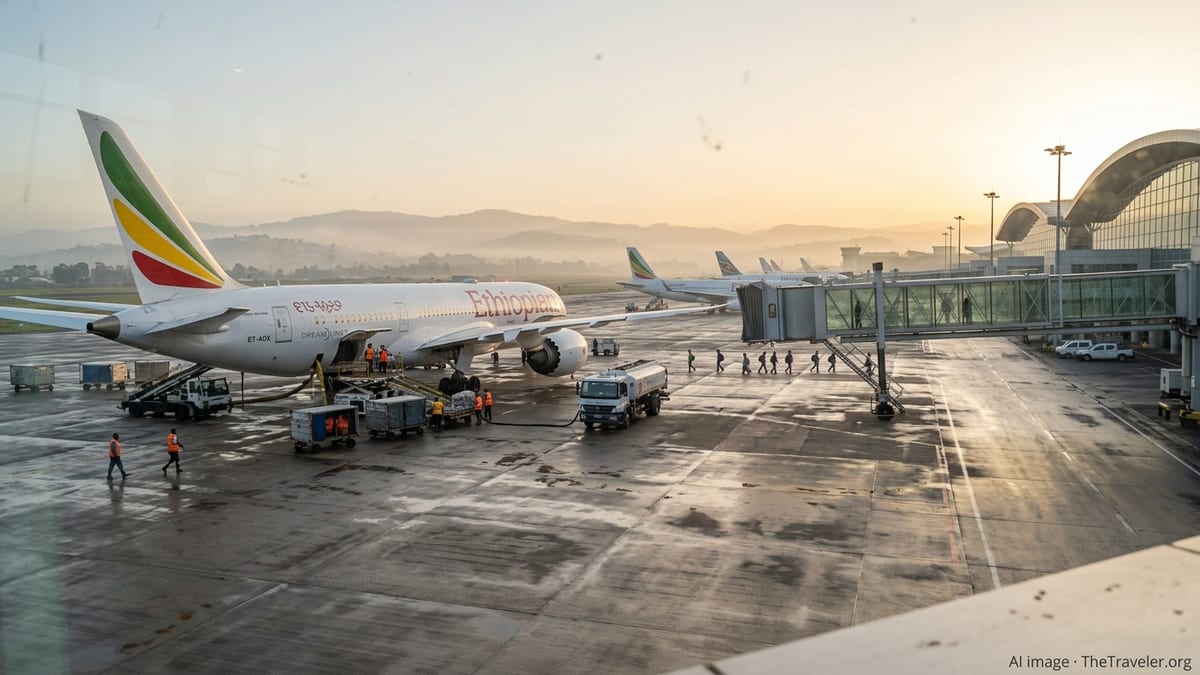
Ethiopian Airlines plans to resume direct passenger flights between Addis Ababa and Atlanta in May 2026, restoring a key air link between Ethiopia and the southeastern United States after a planned six-month suspension of the route earlier in the year.
Get the latest news straight to your inbox!
Route Resumption Marks Renewed Phase in Bilateral Connectivity
Publicly available schedule information indicates that Ethiopian Airlines intends to bring back its Addis Ababa to Atlanta service from May 21, 2026, offering a direct connection between the Ethiopian capital’s Bole International Airport and Hartsfield–Jackson Atlanta International Airport. The move follows a temporary suspension of the route starting in early February 2026, which industry reports have described as a response to a reassessment of demand on transatlantic sectors.
The carrier has previously operated the Addis Ababa–Atlanta route with three to four weekly frequencies, typically using Boeing 787 Dreamliner aircraft and routing westbound services via Rome due to performance considerations at Addis Ababa’s high-altitude hub. Updated network information from the airline shows Atlanta included among the destinations slated to see resumed or enhanced service in the northern summer 2026 season, suggesting that the pause is being treated as a strategic adjustment rather than a withdrawal from the U.S. Southeast.
For Atlanta, the return of Ethiopian Airlines restores a nonstop African flag carrier presence and reconnects the city to one of the continent’s most extensive hub networks. For Ethiopian aviation authorities and the airline’s management, the decision signals confidence in the long-term potential of the U.S.–East Africa market, even after a period of recalibration.
Travel trade analyses note that the Atlanta route has served not only point-to-point traffic between Georgia and Ethiopia, but also onward connections to Central, East, and Southern Africa via Addis Ababa. The planned May 2026 restart is therefore being viewed in the industry as an important piece in the broader puzzle of Africa–U.S. connectivity.
Implications for U.S.–Ethiopia Economic and People-to-People Ties
The restoration of direct air service between Addis Ababa and Atlanta carries significance that extends beyond aviation scheduling. Atlanta is a major U.S. business and logistics center, and Ethiopian Airlines functions as Ethiopia’s primary global connector, so a nonstop link between the two has been interpreted by analysts as a facilitator of trade, investment, and tourism flows between the countries.
Ethiopia has been positioning itself as a regional hub for manufacturing, services, and logistics, while the United States remains one of its larger trade and development partners. Direct long-haul flights can lower travel times for business delegations, diaspora communities, academic exchanges, and development organizations moving between U.S. cities and Ethiopia via Atlanta. Publicly available commentary from travel and business media highlights the route’s role in enabling one-stop itineraries from numerous U.S. destinations into Africa using interline and alliance partnerships.
The route also intersects with growing interest in U.S.–Africa commercial ties. Atlanta is home to a concentration of corporate headquarters, logistics operations, and technology firms seeking access to African markets. Addis Ababa, meanwhile, hosts regional offices for international organizations and non-governmental entities. In this context, the planned resumption of flights in May 2026 is being framed as a practical enabler of face-to-face engagement, which has historically been important for cross-border projects and agreements.
Beyond commerce, the connection supports communities with family, cultural, and educational links spanning Ethiopia and the United States. Travel observers note that such routes often become vital for diaspora mobility, making it easier to visit relatives, attend cultural events, and maintain personal ties that underpin broader bilateral relationships.
Strategic Role of Addis Ababa and Atlanta as Global Hubs
Addis Ababa Bole International Airport has emerged over the past decade as one of Africa’s busiest transfer hubs, with Ethiopian Airlines using its network to connect cities across the continent with destinations in Europe, the Middle East, Asia, and the Americas. Atlanta, for its part, has consistently ranked among the world’s busiest airports by passenger volume and is a key domestic and international gateway in the United States.
A nonstop or single-stop connection between these two hubs allows passengers from secondary cities in both regions to travel with just one connection. Industry route maps and scheduling data show that travelers originating in places such as Nairobi, Kigali, or Lusaka can reach Atlanta via Addis Ababa, while passengers from numerous U.S. cities can travel via Atlanta onward to Ethiopia and beyond. This hub-to-hub structure has been central to Ethiopian Airlines’ international strategy.
The route sits within a wider expansion and modernization drive surrounding Ethiopia’s aviation infrastructure. In parallel with network adjustments, Ethiopia has advanced plans for a new large-scale airport project near Bishoftu intended to complement or eventually relieve capacity pressures at Bole. Analysts point out that sustained long-haul links such as Addis Ababa–Atlanta help justify investments in larger hub facilities by demonstrating continued demand for intercontinental connectivity.
For Atlanta, Ethiopian’s presence adds another intercontinental option on top of existing services to Europe, Latin America, and Asia. Aviation analysts note that such diversity of carriers and destinations can enhance an airport’s attractiveness for both leisure and corporate travelers, supporting the wider regional economy.
What the Restart Means for Travelers and the Wider Region
For passengers, the planned return of Ethiopian Airlines flights between Addis Ababa and Atlanta in May 2026 is expected to simplify itineraries that might otherwise require multiple connections across different carriers. Public booking and route information suggests that the Addis Ababa–Atlanta service will again feed into Ethiopian’s extensive African network, offering relatively short transfer times for travelers heading to destinations in East, West, and Southern Africa.
Travel-industry coverage indicates that, prior to the February 2026 suspension, Ethiopian used widebody aircraft on the route with modern cabins, lie-flat business-class seating, and competitive economy-class offerings. While full details of the resumed operation, including exact schedules and aircraft configurations, remain subject to final confirmation, the airline’s inclusion of Atlanta in its list of enhanced routes for mid-2026 has raised expectations among frequent flyers and travel agencies planning itineraries for the upcoming summer and end-of-year peak seasons.
Tourism stakeholders in both countries are watching the development closely. Ethiopia has been promoting cultural tourism, historical circuits, and nature-based experiences, while Atlanta has positioned itself as a gateway to the broader American South. Easier access through a direct or one-stop link could support tour operators, conference organizers, and destination marketers seeking to attract visitors from each side of the Atlantic.
Observers also note the wider regional effects. Neighboring countries that rely on Addis Ababa as a transfer point may benefit from increased capacity and schedule options into the United States. Similarly, travelers from other parts of the U.S. may choose itineraries that connect via Atlanta into Ethiopian’s African network, potentially redistributing passenger flows and stimulating new patterns of demand across the continent.
Looking Ahead to the May 2026 Launch Window
As May 2026 approaches, further clarity is expected on the precise flight timings, weekly frequencies, and product details for Ethiopian Airlines’ resumed Addis Ababa–Atlanta service. Industry schedule platforms already reflect a planned restart date of May 21, 2026, but final operational plans are typically refined in the months leading up to launch based on booking trends, fleet availability, and broader market conditions.
Observers view the decision to reinstate the route shortly after its suspension as an indication that Ethiopian Airlines sees enduring potential in linking its East African hub with the southeastern United States. The move also aligns with a broader pattern of African carriers re-evaluating their long-haul networks in the wake of shifting travel demand, then selectively doubling down on routes that support both connectivity and commercial objectives.
For now, publicly accessible information points to May 2026 as the moment when nonstop connectivity between Addis Ababa and Atlanta will resume, once again offering travelers a direct bridge between one of Africa’s leading aviation hubs and one of the United States’ most important gateway cities.