

More news on this day
Ethiopian Airlines is reshaping how travelers move around Ethiopia with the inauguration of a transformed domestic terminal at Addis Ababa Bole International Airport, a high-capacity hub designed to handle rising passenger numbers and deliver a more seamless, technology-driven travel experience.
Get the latest news straight to your inbox!
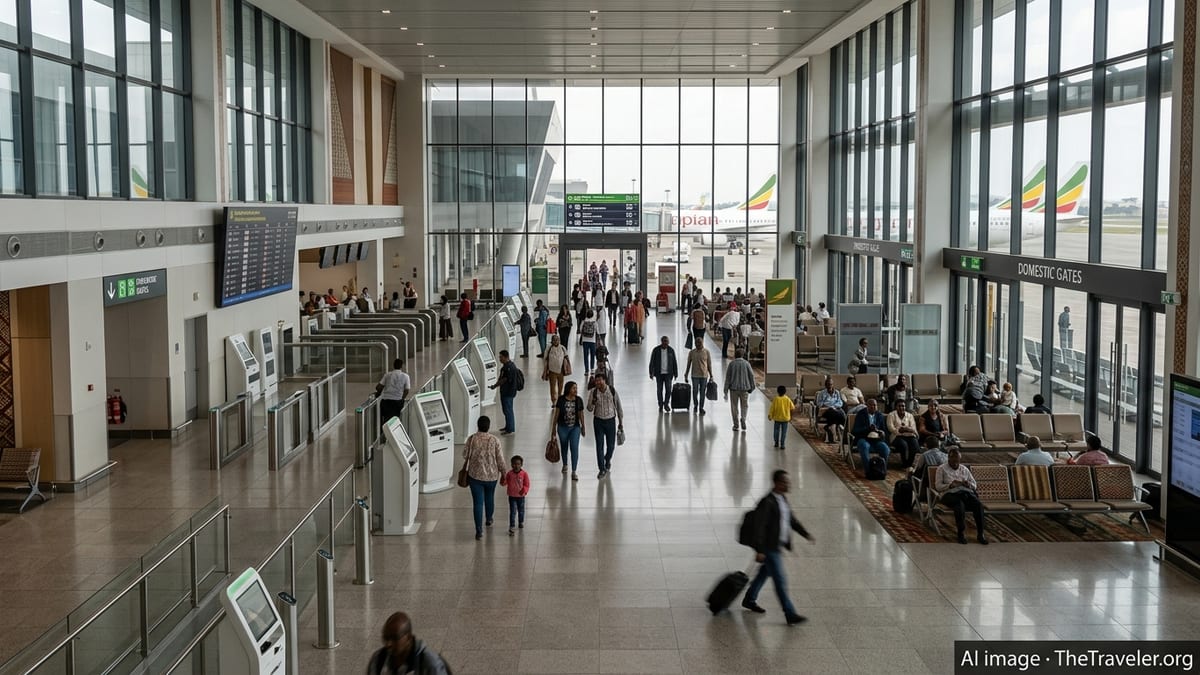
A High-Capacity Hub at the Heart of Ethiopia
The upgraded domestic terminal at Addis Ababa Bole International Airport represents a major step in Ethiopian Airlines’ strategy to modernize the country’s aviation infrastructure. Publicly available information indicates that the carrier has effectively doubled the terminal’s capacity, significantly expanding the built-up area to accommodate larger passenger flows and more frequent domestic services.
The new hub consolidates domestic operations at Bole, positioning the airport as a central gateway for travel to regional cities and emerging tourist areas across Ethiopia. The domestic terminal is designed to complement the airline’s broader hub-and-spoke model, which routes much of the country’s air traffic through Addis Ababa before dispersing passengers to secondary destinations.
This expansion arrives as Ethiopian Airlines pursues long-term growth plans under its Vision 2035 strategy. The airline is investing heavily in both domestic and international infrastructure, from new regional airports to a planned mega-hub at Bishoftu, and the transformed domestic terminal at Bole is one of the most visible pieces of that nationwide network.
Modern Technology and Passenger-Focused Design
The upgraded domestic terminal introduces layers of new technology aimed at speeding up passenger processing and improving the day-of-travel experience. According to airline and industry reports, the facility integrates modern security screening systems, expanded check-in areas with automated support, and improved baggage handling infrastructure intended to reduce congestion at peak times.
Inside the terminal, the layout places emphasis on clearer wayfinding and more intuitive passenger flows from check-in to boarding. Additional boarding gates, enlarged departure halls, and expanded seating areas are intended to ease crowding that had become common as domestic air travel demand grew in recent years.
The terminal’s design also aligns with a wider shift at Bole toward contemporary airport standards seen at major international hubs. Alongside the domestic halls, travelers now encounter a more coherent blend of retail, food and beverage options, and service counters, reflecting the airline’s stated goal of elevating the overall quality of the ground experience for both local and connecting travelers.
Boosting Connectivity Across Ethiopia’s Regions
The enhanced domestic hub is expected to play a pivotal role in strengthening connectivity between Addis Ababa and Ethiopia’s rapidly developing regions. Ethiopian Airlines already operates one of Africa’s most extensive domestic networks, and the new terminal is built to support increased frequencies and new routes as additional regional airports come online.
Recent announcements from the airline highlight plans to inaugurate several new domestic airports and expand services to destinations in southern and southwestern Ethiopia. The improved terminal capacity at Bole is a prerequisite for handling these incremental passengers, especially those connecting from international flights before continuing onward to local cities.
For travelers, the practical impact is the potential for shorter connection times, greater choice of departure slots, and more reliable links between remote areas and the capital. For the airline, the domestic hub allows tighter scheduling and more efficient aircraft utilization, anchoring Addis Ababa as the undisputed center of the country’s aviation network even as new infrastructure projects take shape elsewhere.
Economic Impact and Support for Tourism
The enlarged domestic terminal is being framed by observers as more than an aviation upgrade; it is also a catalyst for economic development. Improved air connectivity within Ethiopia is expected to support trade, domestic business travel, and the movement of skilled workers, particularly to regions where road or rail links remain limited or time-consuming.
Tourism stands to benefit in particular. The new hub is designed to make it easier for international visitors arriving in Addis Ababa to connect directly to national parks, cultural sites, and emerging leisure destinations served by Ethiopian’s domestic network. With Ethiopia marketing itself as a gateway to the Horn of Africa and a destination in its own right, smoother transfers through the domestic terminal are considered key to capturing more of this traffic.
Aviation analysts note that the domestic terminal upgrade dovetails with broader initiatives to enhance airport facilities across the country, including the opening of new regional terminals and the modernization of existing airfields. Together, these projects are positioning air travel as a central enabler of Ethiopia’s tourism ambitions and its wider push to attract investment beyond the capital.
A Stepping Stone in a Larger Infrastructure Vision
While the transformed domestic terminal at Bole is now operational, it is also part of a far larger infrastructure story. Ethiopian Airlines is advancing plans for a new mega airport at Bishoftu, southeast of Addis Ababa, envisioned as one of Africa’s largest aviation hubs. Industry coverage suggests that Bole will increasingly specialize in domestic and regional operations as the Bishoftu project matures.
In the near term, however, the domestic terminal at Bole remains the primary node for local air travel, and its expanded capacity will be tested as the airline brings additional domestic airports into service by mid-2026. The performance of this new hub will offer an early indication of how effectively Ethiopian’s infrastructure investments can translate into smoother journeys for passengers.
For now, the opening of the enhanced domestic terminal marks a tangible milestone in Ethiopia’s aviation modernisation drive. It signals a shift toward higher-capacity, technology-enabled facilities designed to handle sustained growth in local travel and to knit together a geographically diverse country through a more reliable, centrally coordinated air network.