

More news on this day
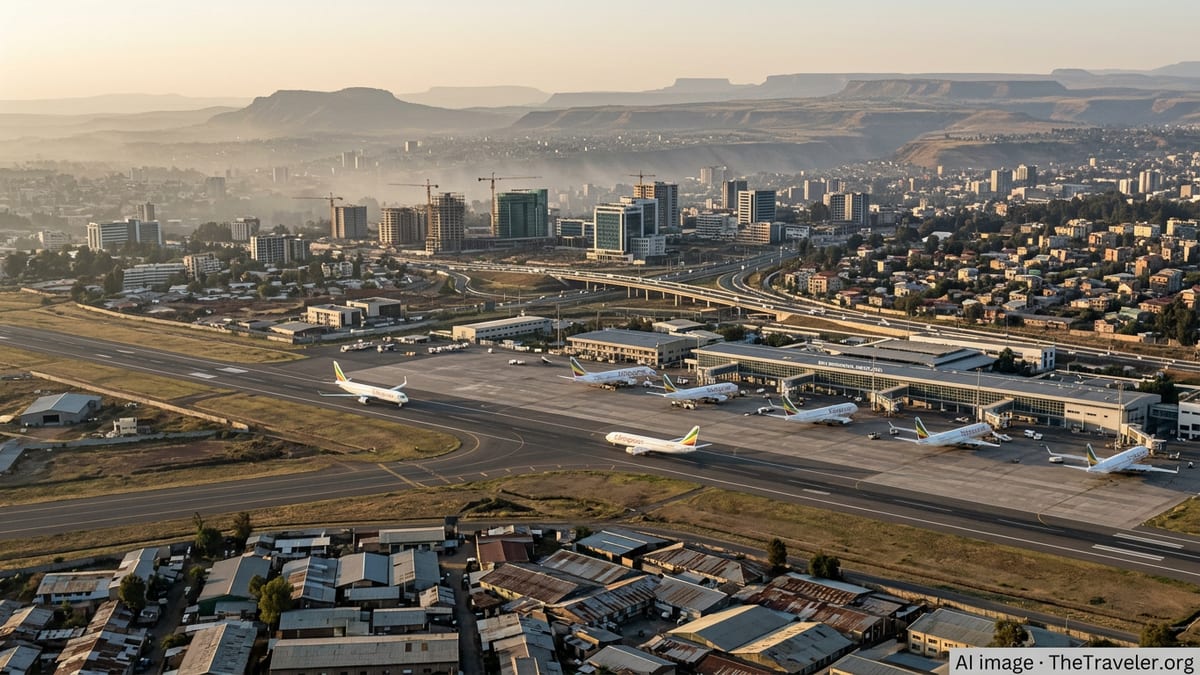
Ethiopia is entering 2026 with tourism on a steep upward trajectory, as an aggressive expansion of aviation networks, record airline growth and headline-making infrastructure projects propel the country into the ranks of Africa’s fastest-rising global travel destinations.
Surging Arrivals Signal a New Tourism Era
After several difficult years marked by conflict and pandemic disruption, Ethiopia’s tourism sector is emerging as one of Africa’s standout recovery stories. According to the latest figures from United Nations Tourism, international arrivals to Ethiopia in 2024 were around 40 percent above pre-pandemic levels, placing the country among the world’s fastest-growing destinations. That momentum is now feeding directly into 2026 forecasts, with officials and industry analysts anticipating another double-digit rise in visitor numbers on the back of expanded air connectivity and new infrastructure coming online.
Travel and tourism research for 2024 points to inbound visitor spending of several billion dollars, underscoring the sector’s growing weight in Ethiopia’s foreign-exchange earnings and broader economy. Industry observers note that leisure demand is returning alongside strong business and diaspora travel, with cultural circuits, nature tourism and city breaks all benefiting from improved access. For a government that has long identified tourism as a pillar of its ten-year development plan, the latest data are being read as confirmation that earlier investments in aviation and transport are starting to pay off at scale.
Tour operators report that lead times for bookings into Ethiopia have shortened, a sign of growing confidence among international travelers and intermediaries. At the same time, the profile of visitors is diversifying beyond traditional European markets to include a rising share from the Middle East and Asia, supported by new routes from Gulf and Asian carriers into Addis Ababa and beyond.
Bishoftu Mega Airport Anchors Aviation Ambitions
The most visible symbol of Ethiopia’s tourism ambitions is rising from farmland outside the town of Bishoftu, about 40 kilometers southeast of Addis Ababa. In January 2026, construction officially broke ground on what the government describes as Africa’s biggest airport, a multi-phase project expected to cost around 10 to 12.5 billion dollars and eventually handle more than 100 million passengers a year. Backed by a major financing partnership in which the African Development Bank is mandated to mobilize roughly 8 billion dollars, the new Bishoftu International Airport will be owned and operated by Ethiopian Airlines Group.
Planned with four runways, parking for up to 270 aircraft and an “airport city” of hotels, logistics hubs and commercial space, the complex is designed to relieve pressure on Addis Ababa’s Bole International Airport and cement Ethiopia’s status as a continental hub. The site’s elevation, around 500 meters lower than Addis Ababa, will also allow aircraft to take off with heavier payloads, improving the economics of ultra-long-haul routes that bring high-spending tourists directly from Europe, North America and Asia.
The airport’s tourism impact will extend beyond the terminal. The master plan includes a multi-lane motorway and a high-speed rail link connecting Bishoftu with the capital, significantly shortening transfer times for international visitors heading into Addis Ababa or connecting to regional flights. Officials and industry groups argue that the project will catalyze a new generation of “hub and spoke” tourism products, from short layover city tours to multi-day cultural and nature itineraries across the country.
Although the new airport will not be fully operational for several years, the start of construction in 2026 is already being used in international marketing campaigns to reposition Ethiopia as a forward-looking gateway between Africa and the rest of the world. Tourism businesses say that the signal effect alone is helping to reset perceptions of the country and draw the attention of global hotel brands and investors.
Ethiopian Airlines Drives Network Growth and Connectivity
Underpinning Ethiopia’s tourism surge is the continued expansion of Ethiopian Airlines, which has cemented its position as Africa’s largest carrier by fleet, destinations and passenger numbers. The airline closed its 2024 to 2025 financial year with record revenues of around 7.6 billion dollars, and it has carried that momentum into 2026 with a series of route launches and strategic partnerships designed explicitly to feed tourism flows.
New routes have been rolled out across the Middle East and Asia, including a daily service between Addis Ababa and Abu Dhabi under a broader joint venture with Etihad Airways. That partnership gives Ethiopian passengers easier access to Gulf and Asian destinations while allowing inbound visitors from those markets to reach Ethiopia via Abu Dhabi with through-ticketing and coordinated schedules. Additional expansion in the Asia-Pacific region, including enhanced connectivity to Southeast Asia, is widening the pool of potential visitors to Ethiopia’s historic and natural attractions.
The carrier’s 2026 strategic outlook emphasizes tourism as a key growth driver, with planners targeting “sixth freedom” traffic that combines convenient connections through Addis Ababa with short stays in the country. Industry insiders say Ethiopian is working more closely than ever with tour operators and regional tourism boards to develop stopover programs, packaged itineraries and coordinated marketing campaigns that encourage transit passengers to convert layovers into two- or three-night visits.
At the same time, a slate of aircraft deliveries is giving the airline greater flexibility to deploy capacity on both long-haul and regional leisure routes. New-generation widebodies are earmarked for high-potential markets in Europe and North America, while narrowbody jets are being used to strengthen intra-African tourism corridors linking Ethiopia with East African safari circuits, Red Sea beach destinations and Indian Ocean gateways.
Infrastructure Upgrades Transform the Visitor Experience
The aviation surge is part of a broader infrastructure push that is reshaping how visitors move around Ethiopia. A decade-long transport development plan foresees the construction of more than 100,000 kilometers of new roads and the expansion of aviation facilities across multiple regions. Between 2018 and 2024, an urban infrastructure program backed by development partners financed thousands of kilometers of roads and serviced land in 117 cities, improving connectivity, easing congestion and creating more than a million jobs. For tourists, these projects translate into smoother airport transfers, shorter drive times between attractions and growing options for city walking and cycling tours.
In Addis Ababa, corridor projects linking Bole International Airport to new convention and exhibition facilities are helping the capital position itself as a meetings and incentives destination, a segment that typically delivers higher per-visitor spending than leisure travel. Outside the capital, road upgrades around lake resorts such as Bishoftu and Bahir Dar, as well as corridors in the Amhara and Dire Dawa areas, are opening up previously hard-to-reach sites and supporting the development of new lodges, eco-resorts and community-based tourism ventures.
Complementing bricks-and-mortar work is a national digital strategy launched at the end of 2025, which aims to accelerate connectivity and support new tourism services. Authorities say that improved mobile coverage and digital payments will make it easier for international visitors to book local transport, guides and experiences on arrival, while also helping small tourism enterprises formalize and reach overseas markets.
Investments are also flowing into port and logistics links that indirectly benefit tourism. Projects to strengthen corridors between Addis Ababa and regional ports such as Djibouti and Berbera are cutting travel times and stabilizing supply chains for hotels and tour operators, while free trade zones in cities like Dire Dawa position them as future multi-purpose hubs for both industry and visitors.
Balancing Rapid Growth with Security and Sustainability
The scale and speed of Ethiopia’s tourism upswing are not without challenges. Security conditions remain fragile in parts of the country, including regions that were once major draws for cultural and trekking tourism. Industry leaders acknowledge that the long-term success of the sector will depend on sustained improvements in safety, clear and consistent travel information, and careful management of visitor flows to sensitive areas.
There is also an emerging debate over how to balance mega-projects such as Bishoftu International Airport with investments in basic services and smaller-scale tourism infrastructure. Supporters argue that the new hub will be a “game changer” for employment, exports and connectivity, anchoring a wider ecosystem of hotels, tour companies, logistics firms and creative industries. Critics, however, caution that benefits must be broadly shared and not come at the expense of urban services, environmental protection or community needs.
Tourism planners insist that sustainability is being integrated into new projects, from public transport options around major airports to environmental standards for accommodation developments in fragile ecosystems such as the Simien Mountains and the Rift Valley lakes. International partners are encouraging Ethiopia to adopt best practices on heritage conservation, community participation and climate resilience, positioning the country to compete not only on accessibility and price but also on responsible travel credentials.
For now, the numbers suggest that Ethiopia’s bet on aviation and infrastructure is paying off. As 2026 unfolds, the country is moving rapidly from aspirant to established player in global tourism, leveraging its geographic position, growing airline and ambitious building program to attract record numbers of international visitors while reshaping the way travelers experience one of Africa’s most diverse destinations.