

More news on this day
UK tourists planning European trips over the next few years will face a new layer of digital paperwork, as the European Travel Information and Authorisation System (ETIAS) moves toward launch and reshapes how British visitors enter most of the continent.
Get the latest news straight to your inbox!
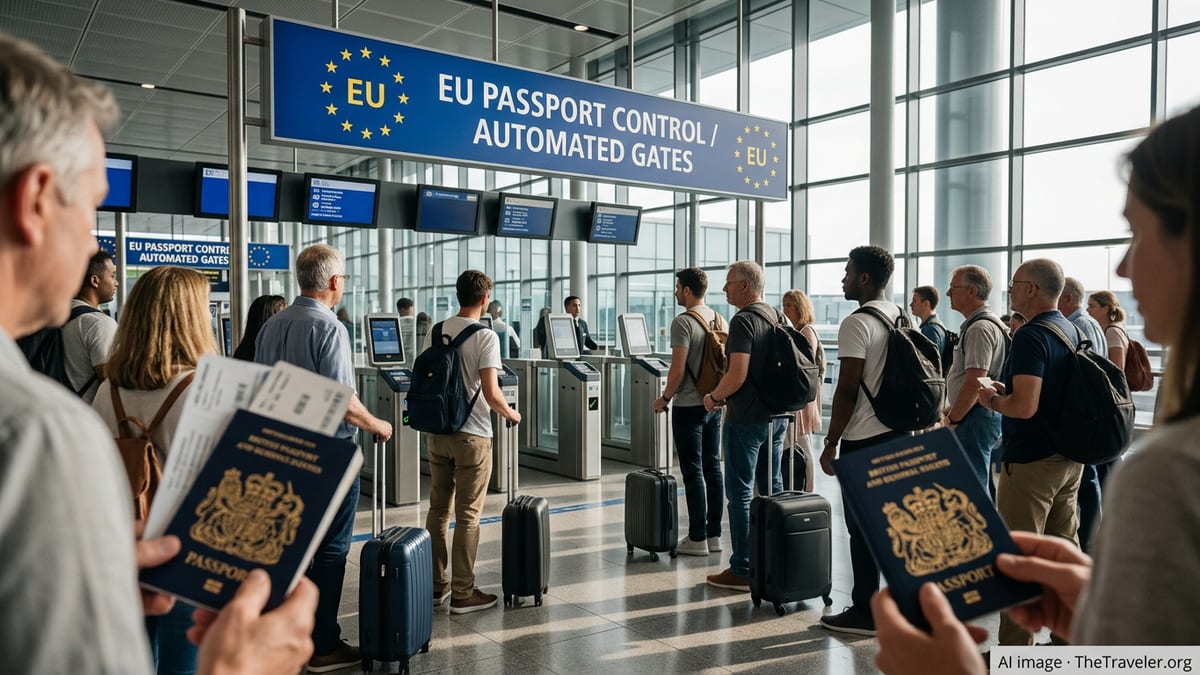
What ETIAS Is and When It Will Start
ETIAS, the European Travel Information and Authorisation System, is a forthcoming digital travel permit for nationals of visa-exempt countries visiting most EU and Schengen-associated states. For UK passport holders, who have travelled visa free across Europe for short breaks since Brexit, it will add an online pre-travel check linked electronically to their passport rather than a traditional visa sticker or vignette.
Publicly available information from European institutions and specialist travel briefings indicates that ETIAS is now scheduled to begin operations in the last quarter of 2026, following multiple delays. Earlier plans to introduce the scheme in 2024 and then in 2025 were pushed back while the EU focused on rolling out its separate Entry/Exit System for tracking border crossings and over-stays.
Once ETIAS goes live, there will be a transition period of at least six months in which the authorisation is available but not yet mandatory, followed by an additional grace period. During this phased introduction, many UK tourists travelling to Europe for short stays will still be able to enter using only their passport while border systems and carriers adjust to the new requirements.
Until ETIAS is actually operational and any transition period has ended, British visitors can continue to travel to participating European countries for up to 90 days in any 180-day period without a visa or digital permit, subject to existing passport validity and entry rules.
Which European Countries UK Tourists Will Need ETIAS For
ETIAS will apply to around 30 European destinations, covering almost all countries in the Schengen Area along with a handful of closely associated states. This includes popular holiday markets such as France, Spain, Italy, Greece and Portugal, as well as city break hubs like the Netherlands, Belgium, Germany and Austria.
Travel industry summaries of the upcoming rules state that Iceland, Norway, Switzerland and Liechtenstein will also fall under ETIAS, bringing many of Europe’s major winter sports and outdoor destinations into the scheme. For UK tourists, this means that many traditional ski, hiking and fjord itineraries will eventually require pre-travel authorisation as well.
Some nearby European countries are not covered. Ireland, which shares a Common Travel Area with the UK, will remain outside ETIAS, so British visitors will continue to travel there under separate arrangements. Cyprus and several non-Schengen states in the Balkans are also currently listed outside the ETIAS framework, meaning a digital permit will not be required for short-term tourism there under the current plans.
UK travellers planning multi-country trips will need to check carefully which stops fall inside the ETIAS zone. Once the system is active, entry into any participating country, whether by air, sea, rail or road, is expected to require a valid ETIAS linked to the travel document being used.
How the ETIAS Application Will Work for UK Travellers
For British tourists, ETIAS is intended to function in a similar way to other electronic travel authorisations used worldwide, such as the United States ESTA. Public guidance indicates that applications will be completed online, with travellers entering passport details, personal information, travel history and answers to basic security and public health questions.
Most applications are expected to be processed automatically in a short time, with a minority requiring manual review. Once approved, the authorisation will be digitally linked to the passport rather than issued as a physical document. Travellers will not need to present a paper permit, but air and sea carriers will be required to check for valid ETIAS approval before boarding.
European and industry briefings consistently describe ETIAS as a travel authorisation rather than a visa. It will not change the underlying 90-in-180 day rule for short stays, and border officers at the point of entry will retain the power to refuse admission if a visitor does not meet entry conditions, even with an approved authorisation.
UK citizens with multiple passports will need to ensure that the same document used for the ETIAS application is carried on the trip. A new passport issued after an ETIAS is granted is likely to require a fresh application, as the authorisation is tied to the individual passport number and biometric data.
Costs, Validity and Who Is Exempt
Current official information and recent coverage indicate that ETIAS will carry a modest fee for most adult applicants. Earlier communications from EU bodies set this at 7 euros, and more recent policy discussions have explored the possibility of a higher standard fee in the future, but no final revised amount has been confirmed publicly at the time of writing.
The authorisation is expected to be valid for several years, typically three, or until the passport used in the application expires, whichever comes first. During that period, UK tourists will be able to make multiple short trips to participating European countries without needing to reapply, provided their circumstances have not changed in a way that would affect eligibility.
Published explanations of ETIAS rules highlight that certain age groups are likely to be exempt from the fee while still needing to obtain an authorisation. Previous guidance has consistently referred to travellers under 18 and older adults above a set age threshold, as well as some family members of EU citizens, as being entitled to a waiver of the charge even though an online application remains mandatory.
UK travellers should expect to pay the fee electronically at the time of application using standard online payment methods. As with similar systems elsewhere, incomplete payment or mismatched personal details are likely to be common reasons for delays or refusals, making careful data entry essential.
Interaction With New EU Border Checks and UK ETA Rules
The introduction of ETIAS is closely linked to the EU’s new Entry/Exit System, a large-scale border database designed to register the time and place of entry and exit for non-EU nationals visiting the Schengen Area. Publicly available material shows that EES went live in late 2025 and is being phased in at air, sea and land borders, with different ports and crossings migrating to the new system through 2026.
For UK tourists, EES has already begun to change the experience at the border. Travellers from visa-exempt countries are photographed and have four fingerprints captured on their first trip after the system becomes active at a particular crossing point. These biometric records are then used to verify identity and track stays against the 90-days-in-180 rule on subsequent visits.
Because EES must be fully operational before ETIAS starts, the new biometric checks are appearing ahead of the digital travel permit itself. Holidaymakers flying to popular European gateways in late 2025 and 2026 are being advised in public guidance to expect longer queues and to allow additional time at passport control while new procedures bed in.
At the same time, the UK is rolling out its own Electronic Travel Authorisation scheme for many non-visa nationals, mirroring the European model. While British citizens are not subject to the UK ETA when returning home, they may encounter it when travelling with non-British family members or friends. Travel industry bodies are warning that, by the late 2020s, many international trips will involve multiple overlapping digital authorisations, making advance checks and careful planning more important for smooth journeys.
What UK Tourists Should Do Now When Planning Europe Trips
For trips taking place before late 2026, the core message from recent public briefings is that little changes immediately for British holidaymakers beyond the gradual expansion of biometric checks under the Entry/Exit System. UK passport holders can continue to book city breaks, beach holidays and rail itineraries across participating European countries on a visa-free basis, ensuring only that their passports meet standard validity rules.
However, travellers organising cruises, package holidays or independent itineraries for late 2026 and 2027 are increasingly being urged by travel specialists to factor ETIAS into their planning. This means monitoring official EU and national government announcements for a confirmed start date, understanding which countries on their route will require the authorisation, and allowing time to apply well before departure once the system opens.
Consumers are also being advised to watch for unofficial websites offering paid “assistance” services around ETIAS applications. Past experience with other electronic travel schemes suggests that some third-party firms will charge high handling fees for processes that can be completed directly by travellers at a much lower cost. UK tourists are likely to be encouraged by governments and consumer bodies to use only trusted official channels once they become available.
As Europe’s new digital border architecture settles into place, ETIAS will become a standard part of the travel checklist alongside passports, insurance and bookings. For now, though, the immediate priority for UK visitors remains staying informed about the evolving timeline and preparing for a more data-driven border experience the next time they head to the continent.