

More news on this day
Etihad Airways has reported the strongest financial performance in its history, posting a record profit after tax of AED 2.6 billion for 2025 as Abu Dhabi’s flag carrier rides a powerful rebound in global air travel and cements its position as a fast-growing Gulf hub airline.
Profit Surges as Revenue and Margins Outpace Global Peers
The 2025 result marks a 47 per cent jump in profit compared with the previous year, underscoring how far Etihad has travelled from the restructuring period that followed years of losses. The carrier’s profit margin reached roughly 8.4 per cent, more than double the global airline industry average, highlighting disciplined cost control alongside robust demand.
Total revenue climbed around 21 per cent year on year to AED 30.7 billion, driven by strong performances from both the passenger and cargo divisions. Passenger revenue grew faster than the topline at 24 per cent, supported by higher fares, improved load factors and an expanded network. Cargo revenue also moved higher, reflecting increased volumes and the continued strength of logistics flows through the Gulf.
EBITDA rose by more than a third to AED 6.3 billion, lifting the EBITDA margin to about 20 per cent. That operating strength translated into powerful cash generation, with operating cash flow approaching AED 8 billion in 2025. The airline used that firepower to fully fund capital expenditure and continue deleveraging its balance sheet, leaving it better positioned to finance long-term growth.
The latest results also represent Etihad’s fourth consecutive year of profitability, a symbolic milestone for an airline that only a few years ago was associated with heavy losses and a costly equity-partnership strategy. Management now describes Etihad as operating with the financial discipline of a listed company, even as it remains under Abu Dhabi ownership.
Passenger Boom Lifts Abu Dhabi as a Global Transit Hub
The financial headline numbers are underpinned by a sharp rise in passenger activity. Etihad carried 22.4 million passengers in 2025, an increase of about 21 per cent compared with the year before, as traffic through Abu Dhabi International Airport continued to recover and then surpass pre-pandemic levels.
Available seat kilometres, a key measure of capacity, climbed 21 per cent to 111.5 billion, while the passenger load factor improved to roughly 88.3 per cent. That combination of higher capacity and fuller aircraft signals that the airline is successfully stimulating demand on new and existing routes without sacrificing yields.
Abu Dhabi’s tourism and connectivity ambitions are woven into the performance. Point-to-point traffic to the UAE capital rose, supported by a rising number of visitors drawn to new attractions and the city’s growing profile as a leisure and business destination. Stopover programs introduced and refreshed by Etihad and local tourism bodies have also gained traction, with the number of stopover visitors more than doubling as the airline encourages long-haul travellers to break their journey in the emirate.
For travellers, the surge in passenger numbers translates into a broader choice of routes, more frequencies and improved onward connectivity across the Middle East, Europe, Asia and North America. For Abu Dhabi, it strengthens the city’s role as a rival to other regional hubs in Dubai and Doha in capturing global transit flows.
Fleet Expansion and New Routes Power Network Growth
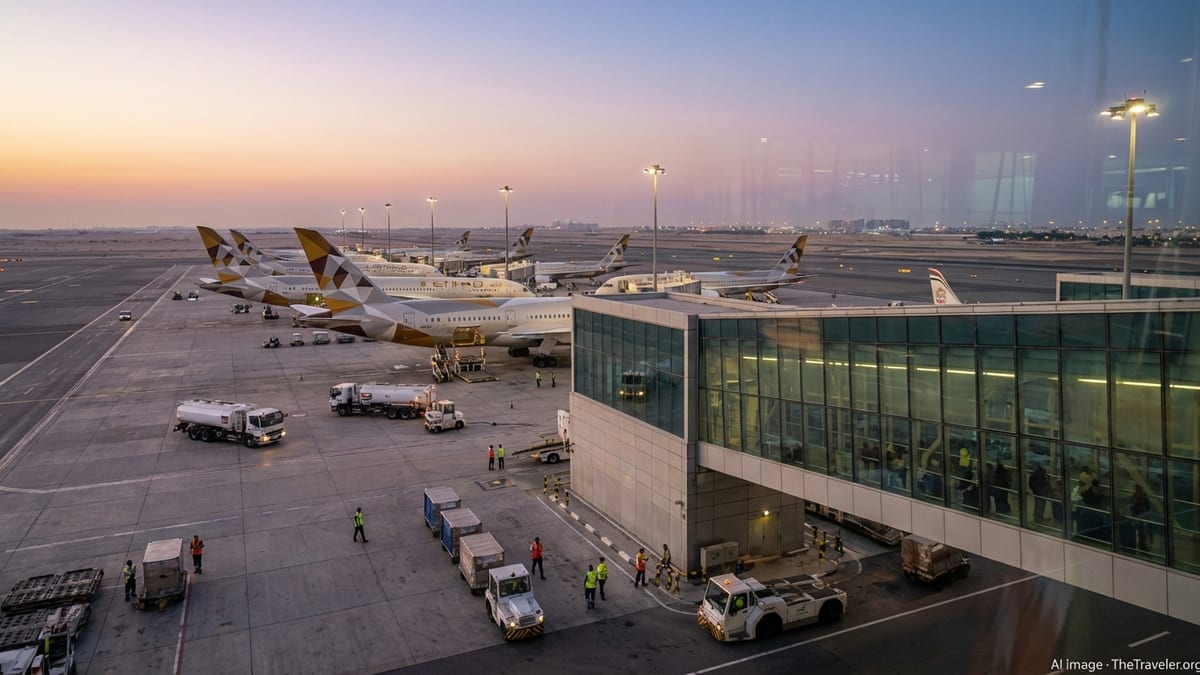
Etihad’s record profit in 2025 coincided with its largest-ever operating fleet. The airline added 29 aircraft during the year, taking the active fleet to 127 jets by year-end. The mix included new-generation widebodies such as the Airbus A350 and Boeing 787, alongside additional narrowbodies to support regional and medium-haul growth.
That capacity allowed the carrier to push into new markets and deepen its presence in existing ones. Over the course of 2025, Etihad expanded its network from 94 to 110 destinations, opening routes to cities including Atlanta, Prague, Warsaw, Addis Ababa, Phnom Penh, Hanoi and Hong Kong. The additions strengthen east–west connectivity over Abu Dhabi, especially between North America, Europe and fast-growing Asian markets.
On the cargo side, fleet and network growth helped turn Etihad into the largest freight operator between mainland China and the Middle East. A joint venture with China’s SF Express and increased belly-hold capacity on passenger aircraft allowed the airline to operate more than 100 cargo services a month on that corridor, reinforcing Abu Dhabi’s role as a logistics gateway.
The expansion is set to continue. Management has signalled plans to take delivery of around 20 aircraft per year for the next five years, and Abu Dhabi has outlined investment commitments worth tens of billions of dirhams to support Etihad’s long-term growth and the wider aviation ecosystem, from airport infrastructure to maintenance and training facilities.
Jobs, Service Upgrades and a Bid for Premium Travellers
The financial turnaround is also being felt in the workforce. Etihad hired more than 3,000 employees in 2025, including around 400 pilots, and has announced plans to recruit between 2,500 and 3,000 staff annually through to 2030. The airline is investing in cadet schemes and leadership programs to build a sustainable pipeline of Emirati and international talent.
Product and service upgrades have accompanied that growth. Etihad has rolled out Airbus A321LR aircraft with lie-flat seating in business class on selected regional routes, giving the airline a premium edge on shorter flights. It has also refreshed lounges, onboard menus and cabin interiors, and accelerated improvements to its digital platforms to smooth the booking and travel experience.
Customer satisfaction scores reached record highs in 2025, building on already strong ratings from earlier in the year. The airline collected a series of industry awards for safety, service and cabin design, helping to bolster its appeal among both leisure travellers and corporate accounts.
For high-yield premium travellers, particularly those flying between Europe or North America and Asia or Australia, the combination of upgraded cabins, competitive fares and efficient connections in Abu Dhabi positions Etihad as a compelling alternative to rival Gulf and European carriers.
Strategic Outlook: From Turnaround Story to Growth Engine
Etihad’s record AED 2.6 billion profit comes at a moment when Gulf carriers are redefining their roles in global aviation. While some peers have long operated as mega-hub airlines, Etihad is transitioning from a turnaround story into a disciplined growth engine with a sharpened focus on profitability and sustainable expansion.
The carrier is aligning more closely with Abu Dhabi’s broader economic diversification plans, which view aviation, tourism and logistics as key pillars. By expanding its long-haul network and enhancing stopover offerings, Etihad is expected to funnel more visitors into the emirate, support hotel occupancy and retail spending, and create additional demand for conferences and events.
At the same time, management continues to emphasise cost discipline and capacity management, wary of overexpansion in a cyclical industry. The airline’s stronger balance sheet and improved credit profile, highlighted by ratings upgrades from international agencies, provide more flexibility to weather shocks from fuel price volatility, geopolitical tensions or shifts in global demand.
For international travellers, the record-breaking 2025 numbers signal that Etihad will be more visible in the skies in the years ahead, with a denser route map, newer aircraft and a growing workforce all aimed at capturing a larger share of global traffic through Abu Dhabi’s increasingly prominent hub.