

More news on this day
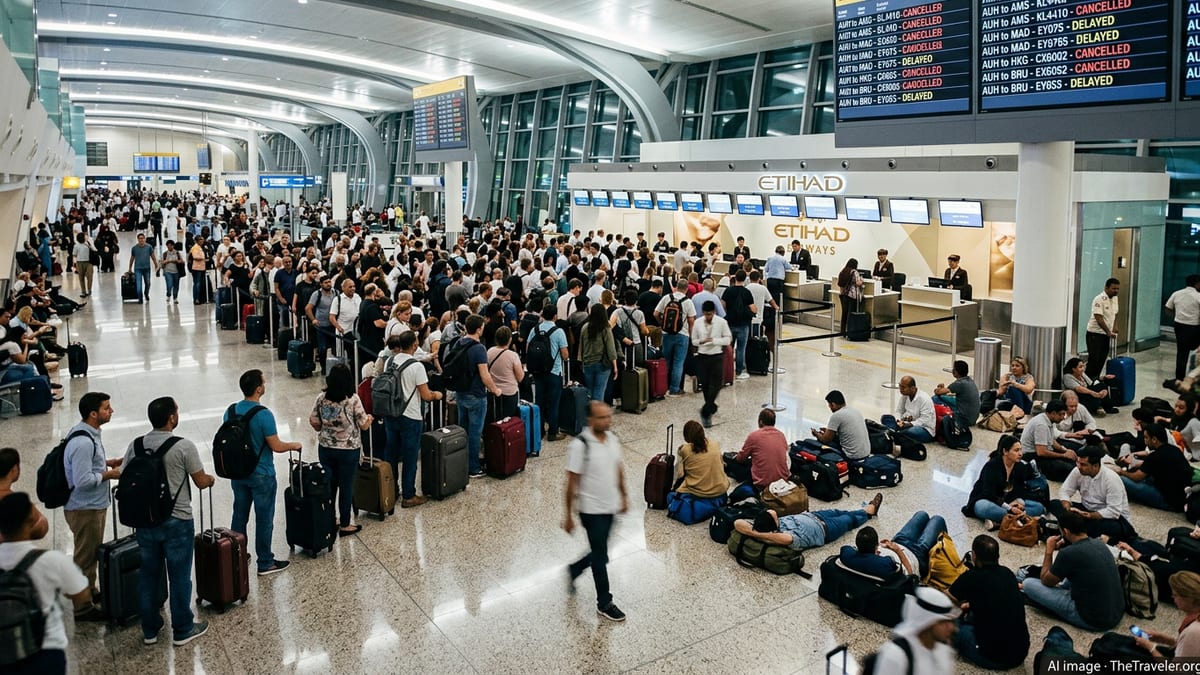
Etihad Airways’ ongoing schedule upheaval has triggered fresh travel chaos across Saudi Arabia, Spain, the Netherlands and Hong Kong, with 17 flights cancelled and at least 29 delayed in the latest wave of disruption, leaving passengers stranded from Abu Dhabi to Amsterdam, Brussels and beyond.
Limited Resumption After Regional Airspace Turmoil
The latest cancellations and delays come as Etihad attempts to rebuild its network following a severe regional airspace disruption that began in late February and continued into early March 2026. The Abu Dhabi based carrier has restarted a limited commercial schedule between March 6 and March 19, serving around 70 destinations worldwide, but operations remain heavily constrained and subject to last minute changes.
While the airline has framed the current timetable as a careful step toward normality, the balance between operating essential routes and managing safety concerns has proven difficult. Flights are not running daily on many sectors, and aircraft and crew positioning remain challenging as air traffic control restrictions and congestion ripple through the wider region.
That fragile operating environment has led to sharp day to day swings in Etihad’s actual flying program. Internal tallies shared with industry partners and travel agents indicate that at least 17 Etihad flights linked to the temporary schedule have been cancelled over the past 48 hours, with a further 29 suffering significant delays exceeding two hours, compounding earlier disruptions.
For travelers, the result is a confusing picture: a published schedule that suggests growing connectivity, contrasted with rolling operational adjustments that can turn a confirmed itinerary into a dead end with little warning.
Abu Dhabi Hub Struggles With Stranded Transit Passengers
At Abu Dhabi’s Zayed International Airport, Etihad’s main hub, the most visible impact has been among transit passengers who are no longer guaranteed onward connections. The airline has been prioritizing point to point traffic and limiting new bookings for itineraries that involve tight layovers, after hundreds of travelers were left sleeping on terminal floors when their connecting sectors were scrubbed or heavily delayed.
Passengers connecting from Asia to Europe and North America via Abu Dhabi have been particularly exposed. Travelers originating in Manila, Bangkok and Mumbai reported arriving in the Emirati capital to find onward services to Amsterdam, Brussels and other European hubs cancelled or pushed back repeatedly, with rebooking options constrained by the skeleton timetable and high demand for any available seats.
Etihad has advised customers not to travel to the airport unless they have received direct confirmation that their flight will operate, a measure intended to ease crowding in the terminal and reduce pressure on ground staff. Even so, scenes of long queues at transfer desks and customer service counters have persisted, as stranded passengers seek hotel vouchers, meal assistance and alternative routing on later Etihad flights or partner carriers.
For some, the only viable solution has been to abandon their journeys with Etihad altogether, securing refunds where eligible and turning to other airlines that skirt the most affected airspace, even at considerably higher fares and with longer routings.
Knock On Effects in Europe: Amsterdam, Brussels and Beyond
In Europe, Etihad’s disrupted schedule has added stress to an already strained aviation system, particularly in the Netherlands, Belgium and Spain. At Amsterdam’s Schiphol Airport, several Etihad services between the Dutch capital and Abu Dhabi have been cancelled or subject to rolling delays, affecting Dutch passengers as well as long haul travelers connecting onward to destinations in Asia and Australia.
Brussels has also seen services thinned out, with flights operating only on select days and subject to late operational reviews. Travelers heading to and from Belgium report receiving cancellation notices less than 24 hours before departure, forcing last minute changes to travel and accommodation plans and placing extra pressure on alternative routes through Paris, Frankfurt and London.
In Spain, where Etihad connects Abu Dhabi with Madrid and Barcelona, passengers have faced a mixture of shortened frequencies and late schedule changes. Spanish holidaymakers returning from winter breaks in Southeast Asia via Abu Dhabi have encountered missed connections and unexpected overnight stays, while business travelers report difficulty securing reliable dates for meetings and events.
The patchy service has knock on implications for tourism boards and hospitality operators across Europe, many of whom rely on steady Gulf carrier traffic to feed long haul demand. With Etihad’s presence curtailed and unpredictable, hotels and tour operators in cities such as Amsterdam, Brussels and Madrid are facing increased volatility in arrivals, complicating staffing and revenue planning.
Saudi Arabia and Hong Kong Feel the Shockwaves
In Saudi Arabia, where Etihad links Abu Dhabi to Riyadh and Jeddah and serves the kingdom as a key gateway for pilgrims and business travelers, the disruption has raised particular concern. Passengers from Saudi cities connecting through Abu Dhabi to Europe and North America have reported cancelled itineraries and extensive rebooking queues, heightening anxiety during a busy travel period and for those with time sensitive religious or work commitments.
Saudi travelers en route to Spain and the Netherlands have been among those stranded when onward legs from Abu Dhabi to European hubs failed to materialize. Some have opted to reroute entirely via Jeddah or Riyadh on rival Gulf and regional carriers, while others have accepted substantial delays to stay on Etihad’s reconfigured network, banking on the promise of gradual stabilization after March 19.
Further east, Hong Kong has been another critical pressure point. Etihad’s flights between Abu Dhabi and Hong Kong connect a substantial volume of Asia Europe and Asia Middle East traffic, meaning that cancellations or long delays on this sector can strand passengers in both directions. Travelers in Hong Kong report repeated schedule changes, with flights alternately listed as operating, delayed and cancelled within short windows as operational conditions shift.
For Hong Kong based passengers destined for Saudi Arabia, Spain or the Netherlands via Abu Dhabi, the uncertainty has made medium term planning difficult. Travel agents in the city say they are fielding a surge of inquiries from customers weighing whether to keep their Etihad bookings or switch to alternative routings via other Asian or Middle Eastern hubs that currently appear more stable.
What Passengers Can Expect in the Coming Days
Looking ahead to the rest of March, Etihad has pledged to maintain its limited schedule through at least March 19 while continuing to review routes on a daily basis. The airline has offered flexible rebooking and refund policies for tickets issued on or before late February with travel dates through March 21, encouraging affected passengers to contact the carrier or their travel agents to explore options.
Industry analysts expect intermittent cancellations and delays to persist as long as regional airspace constraints and congestion remain a factor. With aircraft and crews out of regular rotation and demand surging for any available seats, small operational issues can quickly cascade into more extensive disruption, particularly on long haul routes that depend on precise aircraft turns and tightly timed connections.
Passenger advocates stress that travelers booked on Etihad in the coming days should monitor flight status tools closely, keep contact details updated in their bookings and prepare contingency plans, especially if they rely on Abu Dhabi as a connection point rather than as an origin or final destination. Travel insurance that covers disruption and missed connections is also being recommended more widely to mitigate out of pocket costs for hotels, meals and replacement flights.
For now, the experience of those stranded in Abu Dhabi, Amsterdam, Brussels, Hong Kong and other hubs serves as a stark reminder of how quickly global air travel can be upended. Until Etihad’s schedule stabilizes and regional skies fully reopen to normal traffic flows, passengers across Saudi Arabia, Spain, the Netherlands and the wider network are likely to face an uneasy mix of hope and uncertainty every time they check their departure boards.