

More news on this day
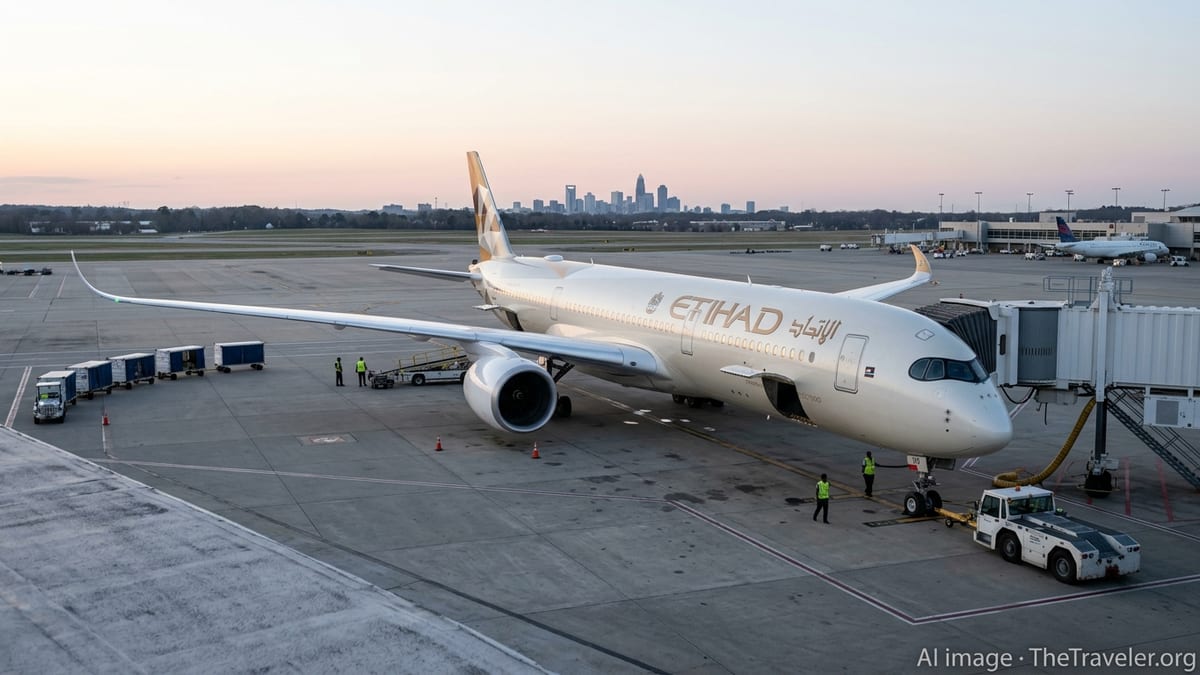
Etihad Airways is set to reshape long-haul travel from the U.S. Southeast, rolling out Airbus A350 service on its new nonstop route between Abu Dhabi and Charlotte and pairing the airline’s latest cabin experience with one of its most fuel-efficient aircraft on the first direct connection to the North Carolina city.
Get the latest news straight to your inbox!
A New Gateway Linking the UAE and the U.S. Southeast
Publicly available information from the airline and Charlotte Douglas International Airport shows that Etihad’s new Abu Dhabi–Charlotte route will mark the first direct air link between the United Arab Emirates and North Carolina. The service positions Charlotte as a fresh entry point to the Middle East for travelers across the Carolinas and neighboring states, complementing existing hubs in New York, Chicago and other major U.S. cities.
The launch is part of a broader expansion of Etihad’s U.S. network, which has recently included new Airbus A350-operated services to Atlanta. Industry coverage indicates that the airline is increasingly using its latest widebody aircraft on long-haul routes where demand for premium cabins, cargo capacity and improved sustainability performance is growing.
For Charlotte, the new link to Abu Dhabi represents one of the airport’s longest nonstop flights and introduces a different style of global connectivity. Rather than feeding into traditional European hubs, passengers will connect eastward through Zayed International Airport, with onward options across the Gulf, the Indian subcontinent, Southeast Asia and parts of Africa.
Airport statements and aviation analysis suggest the route is expected to support both business and leisure traffic. Corporate travelers gain a one-stop link to key markets such as the UAE, India and Saudi Arabia, while leisure passengers are offered new access to destinations including the Maldives, Sri Lanka and Thailand via a single connection.
Flagship A350 Brings Quieter, More Spacious Cabins
The decision to deploy the Airbus A350 on the Abu Dhabi–Charlotte route signals a deliberate emphasis on passenger comfort. Data on Etihad’s fleet shows that its A350-1000s are configured with a contemporary cabin layout featuring Business class suites with direct aisle access and an upgraded Economy cabin designed to deliver more personal space and better ergonomics on flights that can approach 15 hours.
Reports on the airline’s existing A350 operations highlight several passenger-facing benefits. The cabin uses larger windows and higher ceilings that help create a more open feel, while advanced LED lighting systems are programmed to ease the impact of jet lag on ultra-long sectors. The A350’s lower cabin altitude and improved humidity levels are also described in industry reviews as key contributors to travelers feeling more rested upon arrival.
In premium cabins, Etihad’s newest long-haul product incorporates privacy-enhancing features, lie-flat seating and enlarged personal storage. Economy travelers, meanwhile, can expect slimline seats with adjustable headrests, in-seat power and personal entertainment screens, aligning Charlotte with the onboard experience already available on some of the carrier’s flagship routes.
The introduction of the A350 at Charlotte Douglas is also significant at the airport level. Aviation observers note that it will be one of the most modern widebody types regularly seen at the facility, underscoring the airport’s ongoing efforts to attract long-haul carriers and diversify its roster beyond traditional transatlantic operations.
Eco-Friendly Technology Reduces Fuel Burn and Noise
The Airbus A350 is widely recognized in industry documentation as one of the most fuel-efficient aircraft in commercial service, and Etihad has framed the type as central to its long-term sustainability strategy. Manufacturer data and independent analyses indicate that the A350-1000 can deliver up to 25 percent lower fuel burn and carbon emissions per seat compared with previous-generation widebodies of similar size.
This efficiency is achieved through a combination of advanced Rolls-Royce Trent XWB engines and extensive use of lightweight composite materials in the airframe. These technologies contribute not only to reduced greenhouse gas emissions but also to lower operating noise, an important factor for communities near airports such as Charlotte Douglas, where managing the sound footprint of long-haul operations remains a priority.
Etihad has publicly outlined a sustainability roadmap that includes fleet renewal, optimized flight planning and the use of more efficient aircraft on long sectors. By assigning the A350 to the Charlotte route, the airline is aligning the new service with that strategy and signaling to environmentally conscious travelers that long-distance trips between the Carolinas and the Gulf region can be undertaken on one of its lowest-emission aircraft types.
Airport-facing benefits also extend to local environmental objectives. Quieter takeoffs and landings from newer aircraft designs can support noise-abatement programs, while lower fuel burn contributes to regional emissions targets. Analysts suggest that these factors are increasingly influential when airports and municipalities assess the long-term value of new intercontinental routes.
Stronger Global Connectivity for Business and Leisure Markets
From a network perspective, Abu Dhabi serves as a major transfer hub, and the new A350-operated flights from Charlotte are expected to open a range of one-stop itineraries across Etihad’s global system. Timetables published by the airline indicate that connections are being structured to facilitate smooth onward travel to high-demand destinations in South Asia, including key cities in India and Pakistan, as well as to the wider Middle East.
For the Charlotte region’s corporate sector, these links reduce the need for multiple connections via European or U.S. Northeast hubs. Industries with ties to the Gulf and Asia, such as energy, engineering, automotive and financial services, gain a more direct pathway for business travel and project work. Travel industry commentary points out that simplified routings can translate into time savings and greater predictability for frequent flyers.
On the leisure side, the Charlotte–Abu Dhabi service is expected to appeal to travelers drawn to desert city breaks, cultural tourism and resort destinations reachable via Etihad’s network. Marketing materials emphasize Abu Dhabi’s museums, waterfront developments and desert experiences, as well as its role as a staging point for trips to nearby attractions in the wider region.
Tourism boards and local economic development groups are also likely to look at the route as a two-way opportunity. While the service allows U.S. travelers to explore the UAE, it simultaneously positions Charlotte and the Carolinas as accessible new destinations for visitors from the Gulf and beyond, supporting hotel occupancy, convention business and regional tourism.
Charlotte’s Growing Role in Long-Haul Aviation
The arrival of Etihad’s A350 service fits into a broader story of Charlotte Douglas International Airport expanding its long-haul portfolio. Recent years have seen new intercontinental routes and carriers, and the addition of nonstops to Abu Dhabi further diversifies the airport’s global reach beyond its established transatlantic and Latin American links.
Airport planning documents and regional economic reports frequently cite international connectivity as a factor in business recruitment and retention. With a direct bridge to a major Middle Eastern hub, Charlotte strengthens its appeal to companies that operate across multiple time zones and rely on efficient access to both mature and emerging markets.
Aviation analysts note that securing an A350-operated route from a Gulf carrier is also a signal of confidence in local demand. Widebody aircraft of this size and range are typically deployed where airlines anticipate sustained passenger and cargo traffic. If performance on the route is strong, it could encourage additional frequencies or further investment in the market over time.
For travelers, the tangible outcome will be a new option when planning long-haul trips: a modern, fuel-efficient aircraft linking the Carolinas directly to Abu Dhabi, with the comfort enhancements and environmental benefits associated with Etihad’s A350 fleet. As the service begins, Charlotte’s position on the global aviation map is set to become more prominent, reflecting the city’s growth and its evolving role in international travel.