

More news on this day
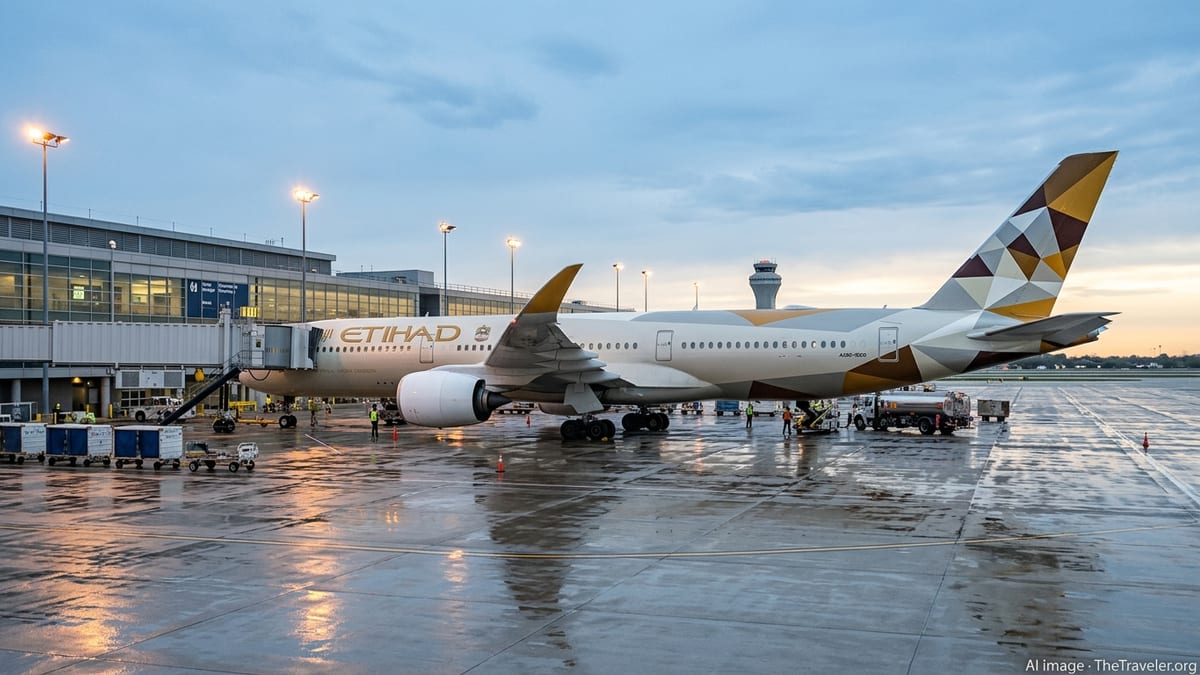
Etihad Airways is preparing a major boost to its United States network by doubling its Abu Dhabi–Chicago O’Hare flights and assigning its flagship Airbus A350-1000 to the route, a move that strengthens the United Arab Emirates’ transatlantic reach and adds fresh capacity on a key corridor for business and leisure travel.
Get the latest news straight to your inbox!
Strategic Expansion on a Key US Gateway
The increase in Chicago services positions Abu Dhabi more firmly as a connecting hub between the United States, the Indian subcontinent, and wider Asia. Publicly available schedule data indicates that Chicago has long been one of Etihad’s primary North American gateways, and the additional rotations are expected to support growing demand from both corporate and visiting-friends-and-relatives traffic.
By moving to double-daily operations, the carrier is seeking to offer more flexible departure times in both directions, giving travelers improved options for same-day connections beyond Abu Dhabi. The step also underlines the broader ambition of the United Arab Emirates to widen direct air links with major US markets, competing more directly with regional rivals for long-haul passengers.
For Chicago O’Hare, the enhanced schedule adds another ultra-long-haul frequency, reinforcing the airport’s role as a Midwest hub for international connectivity. The extra seats and cargo capacity are likely to be welcomed by travel trade partners who have been watching long-haul capacity rebuild and shift in response to evolving global demand.
A350-1000 Becomes the Workhorse on Abu Dhabi–Chicago
Deploying the Airbus A350-1000 on the upgraded schedule places one of the most fuel-efficient widebody aircraft at the center of Etihad’s Chicago strategy. The type is already a core part of the airline’s long-haul fleet, and publicly available fleet documents highlight its role in reducing fuel burn and emissions per seat compared with older twin-aisle jets.
The A350-1000 is configured to balance premium and economy seating, aligning with Chicago’s mix of corporate travelers and value-focused passengers. Its modern cabin environment, lower cabin altitude, and improved humidity are marketed across the industry as contributing to a more comfortable experience on flights of over 13 hours, such as the Abu Dhabi–Chicago sector.
Using a single, common long-haul type on multiple daily frequencies can also simplify scheduling and maintenance. Industry analyses often point to the cost benefits of operating a homogeneous widebody subfleet, and the decision to center the Chicago expansion on the A350-1000 appears consistent with Etihad’s broader fleet optimization efforts.
Enhanced Connectivity for US and Global Travelers
The increased flight frequency is expected to improve onward connectivity from Chicago across Etihad’s network, including destinations in India, Southeast Asia, and the Middle East. Additional daily options can reduce connection times in Abu Dhabi, particularly for travelers heading to cities that have limited daily services and rely on well-timed bank structures at the hub.
For US-based passengers, more frequent nonstops to Abu Dhabi create an alternative to routings via European or other Gulf hubs, potentially spreading demand more evenly across the transatlantic and transpolar markets. Travel industry commentary frequently notes that competitive schedules and modern cabins are key factors when passengers choose between Gulf carriers serving the Midwest.
The expanded operations may also support tourism flows in both directions. Chicago residents gain easier access to Abu Dhabi and onward leisure destinations across the Indian Ocean and Asia, while visitors from the UAE and beyond gain additional arrival and departure choices at one of America’s largest metropolitan gateways.
Passenger Experience and Product Positioning
The A350-1000 has drawn attention from frequent flyers for its cabin design and inflight technology, and traveler reports often highlight the quietness of the aircraft and the quality of onboard entertainment systems on long-haul sectors. Etihad has been positioning its A350-1000s as a showcase for its refreshed cabin experience in both premium and economy cabins.
Business-class customers on the Chicago route are expected to benefit from fully flat seating and direct aisle access, features that have effectively become the standard for competitive long-haul products. In economy, the relatively new interiors and USB charging options help align the product with expectations on other leading intercontinental carriers.
By upgrading capacity with a modern widebody instead of simply adding older aircraft, the airline is signaling that passenger experience remains central to its North American strategy. This focus is particularly important on a route where travelers have alternatives via other Gulf and European hubs.
Implications for Competition and the UAE’s Global Reach
Doubling Chicago frequencies with the A350-1000 underscores how central the United States has become in the network planning of Gulf-based carriers. Additional Abu Dhabi–Chicago capacity places competitive pressure on rival airlines operating from nearby hubs, while also reinforcing the UAE’s status as a key connector between North America, Europe, Asia, and Africa.
For the wider market, extra seats on an ultra-long-haul route can have a moderating influence on fares, particularly during peak seasons when demand between the US Midwest and South Asia has historically stretched available capacity. Travel analysts often observe that additional frequencies, rather than larger aircraft alone, can be especially effective at attracting high-yield passengers who value flexibility.
The move also aligns with the UAE’s broader aviation strategy, which emphasizes international connectivity as a pillar of economic development. As Etihad builds out a long-haul network anchored by efficient next-generation aircraft, the Abu Dhabi–Chicago corridor is set to play a prominent role in connecting travelers and trade flows across continents.