

More news on this day
Etihad Airways has expanded its network of fee waivers and flexible rebooking options into 2026, giving many travelers more time and room to adjust plans without extra charges as the Middle East situation and rolling schedule changes continue to disrupt flights.
Get the latest news straight to your inbox!
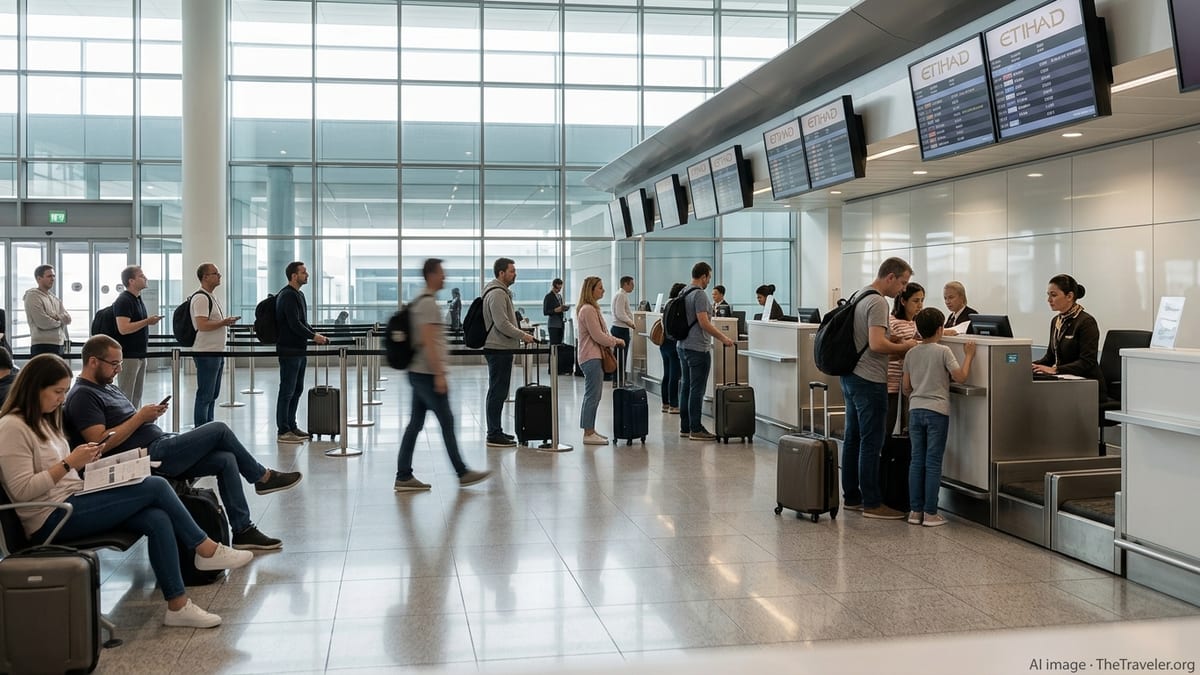
What Etihad’s Expanded Waiver Policies Actually Cover
Publicly available information shows that Etihad has introduced several overlapping waiver policies for 2025 and 2026, largely focused on travelers affected by the evolving situation in the Middle East and associated schedule cuts. The latest advisories describe a combination of free rebooking windows, refund options, and special provisions for both individual and group bookings.
Recent guidance on Etihad’s trade portal and in regional aviation coverage indicates that guests holding Etihad tickets issued on or before 28 February 2026, with original travel dates through late March, can often change their itineraries once without paying change fees when moving to Etihad-operated flights on new dates. In many cases, these replacement journeys can be scheduled as far ahead as mid April or mid May 2026, depending on when the original flight was due to depart.
Separate commercial waivers apply on certain routes where airspace restrictions or aircraft changes have forced last minute adjustments. For example, specific policies cover services impacted by Middle East airspace closures, Pakistan schedule changes and modified aircraft deployment on select regional routes. These tailored waivers may allow rebooking within a fixed window of a few weeks around the original travel date, again without standard change penalties.
For travelers, the effect is a patchwork of flexibility rather than one single global waiver. Understanding which policy applies to a booking is critical to avoiding unnecessary fees or last minute airport surprises.
Key Dates and Deadlines Through April 2026
Reports from Gulf-based outlets and airline communication channels point to a series of cut off dates that determine who can move travel for free and how far into 2026 they can push a trip. For tickets issued on or before 28 February 2026, many passengers whose original journeys were scheduled between late February and late March 2026 are being offered a free change option, often allowing rebooking on Etihad-operated flights up to mid April or mid May 2026. Some accounts from travelers indicate that refund eligibility has been extended in phases, first to the end of March and later into April for affected routes.
Group travel, including tour series and large blocks of seats, is subject to its own waiver bulletin. According to information shared on Etihad’s distribution hub for agents in early March 2026, group bookings disrupted by the Middle East situation can typically be moved without extra charge as long as the new departure takes place by mid May 2026 and remains in the same cabin and booking class where seats are available.
Beyond these special waivers, Etihad has also publicized a broader flexibility policy for tickets issued on or after early March 2026 for travel well into 2027. That program, designed to support new bookings, usually offers one free change within a wide travel period, though it sits alongside and does not replace the targeted disruption waivers focused on the early 2026 period.
Passengers planning to travel close to the end of any waiver window should pay particular attention to dates. Once a stated rebooking deadline passes, normal fare rules and change fees are likely to apply again, even if disruption in the region continues.
How to Reschedule Your Etihad Flight Without Fees
Travelers who believe they qualify for Etihad’s current waivers have several options to reschedule. Public information from the airline and travel trade advisories indicate that the most direct methods are through the “manage booking” function on Etihad’s website, via the airline’s call centers, or through the original issuing travel agent. Many waiver bulletins specify that changes must be processed using the original point of sale, particularly for tickets issued by third party agents or as part of group arrangements.
In practice, travelers are usually asked to keep the same origin and destination, and to select new flights in the same cabin. Where possible, rebooking is offered in the same booking class, though some policies permit the lowest available booking class in that cabin without a change fee. Any fare difference may still be collected if the new itinerary is more expensive, so “free rebooking” generally refers to the waiver of change penalties rather than a complete freeze on price changes.
For disrupted itineraries involving cancellations, travelers are often encouraged to move to the next available Etihad-operated service on the same route, or to accept rerouting via alternative gateways in the region where airspace restrictions make the original routing impossible. Published guidance suggests that waiver codes are applied internally by agents to ensure change fees are bypassed correctly, so passengers should explicitly mention that they are seeking assistance under the current Middle East or schedule disruption waiver if the agent does not reference it unprompted.
Because hold times at call centers have reportedly been long during peak disruption periods, some travelers have had more success by working directly with their original travel agency, especially when an itinerary combines Etihad with partner airlines or complex stopovers.
Tips to Avoid Last Minute Travel Disruptions
Even with generous waivers, the ongoing instability in regional flight operations means travelers need to be proactive. Published coverage in Gulf and Indian media recommends that passengers monitor their flight status regularly in the days before departure and again on the day of travel. Etihad has been updating limited flight schedules in blocks of several days at a time, which means departure times, aircraft types and even operating carriers on some routes can change at short notice.
Travelers connecting through Abu Dhabi are being advised by multiple outlets to build in generous layover buffers where possible. With airspace diversions and congested routings, long haul services may experience extended flight times. A tighter connection that looked comfortable at booking could become risky if upstream flights are rescheduled or rerouted.
Insurance specialists and consumer travel advocates also highlight the value of comprehensive travel insurance that covers schedule change costs not fully absorbed by airline waivers. While Etihad’s policies can remove change fees and sometimes open refund options, they do not usually cover downstream expenses such as missed hotel nights, nonrefundable tours, or connecting flights on other carriers.
Travelers should keep all documentation, including original booking confirmations, updated itineraries and any written references to waiver eligibility. These records can be important when discussing options with agents or when seeking reimbursement from an insurer for residual costs.
What Travelers Should Watch for as Policies Evolve
As the regional situation and Etihad’s operating schedule continue to evolve, analysts expect the airline’s waiver framework to be updated again, particularly if further airspace or airport restrictions are introduced. Previous extensions of free rebooking and refund windows have generally been announced in short increments, sometimes only days before earlier deadlines were due to expire.
Passengers with travel booked in April 2026 and beyond should therefore treat current dates as provisional and check frequently for new advisories. Historic patterns across the industry show that airlines tend to widen or renew waivers when a disruption clearly extends beyond original expectations, but they may also narrow eligibility criteria as conditions stabilize.
For now, the expanded Etihad flexibility gives many travelers a pathway to postpone or reroute 2026 trips without penalty, especially those heading to or connecting through affected parts of the Middle East. By tracking the latest bulletins, staying in close contact with booking agents and monitoring flight status in the days leading up to departure, passengers can make the most of the temporary relief on offer and reduce the risk of last minute airport surprises.