

More news on this day
Etihad Airways has expanded its travel-disruption waiver, giving eligible passengers more time and flexibility to change their plans without extra fees on journeys affected by the ongoing Middle East situation.
Get the latest news straight to your inbox!
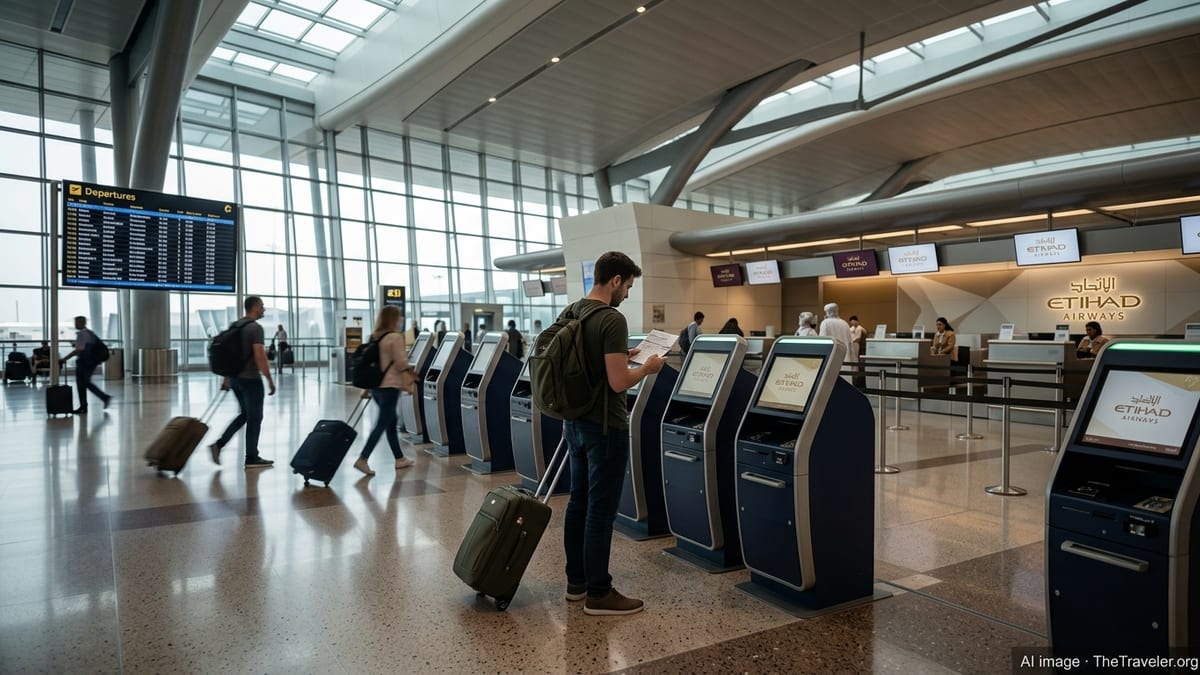
What Etihad’s Expanded Waiver Actually Covers
Publicly available policy documents and advisories indicate that Etihad has widened its disruption waiver so that many tickets impacted by the Middle East situation can now be rebooked free of airline change fees on new dates through April 2026. The precise end date and eligible travel window may differ by ticket issue date, routing and fare type, but the overall direction of recent updates has been toward longer validity and broader flexibility.
In general, the waiver applies to itineraries to, from or via affected points on Etihad-operated flights where schedules are disrupted or where the airline has formally acknowledged the impact of the regional situation. Travelers with tickets issued before specific cutoff dates, often in late February or early March 2026, appear to benefit most, as many of the published summaries reference those issue dates as a key qualifying factor.
Separate guidance continues to distinguish between simple date changes on the same route and more complex modifications such as changing destination, origin or cabin. While fee waivers are common for straightforward rebookings within the permitted period, any difference in fare between the original and new flights may still be collected, which means a free change does not necessarily guarantee a zero-cost itinerary.
Key Eligibility Rules Travelers Need to Check
Travelers hoping to use the expanded waiver through April 2026 need to verify several details on their bookings before attempting to reschedule. The first is the ticket issue date, which determines whether the itinerary falls inside the waiver’s scope. Many disruption policies specify that only tickets issued on or before a certain date qualify, even if the actual travel is planned months later.
The second critical factor is the travel window originally booked. Advisory PDFs and agency briefings typically reference travel by specific dates in March and April 2026, with the waiver granting permission to move those journeys further out, often into late spring or beyond. If the original travel sits outside the defined window, standard change penalties and fare rules are more likely to apply.
Routing also matters. Policies usually require that new flights follow the same origin and destination, and remain on Etihad-operated services, to keep the change fee fully waived. Shifting to a different city pair or combining Etihad with other airlines on the same ticket can trigger a fresh fare calculation and potentially additional costs, even if some flexibility remains.
Finally, travelers should pay attention to the final date by which new travel must be completed. While some guidance points to free rebooking through mid May 2026 on certain disrupted flights, broader updates now reference availability to move trips into April 2026 and beyond. The safest approach is to confirm the last permissible travel date for the specific fare and waiver line that applies to the ticket in question.
Step by Step: How to Reschedule for Free
Using Etihad’s disruption waiver efficiently starts with gathering all key booking details before reaching out to any sales channel. Passengers should have their ticket number, booking reference, original travel dates, routing and fare brand at hand. Checking these details against the latest publicly available waiver summaries can help confirm that the trip falls within the eligible period and route criteria.
Once eligibility appears clear, travelers are generally advised to work through the channel where the ticket was purchased. Those who booked directly with Etihad, either on the website, mobile app or contact centers, can usually request changes through those same platforms, using the manage booking tools or speaking to support staff when necessary. For tickets purchased via online travel agencies or traditional travel agents, current guidance repeatedly stresses that any rebooking must be handled by that intermediary, since they control the ticket.
Passengers should prepare at least two or three alternative date options that fall within the permitted rebooking window and try to keep the same origin, destination and cabin. This improves the odds of securing a new itinerary without added penalties. In many cases, the waiver removes the typical change fee, but if the new flight sits in a higher fare bucket or during a busier travel period, a fare difference may still need to be paid at the time of reissue.
After confirming a new itinerary, travelers should request updated confirmations and review them carefully. It is important to check that the reissued ticket clearly reflects a zero airline change fee under the waiver, that the new dates fall before the final allowed travel deadline, and that any additional charges are strictly labeled as fare difference rather than penalties.
How to Minimize Disruption and Avoid Last Minute Stress
Reports from recent weeks suggest that schedules on some routes through the region remain fluid, with occasional retimings, aircraft swaps and short-notice cancellations. Travelers who already know they will not be able to fly on their original dates are often better served by acting early under the waiver instead of waiting for the airline to make a same-day cancellation or involuntary change.
Monitoring bookings frequently is essential. Using the airline’s app or online tools to check for time changes and equipment updates can give travelers an early signal that an itinerary might be at risk. If a flight experiences a significant schedule change, that can sometimes trigger additional flexibility even outside the formal waiver language, making it easier to move to a more convenient option.
Travelers who have connecting journeys, such as long-haul flights into Abu Dhabi with onward sectors to Europe, Asia or Australia, should pay special attention to minimum connection times and buffer periods. When leveraging the waiver to rebook, it may be wise to choose slightly longer layovers to reduce the chance of misconnecting if earlier segments are delayed due to operational or airspace constraints.
For trips involving high-value events, such as cruises, conferences or once-in-a-lifetime tours, some passengers are choosing to split complex itineraries or build in overnight stops, trading a marginal increase in travel time for a much higher chance of arriving on schedule. The expanded waiver through April 2026 makes such proactive adjustments more financially feasible for many travelers.
Practical Tips Before You Lock in New Travel Dates
Before finalizing new flights under the Etihad waiver, travelers should compare several date combinations to see how fares and cabin availability shift across the eligible period. Even where the change fee is waived, moving to peak weekends, major holiday periods or especially busy routes can generate substantial fare differences, while midweek or shoulder-season dates may keep added costs to a minimum.
It is also worth reviewing other parts of the trip that might need adjustment once flights are moved. Hotel reservations, car rentals, trains and local tours may each have their own change or cancellation terms, some of which are less flexible than the airline’s expanded waiver. Adjusting these elements at the same time as the flight reduces the risk of overlooked fees later.
Travel insurance policies can add another layer of protection, but travelers should check policy wording carefully to see how coverage interacts with voluntary changes under an airline waiver. Some policies focus on nonrefundable third party costs when a trip is disrupted, while others may exclude changes that are technically optional, even if prompted by evolving regional conditions.
Finally, keeping careful records can save time if disputes arise. Maintaining screenshots or PDFs of the relevant Etihad waiver language as it appears on the day of rebooking, along with updated itineraries and receipts, creates a clear paper trail. If questions about eligibility, fees or refunds emerge later, these documents can help travelers demonstrate that their changes were made in good faith under the terms that were publicly available at the time.