

More news on this day
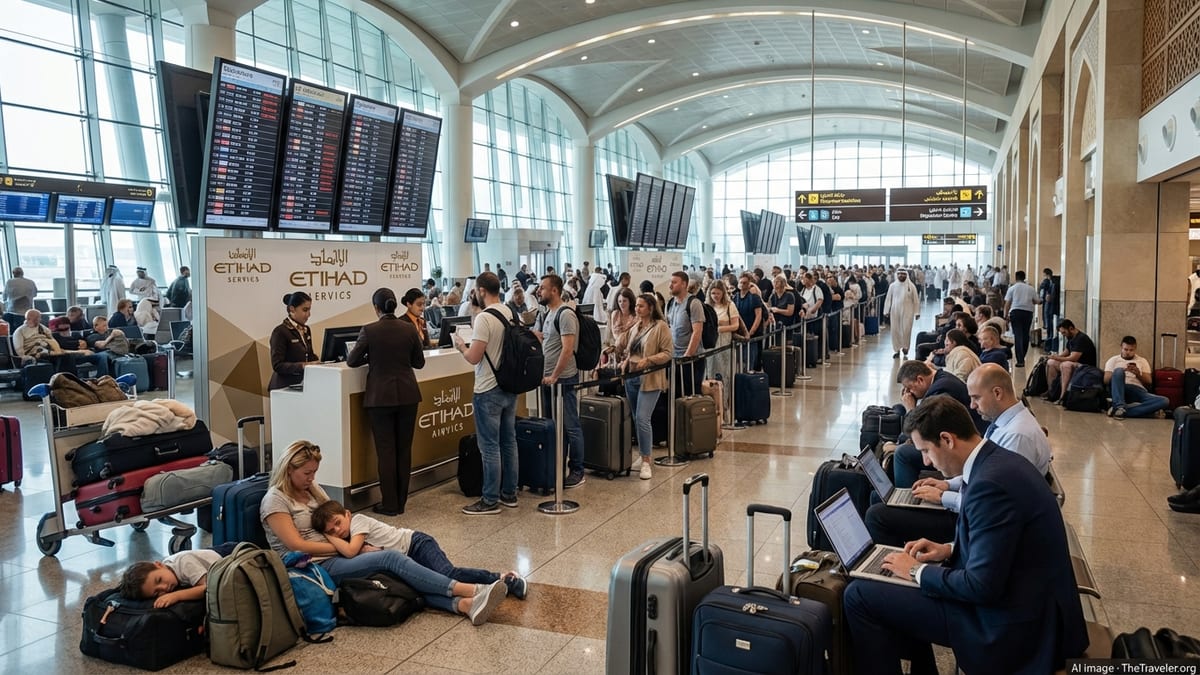
Thousands of travelers were left stranded at Abu Dhabi’s Zayed International Airport this weekend after Etihad Airways suspended all flights to and from the UAE capital amid sweeping airspace closures linked to escalating military tensions between the United States, Israel and Iran.
Etihad Locks Down Operations as Airspace Tightens
Etihad Airways confirmed that all flights to and from Abu Dhabi are suspended until at least 14:00 UAE time on Monday, 2 March, as regional authorities keep large portions of Gulf airspace closed for safety reasons. The move extends an earlier shutdown of all departures from the carrier’s Zayed International Airport hub and has effectively frozen one of the Middle East’s major long haul gateways at the start of the Gulf working week.
The UAE General Authority of Civil Aviation described the measure as a temporary, precautionary closure of national airspace in response to rapidly deteriorating security conditions in the wider region. With airspace over Iran, Iraq and parts of the Gulf also heavily restricted, airlines have few viable corridors for safe passage, forcing widespread cancellations and diversions.
Etihad has advised passengers not to travel to the airport unless their flight is shown as operating, warning that schedules remain highly fluid and subject to last minute change. The carrier stressed that guest and crew safety is its top priority and said it is coordinating closely with regulators to resume normal operations as soon as conditions allow.
Global Routes Disrupted and Transit Hubs Jammed
The suspension is hitting some of the world’s most heavily trafficked long haul and regional routes, as Abu Dhabi sits on key corridors linking Europe and North America with South Asia, Southeast Asia and Africa. High demand services to London, major Indian metros, Southeast Asian capitals and popular leisure destinations have been among those most affected, according to aviation data providers tracking cancellations.
Across the broader Middle East, analysts estimate that thousands of flights have been cancelled or rerouted since the latest round of strikes and counterstrikes began over the weekend. Major hubs in Dubai, Doha and Abu Dhabi, normally handling tens of thousands of connecting passengers daily, have been operating at sharply reduced capacity or temporarily shut to commercial traffic.
With Gulf carriers halting services and overflight options shrinking, long haul itineraries that would normally funnel through the region are being pushed onto more northerly or southerly paths. This has led to longer flight times, last minute aircraft swaps and a surge in demand for seats via alternative hubs such as Istanbul, Muscat and European gateways, where airlines are struggling to absorb the displaced traffic.
Passengers Face Long Queues, Thin Information and Scarce Alternatives
At Abu Dhabi’s terminal, long lines formed at transfer desks and airline help counters as the suspension took hold, with many passengers reporting limited options to rebook in the short term. Hotel rooms close to the airport and in the city’s main business districts quickly filled as airlines sought to accommodate stranded travelers needing overnight stays or multi day stopovers.
Travelers on high demand routes described spending hours in queues or on hold with call centers, competing for the same shrinking pool of alternative seats via other hubs. Families returning from school holidays, business travelers due to start work trips on Sunday and migrant workers heading back to job sites across the Gulf and beyond were among those most affected by the sudden halt.
Etihad has offered free rebooking on its own services through mid March for passengers whose tickets were issued before the latest escalation, as well as the option of full refunds for canceled flights. However, with much of the carrier’s near term schedule still in flux and rival Gulf airlines also cutting back, securing new itineraries has proved difficult for many stranded guests, particularly those needing to connect onward to smaller regional airports.
Airlines Scramble to Reroute and Manage Operational Fallout
Operationally, Etihad and other Gulf carriers face a complex puzzle of aircraft and crew positioning as they prepare for a phased restart once airspace limitations ease. Aircraft that were en route to Abu Dhabi at the time of the closures were diverted back to origin airports or to alternates outside the affected region, scattering equipment and crew across multiple continents.
Industry sources say carriers are working through rolling network plans, modeling different scenarios depending on how quickly corridors reopen and whether any additional restrictions are imposed. Priority is expected to go first to stranded passengers with missed onward connections, as well as to essential cargo flows, once limited operations resume.
The shock disruption comes at a sensitive time for Gulf aviation, which has been rebuilding long haul networks and corporate travel volumes after the pandemic. Abu Dhabi has invested heavily in its new Zayed International terminal and positioned Etihad as a premium global connector; a prolonged shutdown of its hub would put significant pressure on both the airline’s financials and the wider UAE tourism and trade ecosystem.
Uncertain Outlook as Security Tensions Persist
While Etihad and UAE authorities have set an initial target of Monday afternoon for lifting the current suspension, officials caution that the timeline remains dependent on the regional security picture and on coordination with neighboring states that control adjoining airspace. Notices to airmen and military advisories are being updated frequently as the situation evolves.
Aviation analysts warn that even a partial reopening of airspace may see carriers operate reduced schedules for several days, as they work through backlogs, reposition aircraft and crews and reassess routings around any remaining conflict zones. Longer flight times and higher fuel burn on detoured routes could add to costs at a moment of already elevated oil prices.
For now, travelers with upcoming journeys through Abu Dhabi and other Gulf hubs are being urged to monitor airline channels closely, keep contact details updated in their bookings and prepare for the possibility of last minute changes. With no clear indication of when full normality will return to Middle East skies, the weekend’s events have underscored how quickly geopolitical tensions can ripple through global travel plans, leaving even the most seasoned flyers unexpectedly grounded.