

More news on this day
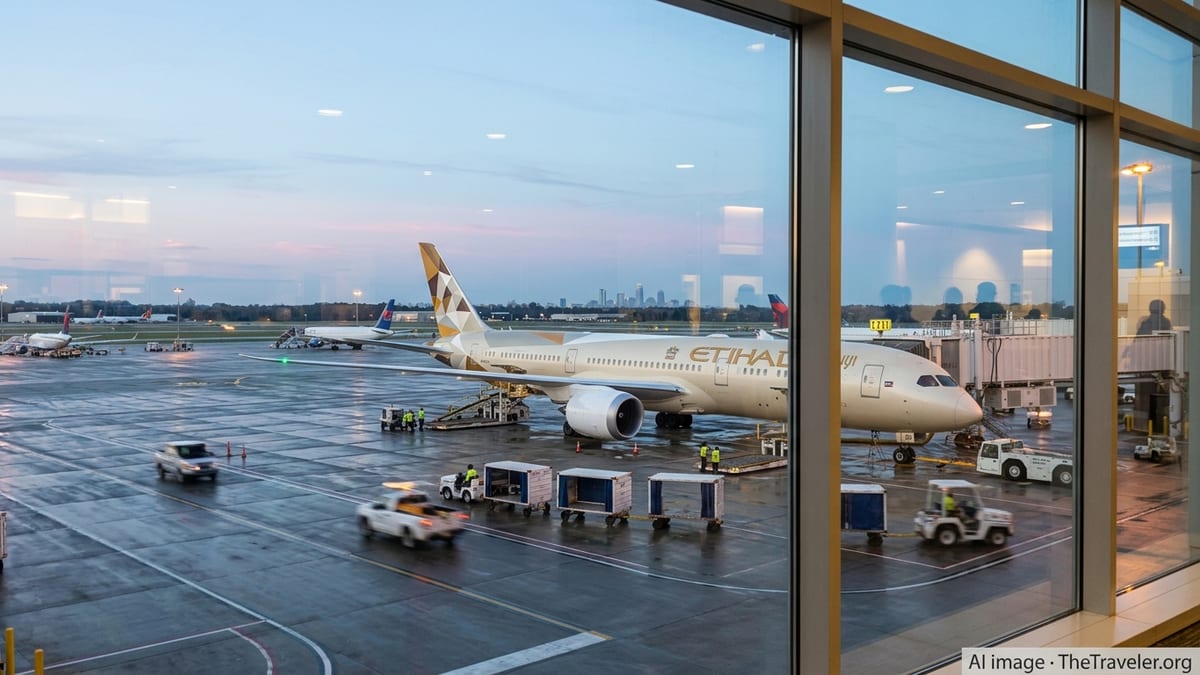
Etihad Airways is set to launch a new nonstop service between Charlotte Douglas International Airport and Abu Dhabi, introducing the first direct link between the North Carolina hub and the United Arab Emirates and reshaping long-haul connectivity options for travelers across the U.S. Southeast.
Get the latest news straight to your inbox!
A New Transatlantic Gateway for the U.S. Southeast
Publicly available network information indicates that Charlotte will join Etihad’s expanding list of North American gateways as part of a broader push to strengthen Abu Dhabi’s role as a global hub. The new service is expected to connect one of the fastest‑growing banking and business centers in the United States with the capital of the United Arab Emirates, reflecting rising two‑way demand for business, leisure, and VFR travel.
Charlotte Douglas International Airport has traditionally relied on connecting services via major European and U.S. hubs for journeys to the Gulf and beyond. The introduction of a nonstop Abu Dhabi route changes that dynamic, allowing passengers from North Carolina, South Carolina, and neighboring states to bypass congested hubs and access a direct long‑haul link to the Middle East and onward destinations in Asia and Africa.
According to published route data, Etihad’s expansion strategy highlights secondary but high‑growth U.S. markets, with Charlotte joining a network that already includes nonstop links from Abu Dhabi to airports such as Washington Dulles, Chicago O’Hare, and New York JFK. Industry analysts note that this pattern reflects a broader trend among Gulf carriers, which increasingly target large regional centers rather than focusing solely on the biggest coastal gateways.
The new route is also expected to strengthen trade and investment ties. Abu Dhabi’s position as an energy, finance, and technology hub complements Charlotte’s established banking and corporate services base, potentially stimulating new corporate travel, trade delegations, and bilateral business activity between the regions.
Route Details and Schedule Expectations
Timetable details circulating in aviation schedules and airport planning documents point to the Charlotte–Abu Dhabi service operating with long‑haul widebody aircraft, in line with Etihad’s existing transatlantic operations. While final timings remain subject to operational confirmation, industry schedule forecasts suggest a pattern designed to provide overnight eastbound travel to Abu Dhabi and daytime westbound returns to North Carolina.
Operational data linked to Abu Dhabi’s Zayed International Airport shows that the new service is scheduled to commence in late May 2026, positioning the launch ahead of the busy summer travel season. This timing is consistent with typical airline strategy, allowing the carrier to capture peak leisure demand while also bedding in the route with business travelers ahead of the autumn corporate travel period.
The flight is expected to integrate into Etihad’s established bank of arrivals and departures in Abu Dhabi, providing coordinated connections onward to destinations across the Middle East, Indian Subcontinent, Africa, and Asia. Network maps released by the airline highlight Charlotte as a new spoke feeding into this hub structure, offering one‑stop itineraries to cities such as Mumbai, Manila, Nairobi, and Bangkok.
While final frequency patterns can evolve based on demand, aviation planning sources suggest that an initial several‑times‑weekly schedule could scale up over time if load factors support additional capacity. Such a phased approach is typical for new long‑haul markets, allowing carriers to match supply with demand and adjust aircraft deployment as performance becomes clearer.
Passenger Experience and Product Offering
Based on Etihad’s current long‑haul product standards, travelers on the Charlotte–Abu Dhabi route can expect a multi‑class configuration featuring a full‑service cabin experience. Publicly available fleet information indicates that the airline typically deploys widebody aircraft equipped with lie‑flat business class seating, a standard economy cabin, and, on select aircraft types, a premium economy or enhanced comfort product.
The route’s length and positioning as a key intercontinental link suggest that in‑flight services will mirror those offered on Etihad’s existing North American services. These typically include full meal service, extensive inflight entertainment options, and connectivity offerings such as onboard Wi‑Fi, with specific details varying by aircraft type and configuration.
For travelers originating in or connecting through Charlotte, the new nonstop also simplifies ground logistics. Instead of transferring through distant hubs, passengers can check in at Charlotte Douglas International Airport and remain on the same aircraft until arrival in Abu Dhabi, reducing the risk of missed connections and baggage mishandling associated with multi‑stop itineraries.
Travel industry observers note that the carrier’s growing North American footprint has been accompanied by ongoing refinements to its customer proposition, with an emphasis on product consistency and updated cabin interiors across key long‑haul aircraft. As aircraft assignments for the Charlotte route are finalized, more detailed information on specific seating layouts and onboard amenities is expected to become available.
Implications for Regional Connectivity and Competition
The addition of Charlotte to Etihad’s network is expected to intensify competition for long‑haul passengers in the U.S. Southeast. The region has historically been dominated by domestic carriers and transatlantic partnerships centered on European hubs, leaving Gulf connections to be served mainly via airports such as New York, Washington, or Atlanta on competing airlines.
By providing a direct Gulf hub link, the new Abu Dhabi service gives travelers an alternative one‑stop option to reach markets that have traditionally required two connections or complex routings. Travel agencies and corporate travel managers in the Carolinas and neighboring states are likely to gain additional flexibility when building itineraries to South Asia, Southeast Asia, and parts of Africa.
Aviation analysts suggest that the move may also prompt competitive responses from rival carriers, potentially including fare adjustments, capacity shifts, or enhanced partnership offerings via other hubs. The presence of a Gulf carrier in Charlotte could encourage alliances and joint ventures to reinforce their own one‑stop propositions through European and U.S. partner hubs.
In the longer term, the Charlotte–Abu Dhabi route may support the case for additional international services from the North Carolina airport, as sustained long‑haul performance can help demonstrate underlying demand to other global carriers. The route’s success will likely be tracked closely by airports and airlines assessing similar secondary U.S. markets for future expansion.
Strategic Significance for Abu Dhabi’s Global Hub
For Abu Dhabi, the launch of nonstop flights from Charlotte aligns with a wider strategy to position Zayed International Airport as a global connecting hub with a diversified portfolio of origin markets. Network expansion announcements in recent years have emphasized both new destinations and increased frequencies, with the aim of strengthening connection banks and improving schedule choice for travelers.
By adding a new U.S. Southeast origin, Etihad broadens the geographic spread of its North American traffic base, reducing reliance on a small number of mega‑gateways and drawing demand from a region with a growing population and strong corporate presence. This diversification is viewed by industry observers as a way to enhance resilience against localized demand shocks and fluctuating economic conditions.
The route also supports Abu Dhabi’s tourism ambitions. Nonstop connectivity from Charlotte opens up easier access for leisure travelers from the Carolinas and neighboring states to explore the emirate’s cultural attractions, desert landscapes, and waterfront developments. At the same time, residents of the UAE gain a new direct option for visiting the American South, including access to regional destinations via domestic connections beyond Charlotte.
As the start date approaches, further operational updates, schedule refinements, and commercial promotions are expected to surface through airline and airport communication channels. Travel planners and passengers are being encouraged, through publicly available guidance, to monitor official schedule publications for the most current flight information and availability on the new Charlotte–Abu Dhabi link.