

More news on this day
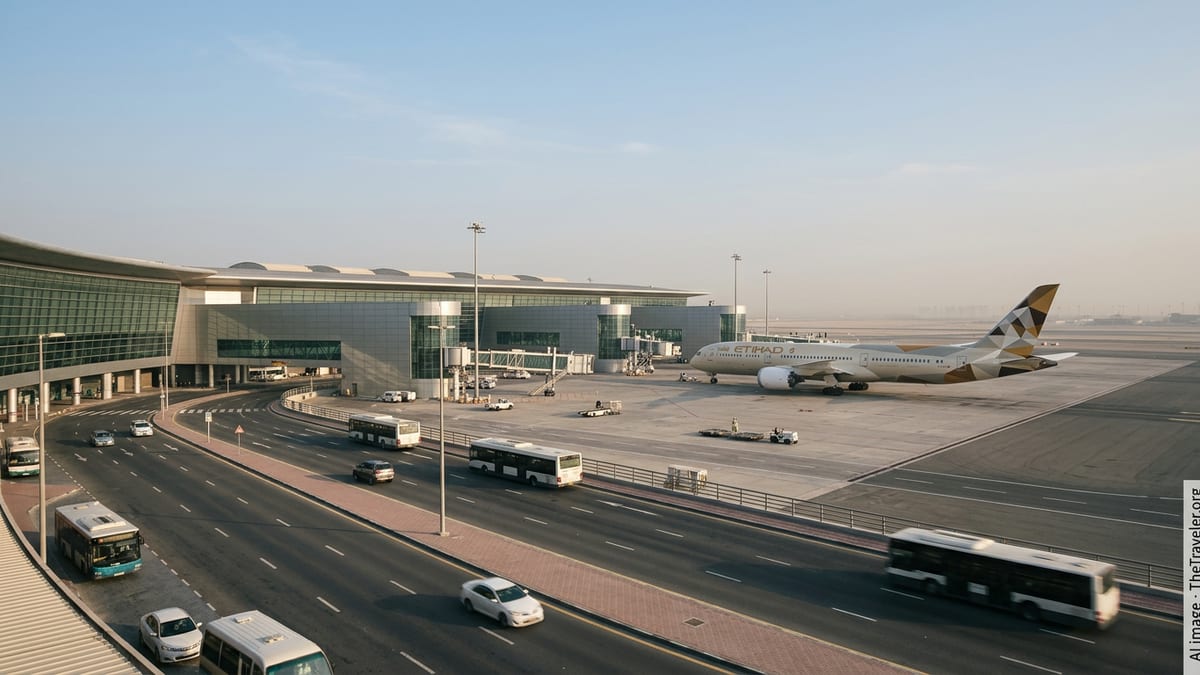
Etihad Airways has resumed a limited schedule of commercial flights from Abu Dhabi from March 6, offering select connections to key international destinations even as large parts of West Asia’s airspace remain tightly restricted by the ongoing regional conflict.
Carefully Restarting Operations From Abu Dhabi
The Abu Dhabi based carrier confirmed that a restricted network of routes is now operating from Zayed International Airport after several days in which all regular passenger services were suspended. The move follows a partial reopening of airspace across the Gulf, although aviation authorities continue to impose stringent routing constraints and last minute approvals on departures and arrivals.
According to Etihad’s latest operational advisories, the airline is initially focusing on a core list of destinations judged operationally and commercially critical, including major cities in Europe, Asia and North America. Industry reports indicate that between 25 and 70 destinations are being served in some form, though frequencies are sharply reduced and flight times have lengthened due to detours around no fly zones.
The limited restart comes after sweeping airspace closures across West Asia in late February triggered mass cancellations at key hubs such as Abu Dhabi, Dubai and Doha. Those shutdowns followed an escalation in the conflict involving the United States, Israel and Iran, which prompted authorities in multiple countries to shut down or severely curtail overflight permissions on safety grounds.
Etihad has stressed that the resumption remains contingent on day to day security assessments. The airline has warned that flight plans could be altered at short notice if risk levels change or additional airspace restrictions are imposed, and that further suspensions remain a possibility.
Who Can Travel and What Passengers Are Being Told
For now, Etihad is prioritising travellers who already hold confirmed bookings on newly operating services between March 6 and March 19, the initial window for the restricted schedule. The carrier has repeatedly urged customers not to head to Zayed International Airport unless they have received direct confirmation that their flight will operate or can see an active, on time status in their booking.
Passengers whose flights remain cancelled are being offered rebooking and refund options under a rolling waiver policy that currently covers departures through late March. Travel agents and online booking platforms have been instructed to handle changes for tickets not purchased directly from the airline, adding an extra layer of coordination for stranded travellers trying to secure alternative routes.
Even for those cleared to depart, journeys are more complex than usual. With several neighbouring states maintaining partial or full closures of their airspace, many Etihad flights are operating on elongated southbound routings before turning toward Europe or Asia, increasing flight times and tightening connection windows at onward hubs. Travellers are being advised to allow extra time for connections and to monitor their reservations frequently for last minute schedule shifts.
Airport authorities in Abu Dhabi have bolstered staffing at information desks and customer service counters to deal with the uneven flow of departures. Despite the limited restart, terminals are expected to see fluctuating crowds as repatriation passengers, residents and transit travellers converge on the relatively small number of flights now available.
Regional Airspace Crisis Still Far From Resolved
Etihad’s cautious return to the skies comes against the backdrop of an unprecedented airspace crisis across West Asia, where key transit corridors linking Europe with South and Southeast Asia have been heavily disrupted. Since late February, closures over Iran, Iraq, parts of the Gulf and the eastern Mediterranean have forced airlines to cancel hundreds of flights and divert others onto longer, costlier routes.
Major Gulf carriers including Emirates, Qatar Airways and flydubai have also announced skeletal operations or special relief services, but most regular schedules remain trimmed back. Aviation analysts note that while some airspace has reopened in recent days, authorities are still restricting altitude bands and routing options, leaving airlines with limited flexibility to restore pre crisis frequencies.
The United Arab Emirates itself implemented a temporary and partial closure of its skies, halting traffic over key hubs and prompting a scramble by foreign governments to arrange evacuation and repatriation flights for their citizens. Those emergency services, coordinated with local authorities, have gradually given way to tightly controlled commercial operations such as Etihad’s newly announced schedule.
Industry observers warn that the region’s recovery will hinge on more durable security guarantees and a clearer picture of how the conflict will evolve. Until then, airlines are expected to keep capacity constrained, impacting not only point to point travel to the Middle East but also global itineraries that rely on Gulf hubs for connections between Europe, Africa and Asia.
What This Means for Global Travelers and the Abu Dhabi Hub
For international travelers, Etihad’s partial restart provides a crucial but still limited lifeline out of the region and across key long haul markets. The carrier is a major connector between Europe, India, Southeast Asia, Australia and North America, and its extended suspension in recent days has rippled across itineraries far beyond West Asia.
The resumption of select flights will help ease the backlog of stranded passengers in Abu Dhabi and at outstations where aircraft and crews have been left out of position. However, reduced frequencies mean that rebookings may stretch over several days, and some travellers may continue to opt for alternative routings via unaffected hubs where possible.
For Abu Dhabi, the restart is also an important step in keeping its ambitions as a global transit hub on track. Zayed International Airport, which only recently completed a high profile terminal transition, depends heavily on Etihad’s transfer traffic. Prolonged disruption could undermine recent gains in passenger numbers and challenge the emirate’s broader tourism and investment strategies.
Local tourism businesses, from hotels and attractions to transport providers, are watching the airline’s schedule closely. While domestic demand and regional visitors can offset some of the downturn, the full ecosystem around Abu Dhabi’s airport and hospitality sector relies on the steady stream of long haul guests that Etihad usually delivers.
Outlook: A Gradual and Uneven Path Back to Normal
Etihad has signalled that it expects to operate a limited schedule at least through March 19, with the possibility of gradual expansion if airspace conditions stabilize and regulatory approvals allow. Any decision to increase frequencies or add destinations will be taken only after further security assessments by the airline and national authorities.
Travel industry insiders anticipate a protracted period of timetable volatility, with rolling schedule updates, pop up relief flights and ongoing cancellations as airlines juggle safety considerations, crew duty limits and aircraft availability. Corporate travel managers and tour operators are advising clients to build additional buffers into their plans, purchase flexible tickets where possible and remain prepared for last minute changes.
For now, Etihad’s measured return to the skies from Abu Dhabi offers a cautiously optimistic signal that regional connectivity can be rebuilt, even as the underlying conflict and associated airspace risks remain unresolved. Passengers looking to travel to or through the UAE in the coming days are being strongly encouraged to treat flight confirmations as provisional and to stay closely tuned to the latest airline and airport updates.