

More news on this day
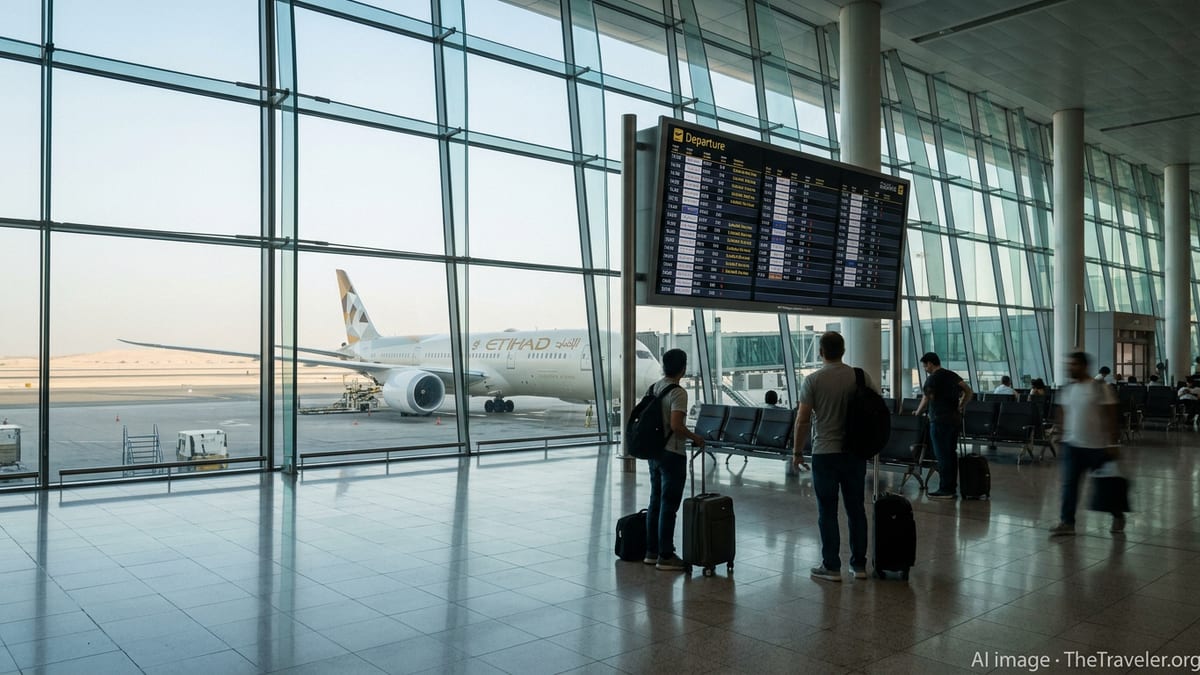
Etihad Airways is returning to the skies with a limited schedule of commercial flights from Abu Dhabi starting 6 March 2026, cautiously reconnecting the UAE capital with dozens of major global destinations after days of sweeping regional airspace disruptions.
What Is Changing From 6 March
The Abu Dhabi based carrier confirmed it will resume a restricted number of services from Friday, following coordinated safety and security assessments with aviation authorities. The move marks a significant shift from the near total suspension of scheduled flights that has stranded thousands of passengers across the Middle East and beyond in recent days.
According to Etihad’s latest operational bulletins, the airline will operate a trimmed commercial network through at least 19 March, with schedules subject to short notice adjustments depending on evolving airspace restrictions. Flights before 06:00 UAE time on 6 March remain cancelled, but services after that time are now being progressively reinstated.
Etihad is stressing that this is not a full return to normal operations. Aircraft and crew are being deployed on carefully selected routes judged to be viable under current overflight and safety constraints, and frequencies on many city pairs will be lower than usual.
Airports in Abu Dhabi are also managing capacity and access, with a focus on keeping terminals clear for passengers holding seats on confirmed operating flights and for any ongoing relief and repositioning operations.
Key Global Destinations Back on the Map
In its most recent update, Etihad listed around 70 destinations that will see services to and from Abu Dhabi between 6 and 19 March. The reinstated network spans major hubs across Europe, Asia, North America, Africa and the wider Middle East, restoring at least some connectivity on many of the airline’s busiest long haul corridors.
Among the headline routes returning are services to London Heathrow, Paris, Frankfurt, Amsterdam, Madrid, Rome and Zurich in Europe, as well as New York, Washington, Boston, Chicago, Atlanta and Toronto in North America. Long haul flights to Sydney and Melbourne are also scheduled, reconnecting Abu Dhabi with Australia’s largest cities after the interruption.
In Asia, Etihad plans to operate to key gateways including Bangkok, Kuala Lumpur, Singapore, Hong Kong, Tokyo, Seoul and multiple destinations in India such as Delhi, Mumbai, Bengaluru, Kochi and Kolkata. Services are also due to run to cities in the Gulf, North Africa and the Levant, including Cairo, Jeddah, Riyadh, Muscat, Nairobi and Casablanca, with Tel Aviv and several Southeast Asian holiday favourites such as Phuket, Krabi and Bali listed on the temporary timetable.
The schedule is being described by aviation analysts as a bridging network, designed to re establish core links for transit and point to point traffic while giving the carrier flexibility to scale up or wind back rapidly as regional airspace stabilises.
What Stranded and Ticketed Passengers Should Expect
Etihad has said that travelers already holding bookings on suspended services will be prioritised as flights come back online. Many affected passengers are being automatically rebooked on the newly scheduled services, with notifications sent by email, SMS or through travel agents as seats become available.
The airline and regional media reports indicate that customers with tickets for travel up to at least 10 March can request refunds or rebooking options without standard change penalties, reflecting the fluid nature of the situation. More flexible policies are in place for tickets issued before the current crisis whose original travel dates fall within March, allowing rerouting or date changes into the coming weeks.
However, travelers report that call centres and digital channels remain heavily congested after days of cancellations, and some passengers continue to voice frustration about limited communication and difficulties securing new itineraries. Aviation industry observers note that all Gulf carriers are juggling high demand for scarce seats, complex crew duty rules and fast moving risk assessments, making a perfectly smooth restart unlikely.
For those who are rebooked, connection times through Abu Dhabi may be longer or shorter than on original itineraries, and in some cases routings will involve different intermediate stops or operating days than originally ticketed.
Essential Advice Before You Head to the Airport
Etihad and UAE authorities are urging passengers not to travel to Abu Dhabi’s airport unless they have been directly contacted by the airline or hold a confirmed booking on one of the operating flights listed in the limited schedule. Terminal access controls and security checks remain tighter than usual, and walk up passengers without confirmed seats are unlikely to be accommodated.
Travelers are being advised to check the status of their flight repeatedly on the day of departure, as last minute cancellations or time changes remain possible while airspace routings are recalibrated. Contact details on bookings should be updated so automated alerts can reach passengers quickly if their service is adjusted.
Experts also recommend allowing extra time for check in and security, as staffing levels and passenger flows may be uneven while the operation ramps back up. Those with onward connections on other airlines should carefully verify minimum connection times and consider travel insurance or flexible fares where possible.
Passengers already overseas who are due to fly into Abu Dhabi on Etihad in the coming days should pay close attention to local airport information, as some foreign airports are operating special arrangements for travelers on limited Gulf services, including segregated check in areas or specific transport links.
What This Limited Comeback Means for Future Travel
Industry analysts see Etihad’s measured restart as an important signal that regional aviation is edging back toward normality, even as the underlying security situation remains volatile. The airline had been forced to suspend the bulk of its network as nearby conflict and retaliatory strikes triggered airspace closures and made some routes temporarily unsafe or commercially unviable.
By restarting with a carefully curated list of core routes and a clear operating window through 19 March, Etihad is effectively testing the resilience of new routings and coordination mechanisms with air navigation authorities. If conditions allow, more destinations and higher frequencies could be added in stages, eventually restoring something closer to the carrier’s full global schedule.
For travelers, the limited comeback provides a badly needed outlet for those separated from families, work commitments or onward travel plans. At the same time, it underscores how fragile long haul connectivity can be when geopolitical tensions affect key air corridors.
For now, Etihad’s message is one of cautious optimism: essential routes are back, but flexibility and patience remain essential as the airline, regulators and passengers navigate an evolving situation one flight at a time.