

More news on this day
Etihad Airways is preparing to operate 66 passenger flights out of Abu Dhabi on Sunday, March 29, 2026, a concentrated schedule that highlights both the airline’s rapid post-disruption recovery and Abu Dhabi’s growing profile as a global aviation hub.
Get the latest news straight to your inbox!
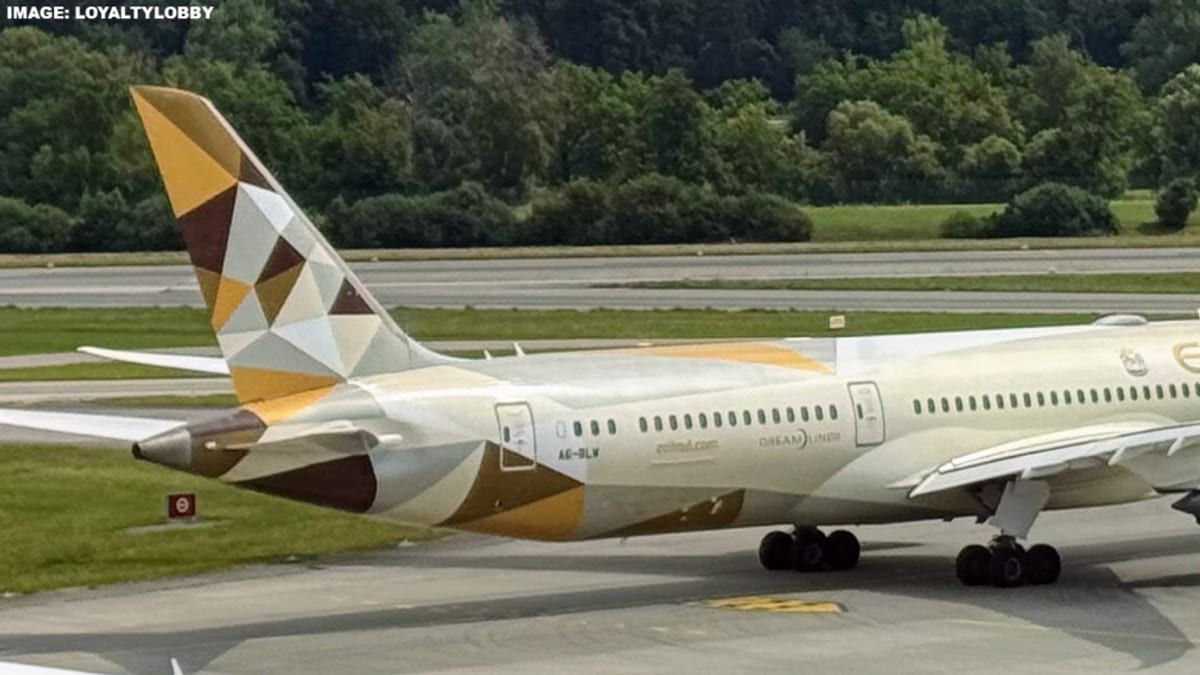
Image by LoyaltyLobby
Surge In Departures Marks New Phase Of Recovery
Publicly available operational data and flight tracking information indicate that Etihad’s schedule for Sunday, March 29, 2026 will feature 66 outbound services from Abu Dhabi’s Zayed International Airport. The figure represents one of the densest single day departure patterns for the carrier since the phased resumption of services earlier in the month, when a combination of regional tensions and airspace restrictions temporarily curtailed operations.
Reports from recent days show that Etihad moved from operating only a limited number of services in early March 2026 to gradually restoring frequencies and destinations across its network. Industry coverage notes that by the middle of the month, the airline was already running several dozen daily departures from its hub, with plans to continue scaling up as conditions and demand allowed.
The 66 flights now scheduled out of Abu Dhabi on March 29 are being interpreted by aviation analysts as a signal that the carrier is approaching a more stable operating rhythm. While the total still sits below the 300 daily flights Etihad has targeted systemwide as part of its broader growth plan, it nevertheless underscores how quickly the airline is rebuilding its timetable following a period of constrained activity.
Abu Dhabi’s airport operator has also been working to support a safe and orderly ramp up, with operational updates indicating that runway availability, air traffic flows and ground services have been progressively realigned to accommodate the increasing volume of departures and arrivals.
Network Balance Between Long Haul And Regional Links
Based on typical Etihad scheduling patterns and the carrier’s current network, the 66 flights departing Abu Dhabi on March 29 are expected to span a mix of long haul routes to North America, Europe and East Asia, along with dense regional services across the Gulf, the Indian subcontinent and key leisure destinations. Recent network updates show Etihad concentrating growth on markets such as India, Southeast Asia and Africa, while also consolidating capacity on established trunk routes to major European capitals.
Industry analysis of Etihad’s fleet deployment indicates that widebody aircraft like the Boeing 787 and Airbus A350 are being directed toward high demand intercontinental services, including connections to major hubs in Europe and North America. At the same time, the carrier’s newer single aisle aircraft, including the Airbus A321LR introduced on select routes from August 2025, are increasingly used on medium haul sectors linking Abu Dhabi with key cities in the Middle East, North Africa and parts of Asia.
This blend allows the airline to maximize connectivity through its Abu Dhabi hub on a day with elevated outbound activity. A significant portion of the 66 departures is likely to be timed to feed connecting banks, aligning short and medium haul arrivals with onward long haul departures, a strategy that has underpinned Etihad’s growth throughout 2025 and into 2026.
Travel industry observers point out that this approach also supports Abu Dhabi’s wider tourism and economic objectives. As Etihad increases the number of departure waves on peak days such as March 29, more passengers are routed through the UAE capital, bolstering hotel stays, conference traffic and leisure visits while improving aircraft utilization for the airline.
Underpinning Strong Growth And Profitability
The busy March 29 schedule comes against the backdrop of record financial and traffic performance for Etihad. Recent financial disclosures for 2025 show the airline delivering its strongest results in its history, with profitability supported by higher load factors, disciplined capacity growth and a focused network strategy that emphasizes Abu Dhabi as a transfer and destination hub.
Traffic statistics from late 2025 highlight that Etihad carried significantly more passengers year on year, with September 2025 alone seeing nearly 1.9 million travelers systemwide and average load factors close to 90 percent. That momentum carried into early 2026 as the carrier continued to open new routes and add frequencies, even as it navigated periodic airspace disruptions and shifting demand patterns.
Abu Dhabi’s broader aviation market has also been expanding, with government and industry figures citing double digit growth in passenger numbers in 2025 and additional infrastructure investment at Zayed International Airport. Etihad’s contribution to that growth has been particularly pronounced, with some official data indicating that the airline accounted for roughly half of the UAE’s incremental passenger gains in 2025.
Analysts note that a day featuring 66 Etihad departures from Abu Dhabi is a practical illustration of how the carrier is converting this strategic expansion into daily operations. Each additional wave of flights enhances connectivity, strengthens Abu Dhabi’s competitive position relative to other regional hubs and reinforces Etihad’s role at the center of the emirate’s travel and tourism ambitions.
Operational And Passenger Experience Considerations
Running 66 flights out of a single hub over the course of a day requires careful coordination across airline and airport operations. Ground handling resources, check in desks, security screening capacity and air traffic control slots all need to be synchronized to keep turnaround times tight and minimize delays, particularly during peak departure banks.
Publicly available information from recent weeks indicates that Etihad has been actively adjusting flight timings, aircraft assignments and crew schedules as it rebuilds its March 2026 timetable. Travel advisories have emphasized the importance for passengers of monitoring flight status closely and arriving at the airport earlier than usual on days with a heavy schedule, as procedures may be adjusted in line with evolving operational or security requirements.
The airline’s recent fleet investments are expected to support a smoother experience on days like March 29. The introduction of new generation aircraft, including long range narrowbodies with upgraded cabins, has been presented by industry coverage as a way to improve comfort on regional and medium haul sectors while maintaining fuel efficiency and operational flexibility.
For passengers connecting through Abu Dhabi, a departure day with 66 outbound services should translate into a wider choice of routings and shorter connection times on many city pairs. Travel agents and online booking platforms have already flagged an increase in available itineraries through the hub in late March 2026, reflecting the gradual restoration of the network following earlier disruptions.
Significance For Abu Dhabi As A Global Hub
The concentration of 66 Etihad flights leaving Abu Dhabi on a single Sunday also carries symbolic weight for the emirate’s long term aviation strategy. Abu Dhabi has been positioning itself as a global connector between East and West, in competition with nearby hubs that have traditionally attracted a larger share of long haul transfer traffic.
Over the past two years, Etihad’s expansion has been closely aligned with Abu Dhabi’s broader economic diversification plans, which seek to attract more international visitors, business events and trade flows. New routes announced into 2025 and 2026 have increasingly targeted fast growing markets in Asia and Africa, as well as secondary cities in Europe, supporting both inbound tourism and outbound travel for residents of the UAE.
On days when Etihad operates well over 60 departures from its home base, the visibility of Abu Dhabi on global departure boards is noticeably higher, reinforcing the perception of the city as a major gateway. Aviation commentators argue that this halo effect supports investment across sectors, from hospitality and retail to logistics and professional services, as more travelers and businesses consider Abu Dhabi in their plans.
While the March 29 schedule remains subject to operational adjustments, the current plan for 66 Etihad departures from Abu Dhabi underscores how quickly the airline and its home hub are moving from recovery back to growth. For passengers, industry stakeholders and the emirate itself, the day’s busy timetable offers a snapshot of the renewed momentum behind Abu Dhabi’s ambitions in global aviation.