

More news on this day
Etihad Airways is scheduled to operate 71 departures from Abu Dhabi’s Zayed International Airport on Monday, March 30, 2026, marking one of the carrier’s busiest single days since it began restoring services following regional disruptions earlier in the month.
Get the latest news straight to your inbox!
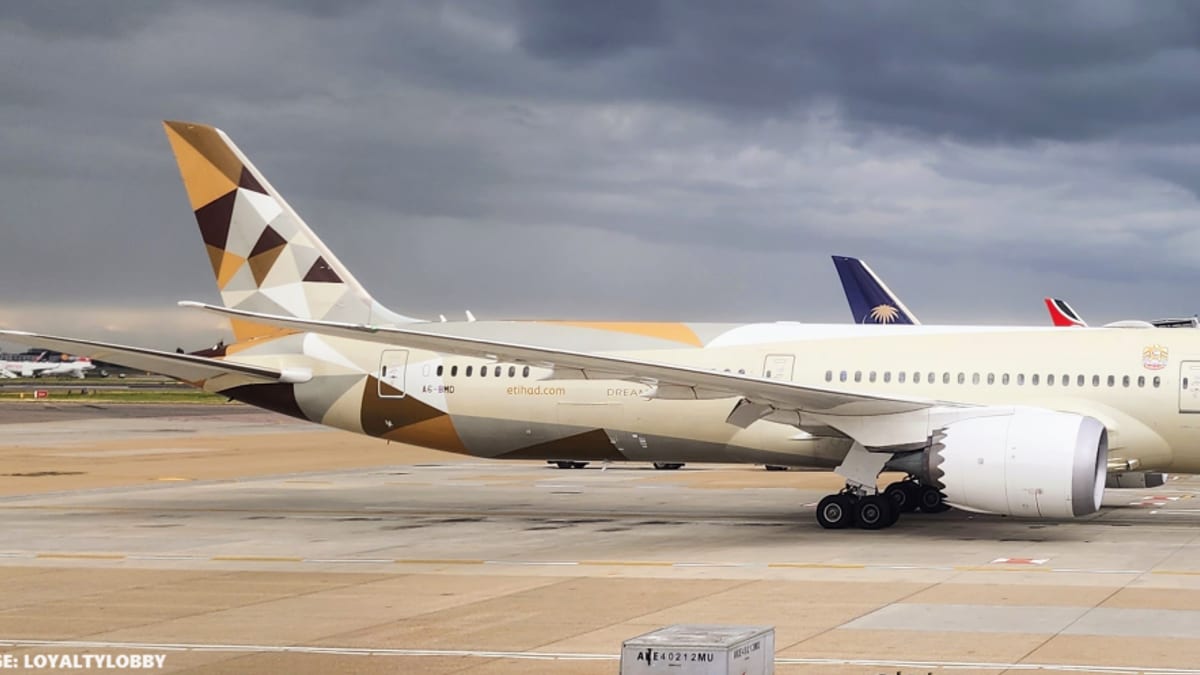
Image by LoyaltyLobby
Busy Day At Zayed International Airport
The 71 scheduled flights on March 30 reflect how quickly Etihad’s network has scaled up from the limited operations that followed airspace and security restrictions across parts of the Middle East in early March. Publicly available information shows that the airline has been progressively reintroducing routes and frequencies from its Abu Dhabi hub through the second half of the month.
Operational data for late March indicates that outbound traffic from Abu Dhabi is now spreading across Etihad’s full mix of regional and long haul markets, with numerous banks of departures structured across morning, afternoon and late evening peaks. The 71-flight day on March 30 sits near the upper end of the carrier’s revised March schedule and underscores the role of Abu Dhabi as a primary connection point for travelers moving between Asia, Europe, Africa, Australia and North America.
Airport planners at Zayed International have been working with a condensed but still complex timetable that must accommodate passenger services alongside growing cargo demand. Reports indicate that Etihad’s expanded bellyhold capacity on passenger aircraft has become increasingly important for shippers during the current period of constrained regional capacity, adding another layer of planning to each departure slot on March 30.
While the total number of flights remains below the highest peaks seen before the recent conflict-related disruption, the March 30 schedule signals renewed momentum for the hub, with aircraft and crew rotations beginning to resemble a more stable operating pattern.
Network Spread Across Key Global Regions
The 71 departures comprise a broad spread of destinations, with a significant concentration on high volume markets in the Indian subcontinent and wider Asia, complemented by links to major European gateways, Gulf and Middle Eastern cities, and selected services to North America and Australia. According to published coverage of Etihad’s March schedule, the airline has prioritized routes that support both point to point demand and onward connectivity through Abu Dhabi.
Services to cities such as Mumbai, Delhi, Kochi and Dhaka are expected to make up a notable portion of the March 30 roster, reflecting strong demand from visiting friends and relatives traffic and labor flows. Regional connections to key Gulf and Middle Eastern destinations remain important, both for essential travel and to feed longer haul flights leaving Abu Dhabi later in the day.
On the long haul side, reports on Etihad’s network plan for 2026 highlight a continued focus on Europe and North America, including new links such as Charlotte in the United States entering the schedule in late March. Although individual flight numbers on March 30 are subject to change, the presence of transatlantic and European departures reinforces the role of Abu Dhabi as a through-hub for passengers traveling between the Americas or Europe and markets in South and Southeast Asia.
Etihad’s emerging Central and Eastern European and Central Asian routes, developed through the 2025 and 2026 seasons, are also expected to feature within the 71-flight total, adding to the diversity of destinations available from Abu Dhabi on that day.
Recovery From Early March Disruptions
The busy schedule on March 30 follows a month that began with widespread disruption across air corridors in the Gulf region. According to open reporting on the conflict that escalated at the start of March, airspace restrictions and safety concerns led many airlines, including Etihad, to suspend or sharply curtail operations for several days.
Etihad subsequently published a phased resumption plan, initially centered on a limited set of “special” or essential services and gradually expanding the list of permitted destinations. By mid March, schedule updates and waiver notices indicated that more routes were being restored, with additional flexibility for passengers booked up to the end of the month to change travel dates without penalty.
The move from a small number of evacuation and essential flights in early March to 71 scheduled departures on March 30 illustrates how quickly airlines can rebuild capacity once operational conditions improve. It also reflects pent up demand from travelers whose earlier journeys were postponed, creating a bulge of rebooked passengers alongside newly booked trips.
Industry analysts observing the March recovery have pointed to Etihad’s experience in ramping up from earlier periods of reduced flying during global crises. That playbook, involving tightly controlled capacity increases and close coordination with regulators and airport operators, appears to be informing the structure of the late March schedule, including the busy day forecast on March 30.
Implications For Passengers And Connectivity
For travelers, a day with 71 departures from Abu Dhabi translates to more options for routing and timing, but it also introduces complexity for those navigating a fluid timetable. Reports from passenger forums through March describe frequent timing adjustments and aircraft swaps as Etihad has fine tuned its restored services, suggesting that travelers departing on March 30 would benefit from closely monitoring their bookings in the days leading up to departure.
The increased volume of flights also strengthens one of Abu Dhabi’s core selling points as a transit hub: tightly timed connections. With multiple daily frequencies resuming on routes to the Indian subcontinent, Europe and Southeast Asia, passengers booking for March 30 gain improved opportunities to minimize layover times and access a wider range of onward destinations in a single journey.
At the same time, the airline’s flexible ticketing policies, extended into late March according to publicly available advisories, remain a critical tool for managing lingering uncertainty. The combination of a robust schedule and continued flexibility may help support traveler confidence as the network rebuild continues into April.
For Abu Dhabi itself, a day of 71 outbound Etihad flights contributes to broader economic activity linked to tourism, business travel and trade. Passenger throughput supports airport retail and hospitality, while the associated cargo capacity helps keep regional and global supply chains moving at a time of disrupted shipping patterns elsewhere in the Middle East.
Strategic Positioning For The Rest Of 2026
Looking beyond March 30, the scale of Etihad’s operations that day fits into a wider strategy to grow its 2026 footprint from Abu Dhabi. Recent corporate updates have pointed to the airline’s strongest financial performance on record in 2025, supported by a growing fleet and a wave of new destinations scheduled to come online between late 2025 and the end of 2026.
The late March ramp up, including the 71 flights set to depart on March 30, can be seen as an early test of the hub’s capacity to absorb an expanded network in the months ahead. Lessons from operating a heavy schedule in a still sensitive regional environment are likely to inform planning for the northern summer season, when additional routes and higher frequencies typically come into play.
From a competitive standpoint, a robust day of operations at the end of March helps position Etihad alongside regional peers that are also working to restore and grow capacity following the early March disruption. With multiple Gulf carriers vying for transfer traffic across similar geographies, the ability to maintain a dense, reliable wave of departures from Abu Dhabi is central to Etihad’s value proposition.
As March closes, the 71 scheduled flights on Monday, March 30 stand as a snapshot of an airline moving from crisis response back toward growth mode, using its Abu Dhabi base and expanding fleet to reestablish global connectivity while the wider region continues to adjust to a changed operating landscape.