

More news on this day
Etihad Airways is set to launch the first-ever nonstop flights between Abu Dhabi and Calgary in November 2026, creating a new air corridor between the Gulf and Western Canada and strengthening competition for long-haul traffic across the North Atlantic and Pacific gateways.
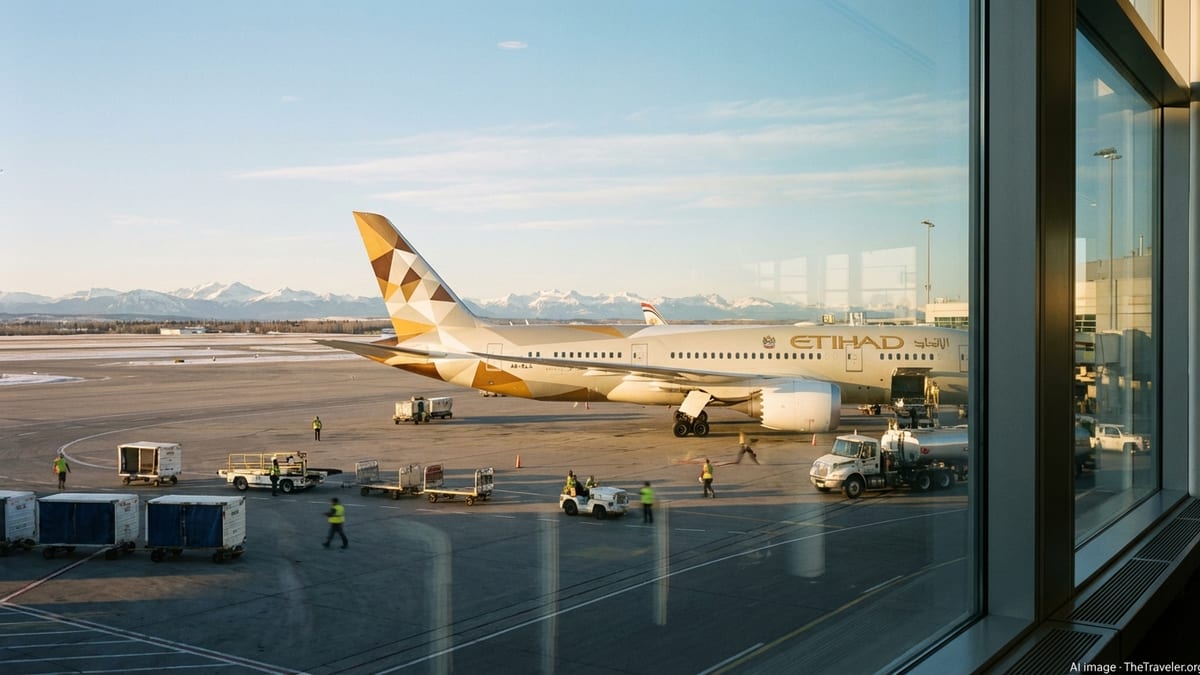
New Route Connects Abu Dhabi and Western Canada
The Abu Dhabi-based carrier has confirmed it will begin scheduled service between Zayed International Airport and Calgary International Airport on November 3, 2026. The move marks Etihad’s first entry into Western Canada and the first nonstop link between the United Arab Emirates and Calgary, a fast-growing hub for energy, technology and tourism.
Etihad plans to operate the route four times per week, using a Boeing 787 Dreamliner configured with Business and Economy cabins. The schedule, designed to provide daylight flying westbound and overnight connections eastbound, will see flight EY29 depart Abu Dhabi in the morning and arrive in Calgary around midday, with the return EY30 leaving Calgary in the early evening and reaching Abu Dhabi the following day.
The new service adds Calgary to Etihad’s expanding North American network, which already includes Toronto and multiple United States gateways. It comes as the airline continues a broader growth strategy, rebuilding and reshaping its long-haul schedule with new aircraft deliveries and rising demand between the Middle East and the Americas.
Calgary airport officials have welcomed the announcement as a milestone that elevates the city’s global connectivity. For the local market, Abu Dhabi will become a one-stop option to major destinations across the Middle East, South Asia, Africa and Australasia, bypassing traditional routings via Europe or other North American hubs.
Strategic Boost for Trade, Energy and Tourism
The nonstop link is expected to enhance trade flows between the UAE and Western Canada, particularly in energy, petrochemicals, renewables and technology services. Calgary sits at the heart of Alberta’s oil and gas industry and is increasingly positioning itself as a center for clean energy transition, while Abu Dhabi is investing heavily in both hydrocarbons and low carbon technologies.
Executives and project teams who previously routed through Toronto, Vancouver or European hubs will gain a shorter, more predictable journey. Freight forwarders are also watching the development closely, with the bellyhold capacity of the 787 providing new options for time-sensitive shipments ranging from high value machinery and parts to perishables and pharmaceuticals.
On the tourism side, the new flights are expected to stimulate two-way leisure travel. For travelers from the Gulf, Calgary offers direct access to the Canadian Rockies, including Banff and Lake Louise, which are among Canada’s most visited national park destinations. For Canadians, Abu Dhabi becomes a convenient gateway to beach resorts, cultural tourism in the wider Middle East and onward travel to the Indian Ocean and Asia.
Industry analysts note that the route could also benefit Alberta’s efforts to attract foreign investment and skilled workers. Easier access to the Gulf region and beyond may bolster Calgary’s pitch as a base for multinational firms looking to serve both North American and global markets from a single Western Canadian hub.
Calgary Strengthens Role as International Gateway
The announcement further consolidates Calgary International Airport’s position as a rising long-haul gateway. In recent years, the airport has been working to diversify its international offering beyond transborder and European routes, courting carriers from Asia and the Middle East to tap into the region’s growing population and outbound travel demand.
By securing Etihad’s first Western Canadian service, Calgary joins a select group of North American cities with nonstops to Abu Dhabi. The route also complements existing links to other Middle Eastern and global hubs, giving airlines and alliances additional options for coordinating schedules and interline agreements.
Local tourism boards and economic development agencies are preparing targeted marketing campaigns in the UAE and wider Gulf to coincide with the launch. These efforts are expected to spotlight Alberta’s outdoor experiences, Indigenous tourism, winter sports and year round cultural events, positioning Calgary and the Rockies as an alternative to more established Canadian entry points.
For the airport itself, the new flights fit into a broader capacity and infrastructure plan designed to handle larger widebody aircraft and higher passenger volumes. Investments in security, customs processing and premium facilities are underway to streamline connections and improve the experience for international travelers using Calgary as a transfer point.
Etihad’s Wider North American and Global Expansion
The Calgary route is part of a wider network build out by Etihad, which has been adding destinations and increasing frequencies across North America, Europe, Asia and the Caucasus. As new aircraft join the fleet, the airline has prioritized markets where it can leverage Abu Dhabi’s geographic position between East and West and feed long haul services with growing regional traffic.
In North America, Etihad has been rolling out additional routes and capacity to both the United States and Canada, targeting cities with strong corporate demand and connecting potential. The inclusion of Calgary aligns with that strategy, tapping into a robust energy-driven economy and a sizable population base that currently relies on one or two stop itineraries to reach the Gulf and South Asia.
Beyond the Americas, Etihad is also opening new routes to Central Asia, the Caucasus and secondary European cities, underscoring its ambition to be a key connector across emerging markets. The airline’s planners view these additions as complementary, feeding long haul flights and allowing more passengers to route through Abu Dhabi in a single stop instead of combining multiple carriers.
While the airline has recently had to navigate temporary disruptions linked to regional airspace closures, its medium term schedule announcements point to confidence in demand and in Abu Dhabi’s role as a resilient global hub once conditions stabilize.
What Travelers Can Expect on the New Service
Passengers on the Abu Dhabi–Calgary flights will travel on Etihad’s Boeing 787 Dreamliner, an aircraft known for lower cabin altitude, higher humidity and larger windows that can help reduce fatigue on long haul journeys. The configuration typically includes a Business Class cabin with fully flat beds and direct aisle access, alongside an Economy cabin with modern in flight entertainment and options for extra legroom.
Timings are structured to offer convenient connections over Abu Dhabi to destinations across the Middle East, the Indian Subcontinent and Southeast Asia. Travelers originating in Calgary will be able to book single ticket itineraries that include through check in of baggage, coordinated minimum connection times and access to Etihad’s partner network beyond Abu Dhabi.
In Calgary, the additional long haul flights are expected to support airport retail, food and beverage outlets and ground transport providers, particularly at peak departure and arrival windows. In Abu Dhabi, the new service will add another Western Canadian city to the mix of long haul destinations feeding the airport’s growing network.
Fares for the route are set to be dynamic, responding to demand patterns across business, visiting friends and relatives, and leisure segments. Travel agents and online booking platforms are already starting to highlight the new option in search results for travel from Western Canada to cities across the Gulf, South Asia and beyond, well ahead of the November 2026 launch date.