

More news on this day
Etihad Airways is returning to Damascus with a new Abu Dhabi route from June 2026, ending a fourteen-year suspension and signaling renewed momentum in Syria–UAE connectivity.
Get the latest news straight to your inbox!
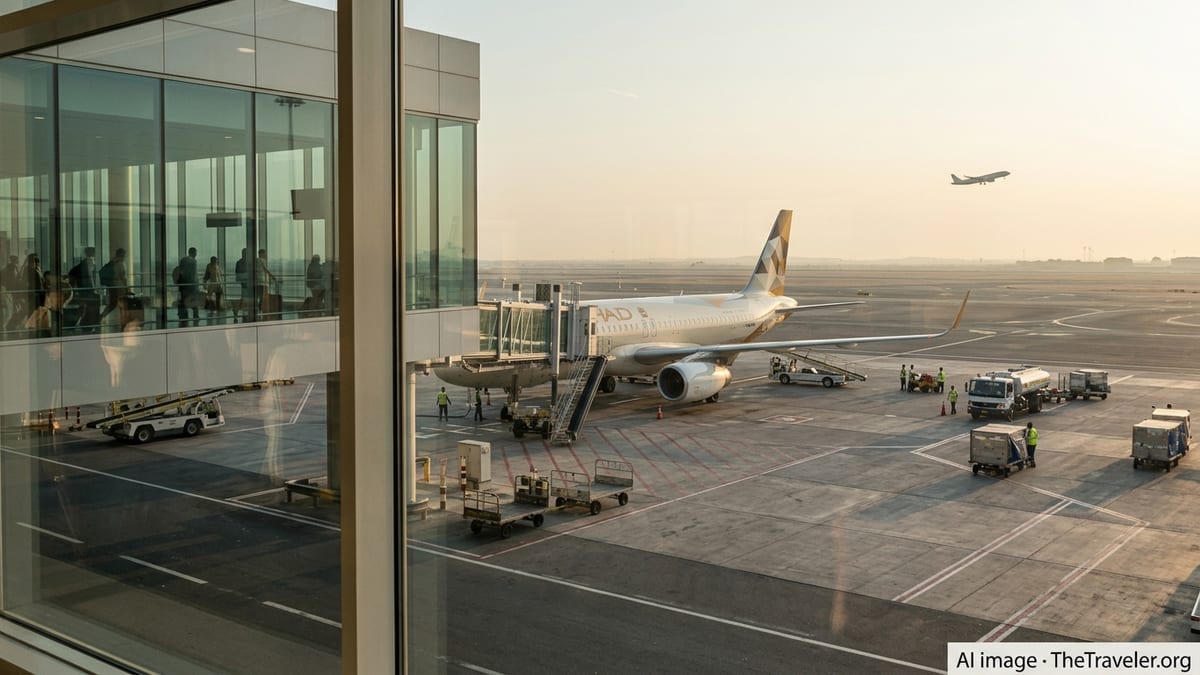
Route Details and Timeline for the Damascus Comeback
According to Etihad’s published network updates, direct flights between Abu Dhabi’s Zayed International Airport and Damascus International Airport are scheduled to begin on 12 June 2026. The carrier plans four weekly services, restoring a route that was halted in 2012 during the height of Syria’s civil conflict, and marking almost fourteen years since the airline last served the Syrian capital.
Publicly available schedules indicate that flight EY561 will depart Abu Dhabi in the morning and arrive in Damascus late morning, while the return service EY562 will leave Damascus mid-afternoon and land back in the UAE early evening. The timings are designed to connect with Etihad’s broader network at Zayed International Airport, enabling one-stop links between Syria and destinations across Europe, Asia, Africa and North America.
The service will be operated by Airbus A320 aircraft, configured with around eight seats in Business and 150 in Economy. This narrow-body deployment reflects a measured restart focused on point-to-point traffic and key connections, with scope for future adjustments if demand strengthens.
Reports from regional travel media add that the route forms part of a wave of new destinations rolled out by Etihad since 2024, as the carrier targets higher passenger numbers and leverages Abu Dhabi’s growing role as a regional hub.
Strategic Significance for Abu Dhabi, Damascus and the Region
The decision to restore links with Damascus positions Abu Dhabi as a key gateway for renewed engagement with Syria. Industry coverage highlights that trade between the UAE and Syria has been rising in recent years, with bilateral flows reportedly increasing in 2024 and 2025 as commercial ties cautiously resume. The new Etihad route is expected to support this trend by simplifying travel for business delegations, investors and traders.
For Damascus, the route offers fresh access to a major global hub at a time when Syria’s aviation connectivity is still rebuilding. Zayed International Airport’s growing long-haul network allows passengers from Syria to reach major cities with a single connection, a practical benefit for students, medical travelers and the Syrian diaspora looking to visit family or manage cross-border businesses.
Aviation analysts cited in specialist outlets note that Etihad’s move also reflects shifting regional dynamics. Several Gulf and regional carriers have gradually returned to Damascus or expanded existing services, suggesting a calculated assessment that demand and operating conditions now justify additional capacity.
The route may also strengthen Abu Dhabi’s tourism ambitions. With Etihad actively marketing the emirate as a stopover and leisure destination, travelers from Syria gain more direct access to cultural attractions, events and new infrastructure in the UAE capital.
Impact on Travelers, Diaspora Communities and Tourism
For passengers, the reinstated Abu Dhabi–Damascus link is expected to reduce travel times and reliance on multi-stop itineraries via third countries. Coverage across Middle East travel outlets emphasizes the importance of this for families split between Syria and the UAE, many of whom have faced longer, more complex journeys for over a decade.
The choice of four weekly flights provides a level of flexibility aimed at both leisure and business travelers, including weekend and midweek options. Industry commentary suggests that, if the route performs strongly, there is potential for increased frequencies or larger aircraft at a later stage, aligning with Etihad’s broader growth targets.
Tourism stakeholders in Abu Dhabi are likely to see an opportunity in promoting short breaks and medical, cultural or shopping trips to visitors from Syria. Conversely, the service could gradually support niche tourism into Syria for regional travelers once conditions and advisories permit, particularly to heritage sites around Damascus that previously drew visitors from the Gulf.
Travel experts cited in regional media caution that visa regulations, security guidance and insurance coverage will remain key considerations for passengers. However, the presence of a large Syrian community in the UAE suggests a solid base of origin-and-destination traffic that may underpin the route regardless of broader tourism flows.
Part of a Wider Revival in Syria’s Air Connectivity
Etihad’s return to Damascus comes amid a broader pattern of airlines re-establishing links with Syria after years of isolation. Aviation-focused publications note that carriers from the UAE and other regional markets have progressively added or reinstated flights to Damascus, Dubai, Sharjah and other points, contributing to a measured recovery in Syria’s international air links.
Damascus International Airport, which has experienced repeated closures and disruptions over the past decade, has seen a gradual rise in scheduled services as infrastructure is repaired and demand recovers. The addition of Abu Dhabi on Etihad’s network places Damascus back on the map for one of the Gulf’s major full-service airlines, complementing operations by regional low-cost and national carriers.
Aviation analysts point out that the move also reflects competitive pressures among Gulf hubs. With other airlines already serving Damascus from Dubai, Sharjah and regional cities, Etihad’s new route aims to ensure Abu Dhabi is represented in this emerging market segment, capturing traffic that might otherwise route via rival networks.
Observers of Middle East aviation trends suggest that performance on the Damascus route will be watched closely as a barometer of both commercial demand and geopolitical risk, potentially influencing future service decisions by other carriers considering entry or expansion.
Operational Outlook and What Comes Next
In operational terms, the Abu Dhabi–Damascus route is scheduled to launch at the start of the busy northern summer season in June 2026, giving Etihad an opportunity to test demand under favorable travel conditions. Travel trade reports indicate that tickets will be sold through the airline’s standard channels and agency partners, with fares likely to align with regional benchmarks for similar medium-haul services.
Industry coverage underscores that safety, regulatory compliance and insurance remain central considerations for any operation into Syria. Aviation analysts expect Etihad’s move to have been preceded by extensive route risk assessments, including airspace, airport infrastructure and ground-handling capabilities at Damascus International Airport.
Looking ahead, network planners quoted in specialist outlets describe the new service as part of a phased expansion strategy. If macroeconomic trends remain supportive and travel demand from the Syrian market continues to grow, the Abu Dhabi–Damascus connection could form the basis for wider cooperation, additional frequencies or seasonal adjustments.
For now, Etihad’s scheduled return in June 2026 stands as a symbolic and practical milestone, encapsulating both the cautious reopening of Syria’s skies and the UAE’s widening role in regional connectivity and trade.