

More news on this day
Etihad Airways is rebuilding its schedule across the Middle East after unprecedented airspace closures in late February and early March 2026, but passengers face an evolving mix of resumptions, selective cancellations and flexible ticket options in the weeks ahead.
Get the latest news straight to your inbox!
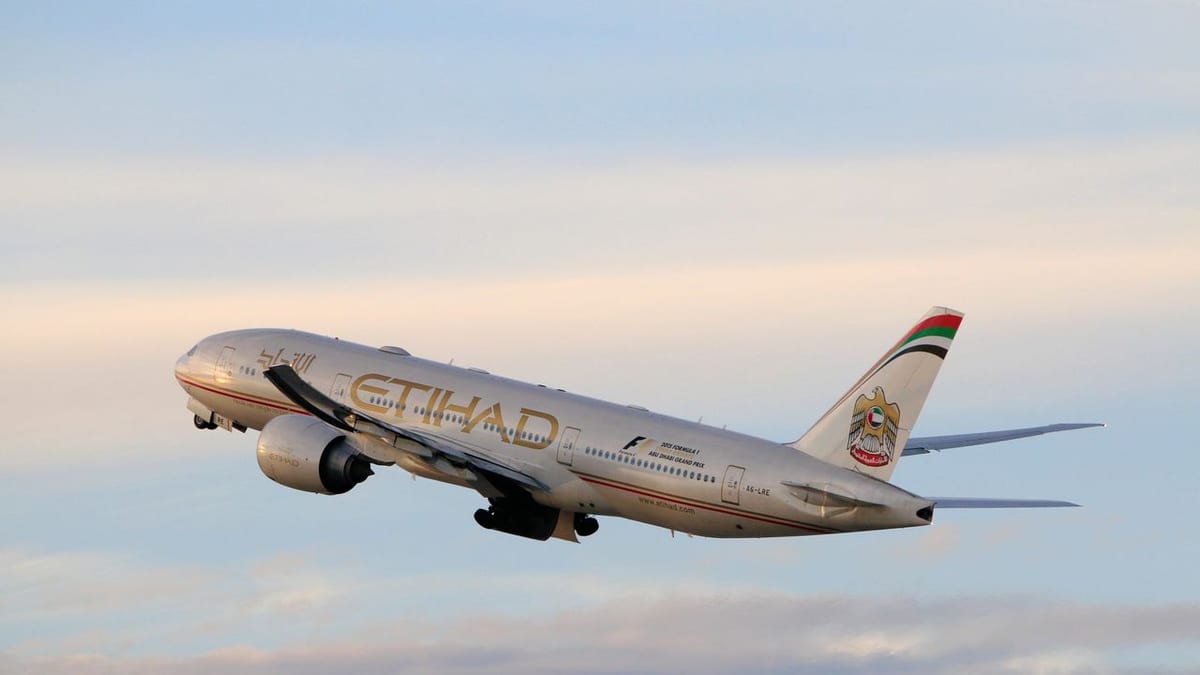
Image by Condé Nast Traveller Middle East
From full suspension to a limited restart of Abu Dhabi flights
Etihad’s operations were heavily disrupted in late February and early March 2026 when regional airspace closures across the Gulf and wider Middle East forced a near-total halt to departures from Abu Dhabi’s Zayed International Airport. Published coverage describes a temporary suspension of all commercial flights at the height of the crisis, with only essential repositioning, repatriation and cargo services permitted to operate.
Publicly available information shows that from early March, Etihad shifted to a phased recovery strategy. Advisories on airline and travel-industry channels describe a “limited flight schedule” from Abu Dhabi beginning around 6 March, with departures restored first on key trunk routes to Europe, North America and selected Middle Eastern capitals where airspace corridors were deemed viable.
Regional reporting indicates that this restart coincided with partial reopening of airspace over several Gulf states following the initial wave of missile and drone activity. Even as some corridors reopened, Etihad continued to route flights around high-risk zones, leading to longer flight times, altered routings and, in some cases, last-minute operational changes as conditions evolved.
Industry trackers suggest that by late March Etihad was operating in the region of 60 or more departures a day from Abu Dhabi, still below normal levels but representing a significant increase from the near-standstill seen at the beginning of the month.
Current status of Middle East routes and selective cancellations
As of early April 2026, Etihad’s network across the Middle East is best described as partially restored but still highly dynamic. Schedules published by specialist aviation outlets show continued adjustments for mid to late April, particularly on routes most exposed to ongoing airspace restrictions and demand uncertainty.
Operational data for the April schedule indicates that Etihad has prioritized connectivity between Abu Dhabi and major markets in Europe, Asia and North America while maintaining a more cautious approach on some short- and medium-haul routes within the wider region. Flights touching or crossing still-sensitive airspace are more likely to see timing changes, reroutings or temporary suspensions.
Reports from flight-data services and traveler accounts highlight that cancellations continue to appear on select long-haul routes, including certain North American departures, often several weeks before travel as the airline refines its schedule. In some cases, passengers have reported being moved to nearby dates or alternative Etihad services, while in others the airline has processed refunds under its disruption waivers.
Travel advisories also underline that onward connections through Abu Dhabi remain vulnerable when a downstream sector is canceled, even if the initial leg is still operating. This can result in passengers being advised not to commence travel if their onward flight has been withdrawn from the schedule.
Waivers, refunds and what affected passengers can expect
Alongside schedule changes, Etihad has introduced a series of fare waivers intended to give affected customers more flexibility. Documentation and traveler guidance circulating in the market indicate that guests holding tickets issued before the end of February for travel in early to mid-March were offered rebooking onto later dates without change fees, or the option of a full refund under a dedicated Middle East disruption code.
Subsequent updates suggest that elements of this flexibility have been extended into April for some itineraries, particularly where flights are canceled or significantly rescheduled. According to publicly available travel-agency briefings, Etihad is permitting date changes or refunds when it withdraws a flight from service, with exact rules depending on ticket type, route and original date of purchase.
However, there are notable variations in how these waivers are applied in practice. Travelers who booked through online travel agencies or credit card portals report occasional mismatches between airline policies and intermediary terms, sometimes resulting in additional fees or longer processing times for refunds. Consumer discussions emphasize the importance of checking both the airline’s official waiver language and the conditions of the platform where the ticket was purchased.
For passengers whose flights remain scheduled but who no longer wish to transit the Middle East, standard fare rules typically still apply. In those cases, change penalties or fare differences may be payable unless the airline subsequently updates its disruption policy to cover a broader travel window.
Practical advice if you are booked on Etihad in the coming weeks
Given the fluid situation in the region, travelers booked on Etihad services to, from or via Abu Dhabi are being encouraged by travel-industry guidance to adopt a more hands-on approach to their itineraries. The consensus across advisory sites is that passengers should monitor their booking closely in the days before departure, as schedule changes and cancellations may occur within a relatively short window.
Travel specialists recommend checking flight status through official airline channels before leaving for the airport, and ensuring contact details in bookings are accurate so that email or SMS updates can reach customers promptly. Several reports note that some travelers received cancellation notices only hours before scheduled departure, reinforcing the value of real-time monitoring.
For itineraries involving connections onward from Abu Dhabi to destinations elsewhere in the Middle East, travelers may wish to consider contingency plans, particularly if their journey relies on corridors that have seen repeated closures. Some advisory content suggests that, where feasible, routing via alternate hubs outside the immediate conflict zone can reduce exposure to sudden airspace shutdowns.
Passengers concerned about potential disruption are also weighing the value of fully refundable backup tickets on other carriers, especially for essential trips. While this can increase upfront cost, it may provide a safety net if Etihad later cancels or significantly alters the original itinerary and replacement options are limited or expensive at short notice.
Key points to watch as Etihad rebuilds its Middle East network
Looking ahead through April 2026, operational forecasts from aviation analysts point to a gradual increase in Etihad capacity, balanced against the possibility of renewed volatility if regional tensions escalate again. The airline appears to be rebuilding its schedule in stages, adding frequencies and destinations as airspace conditions and crew resources allow.
Travel publications note that even as more flights return, routings may remain non-standard for some time, with detours around closed or restricted airspace resulting in longer flight times. This can have knock-on effects for connection windows in Abu Dhabi, meaning passengers with tight layovers may be at greater risk of missed onward flights.
Observers also highlight regulatory decisions on airspace as a major variable. Any fresh closures affecting Iran, Iraq, the Gulf or the eastern Mediterranean could prompt a new round of cancellations and diversions. Conversely, a sustained period of stability would likely accelerate Etihad’s return to a more typical pattern of operations across the Middle East.
For now, travelers are advised to treat schedules as provisional and to stay informed through official airline updates and reputable news outlets. While Etihad’s network is clearly on a path to recovery, the experience of the past several weeks shows that conditions for flying to and through the Middle East can change rapidly, and flexibility remains essential for anyone planning to travel on the carrier in the near term.