

More news on this day
Etihad Airways has released updated guidance on flights across the Middle East, along with expanded options for rebooking and refunds, as Abu Dhabi’s main hub continues to operate on a reduced schedule amid the ongoing regional conflict.
Get the latest news straight to your inbox!
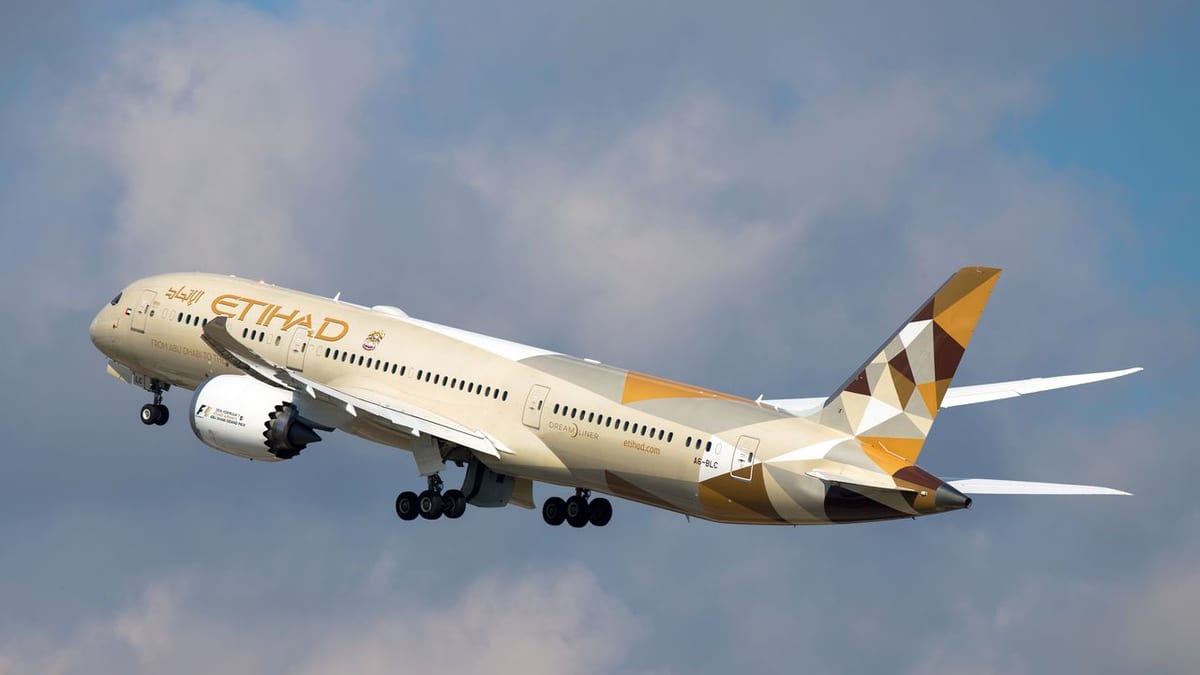
Where Etihad is flying in the Middle East right now
Etihad’s network across the Middle East has been significantly reshaped since hostilities erupted between Iran, Israel and the United States at the end of February. Airspace closures and missile threats initially led to a near-total shutdown of operations through Abu Dhabi, leaving thousands of passengers stranded or rerouted via alternative hubs.
In recent weeks, publicly available flight-tracking data and media coverage indicate that Etihad has restored a limited schedule from Abu Dhabi to around 70 to 80 cities worldwide, with priority given to trunk routes in Europe, Asia and North America. Services to certain high-risk destinations and airspace corridors remain suspended or heavily curtailed, and many flights continue to operate on lengthened routings that avoid Iranian and nearby conflict-zone skies.
Reports from aviation analytics providers suggest that Etihad is currently operating at roughly half to two-thirds of its pre-crisis capacity, behind its usual levels for this time of year. Capacity into and out of key Gulf hubs has been slower to recover than in other regions, largely because conflict-related notices and safety bulletins still advise extreme caution across large parts of Middle Eastern airspace.
Travelers should be aware that the situation remains fluid. Schedules visible in reservation systems are subject to frequent last-minute adjustments, including departure time changes, aircraft swaps and, in some cases, outright cancellations within 24 to 48 hours of departure.
Key dates and eligibility for refunds and fee-free changes
Etihad has introduced a series of overlapping policies to address passengers affected by the crisis, and the exact rules depend on when the ticket was issued and when travel is scheduled. Recent advisories highlight a distinction between tickets issued before the outbreak of hostilities and those booked after the disruption was already under way.
For many customers who purchased tickets on or before late February for travel through at least mid-April, publicly available information shows that Etihad is allowing free rebooking or refunds if their flights are cancelled or significantly disrupted. Some guidance from travel-industry advisories points to flexibility for journeys up to the end of April, with options to move travel to dates in May or beyond without standard change penalties.
A separate policy applies to newer bookings. According to recent coverage in regional travel media, Etihad has updated its rules so that passengers who booked flights on or after 6 March 2026 can change their travel dates once without paying a change fee, for journeys rebooked up to 31 March 2027. The fare difference may still apply, but the waiver is designed to give travelers more confidence to book while the situation remains uncertain.
Crucially, most of these waivers are tied to travel periods that currently run through at least 15 April 2026. Decisions on flights after that date, including itineraries that only transit Abu Dhabi or other Gulf hubs, are expected to be reviewed in the coming weeks as the conflict and airspace restrictions evolve.
What happens if your Etihad flight is cancelled
Passengers whose Etihad flights are cancelled outright are generally being offered a choice between rebooking and refunds, although the exact options can vary by route and fare type. Consumer reports describe a mix of automatic rebooking onto alternative Etihad services and manual changes processed via call centres or online chat.
In many cases, travelers are being placed on the next available Etihad flight on the same route or, if that is not operating, on a nearby date or an alternative destination that still connects to their final stop. When capacity through Abu Dhabi is tight, some passengers are being asked to accept significant schedule changes, such as different departure days or longer layovers, to keep their itineraries intact.
Where suitable alternatives are not available, recent travel-industry summaries indicate that Etihad is offering full refunds for cancelled segments, including on some multi-leg itineraries. This has been particularly relevant for long-haul passengers from Europe, North America and Asia who planned to connect through Abu Dhabi to destinations that remain suspended or severely reduced.
Travelers who are rebooked but prefer not to travel at all may face more complex decisions. Some policies allow a one-time change or refund only if the original flight has been cancelled, while others provide more flexibility for voluntary changes within the published travel window. Passengers are encouraged, based on publicly available guidance, to monitor their booking status closely in the days leading up to departure, as rebooking rights often depend on whether a cancellation or major schedule change is officially recorded.
Transit itineraries and knock-on impacts for global routes
Because Etihad’s Abu Dhabi hub serves as a bridge between Europe, Asia, Africa and Australia, disruptions to Middle East operations have had cascading effects far beyond the region. The closure and partial reopening of airspace over Iran, Iraq and adjoining areas have forced long detours, reduced frequencies and, in some cases, temporary suspension of flights on routes that do not even touch the conflict zone directly.
Independent analyses of air traffic patterns show that Asia–Europe and Asia–North America itineraries that once connected seamlessly through Gulf hubs are now being rerouted through Southeast Asian and European gateways, adding hours to journey times and putting pressure on alternative carriers. Fares on these corridors have risen compared with pre-crisis levels, partly because of reduced capacity from Middle Eastern airlines, including Etihad.
For Etihad passengers, this means that even if their origin and destination appear unaffected, a transit via Abu Dhabi can still be vulnerable to disruption. Some travelers have reported short-notice cancellations or reroutings where the long-haul segment operates but the regional connection does not, or where connection times change enough to break the itinerary.
Travel-planning experts quoted in public coverage suggest that passengers with time-sensitive trips, such as cruises, tours or events, should build in additional buffer time or consider routings that avoid the most affected airspace altogether. However, many travelers continue to use Etihad itineraries successfully, particularly on routes where operations have stabilised and schedules are operating more predictably.
Practical advice for Etihad customers with upcoming travel
With conditions shifting quickly, the most consistent theme in recent public guidance is the importance of checking flight status frequently and understanding the latest version of Etihad’s waiver policies before making changes. Schedules that appear stable weeks in advance can still be revised within days or even hours of departure, especially if regional security conditions worsen.
Passengers are widely encouraged to ensure that their contact details are up to date in their booking so that any schedule changes or cancellations are communicated promptly. Many accounts from affected travelers describe receiving emails or app notifications offering alternative flights or refund options soon after a cancellation is processed in the system.
For those who have not yet been impacted but are travelling during key windows, such as up to mid or late April, travel-industry advisories recommend preparing a contingency plan. This may include identifying alternative routings via other regions, reviewing the terms of any travel insurance policy, and deciding in advance whether to accept rebooking or request a refund if their Etihad flight is later cancelled.
As the situation in the Middle East evolves, further changes to Etihad’s schedule and customer policies are likely. Travelers planning journeys through Abu Dhabi in the coming weeks are therefore advised to stay alert to new advisories and to review the specific conditions attached to their tickets, including booking dates, travel windows and eligibility for fee-free changes or refunds.