

More news on this day
Etihad Airways has rapidly rebuilt its global network to 70 destinations from Abu Dhabi, putting Bangkok alongside Colombo, Hong Kong, Singapore, Istanbul, Vienna, Toronto and more key cities back within easy reach for leisure travelers and city-break addicts.
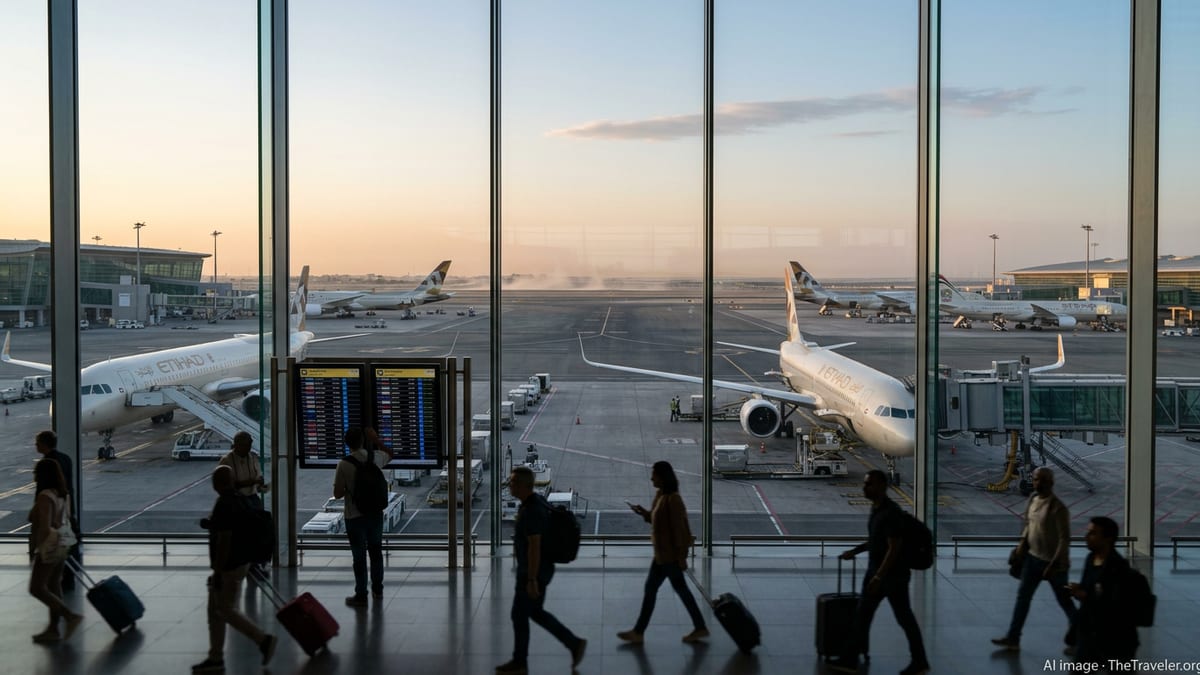
A Rapid Reboot of Etihad’s Global Network
The Abu Dhabi-based carrier has confirmed a sharply expanded, but still time-limited, schedule connecting Zayed International Airport with major hubs across Asia, Europe, North America and the Middle East between March 6 and March 19, 2026. Bangkok features prominently on the list, joined by Colombo, Hong Kong, Singapore, Istanbul, Vienna, Toronto and dozens of other gateways that collectively restore a significant slice of pre-crisis connectivity.
The 70-destination restart follows weeks of severe disruption linked to airspace closures and regional instability, which saw many long-haul itineraries rerouted or canceled. By selectively switching key routes back on, Etihad is signaling renewed confidence in operational safety while acknowledging that capacity and frequencies will remain constrained in the short term.
For travelers, the network reboot means that many long-planned holidays and business trips can now feasibly go ahead, even if itineraries may look different from what was originally booked. Etihad is urging passengers to closely monitor flight status and to treat the current schedule as dynamic rather than fully restored.
Importantly for tourism players from Southeast Asia to Central Europe, the return of Abu Dhabi as a long-haul transfer hub sends a clear message: international visitor flows are starting to move again, and demand for both classic city breaks and more offbeat itineraries is rebounding fast.
Why Bangkok and Its Asian Neighbors Matter
Bangkok’s presence on Etihad’s resumed route map is no coincidence. The Thai capital remains one of the world’s most visited cities, anchoring regional tourism into beach destinations such as Phuket and Krabi as well as cultural hubs like Chiang Mai and Luang Prabang via onward connections. For travelers from Europe and North America, having a one-stop option via Abu Dhabi back in place dramatically simplifies access to Thailand’s islands, temples and food scene.
Alongside Bangkok, Etihad has also restored links to other Asian powerhouses, including Singapore, Hong Kong, Kuala Lumpur, Seoul and Tokyo. These cities act not only as tourist magnets in their own right but also as critical junctions for regional low-cost and full-service carriers, allowing visitors to fan out across secondary and tertiary destinations that would otherwise be time-consuming to reach.
The inclusion of Colombo further underscores the strategy. Sri Lanka has been steadily climbing the wish list of adventure-minded travelers, thanks to its tea-country landscapes, surf-friendly coasts and emerging boutique hotel scene. With Etihad flights again feeding into Colombo, tourism operators there can look forward to renewed bookings from Europe and the Gulf, markets that rely heavily on seamless long-haul connections.
Crucially, many of these Asian routes tie directly into Etihad’s broader fleet plans. The carrier is in the midst of a long-term strategy that leans on fuel-efficient widebodies while deploying high-density aircraft on leisure-heavy routes. Future capacity increases, such as the planned introduction of the A380 on the Bangkok route later in 2026, are aimed squarely at meeting robust demand for travel to Southeast Asia.
Europe and North America: Classic Gateways Regain Lift
Etihad’s refreshed network is not just about Asia. Vienna’s presence on the list symbolizes the airline’s commitment to connecting Abu Dhabi with cultural capitals that double as smart springboards into wider regions. From Vienna, tourists can easily tap into nearby Central European cities like Bratislava, Budapest and Prague, creating multi-country itineraries that had become logistically complex during the height of the disruption.
Istanbul, meanwhile, offers a bridge between continents and cultures, with its mix of historic sites, vibrant neighborhoods and strong onward links into both Europe and Anatolia. For travelers using Abu Dhabi as their primary connection point, the revival of Istanbul flights restores an attractive option for combining Gulf stopovers with explorations of Türkiye’s Mediterranean coastline or Cappadocia’s otherworldly landscapes.
On the other side of the Atlantic, Toronto’s return is particularly significant. For Canadian travelers, a reinstated link to Abu Dhabi opens one-stop access to much of Asia, the Middle East and parts of Africa. For inbound visitors, Toronto serves as both a gateway to Canada’s major urban centers and a jumping-off point for nature-focused trips to the Rockies or the Atlantic provinces.
Etihad has paired these marquee destinations with a web of other European and North American cities, including London, Paris, Frankfurt, New York and Washington, to reconstitute a core long-haul skeleton. This gives tourists the flexibility to mix and match city breaks, coastal escapes and countryside retreats across multiple continents, all routed through a single Gulf hub.
A Win for Tourists Chasing Both Icons and Hidden Gems
The immediate benefit of Etihad’s 70-destination restart is obvious: more options. But for tourists, the deeper value lies in how these routes can be combined to unlock both headline cities and lesser-known locales in a single trip. A traveler from Toronto might now fly via Abu Dhabi to Bangkok, then connect onward to a quieter Thai island or a neighboring country, before looping back through Vienna or Istanbul for a European city break.
Similarly, visitors from Asia can once again use Abu Dhabi to reach not just flagship cities such as London or New York but also smaller European destinations via short-haul links from Vienna or other continental hubs. The resumed schedule empowers travelers to design multi-stop itineraries that string together contrasting experiences: ancient sites in Sri Lanka, street food in Bangkok, rooftop bars in Singapore, art museums in Vienna and neighborhood markets in Istanbul.
Tour operators and travel advisors are already reshaping packages to reflect the new possibilities, highlighting cross-regional routes that capitalize on Abu Dhabi’s returning hub role. Many are emphasizing flexible booking terms and travel insurance, recognizing that while capacity is back, the broader environment remains fluid.
For independent travelers, the message is to move quickly but strategically. With demand surging and capacity still below pre-crisis levels on some routes, attractive fares and award seats are likely to be snapped up early. At the same time, those who are willing to consider alternative dates or slightly longer layovers may find that Etihad’s rebuilt network offers creative, good-value paths into some of the world’s most compelling destinations.
What Travelers Should Watch in the Weeks Ahead
Despite the upbeat tone surrounding the 70-destination milestone, Etihad is clear that this is a limited schedule and subject to change as airspace conditions evolve. The current plan covers flights through March 19, with the possibility of adjustments and further expansion as operational assessments continue. Travelers are being advised to check flight status regularly and to ensure their contact details are up to date with the airline or their booking agent.
Flexible policies remain an important safety net. Customers with tickets issued before the latest wave of disruption are being offered options to rebook onto available services without additional change fees within specified windows. For many, this will be the difference between salvaging a long-awaited trip and canceling outright.
Industry observers note that Etihad’s swift move to restore a broad but carefully curated network is likely to influence competing carriers in the region. As other Gulf and Asian airlines recalibrate their own schedules, tourists may see a wave of additional capacity and new fare sales targeting marquee routes such as Bangkok, Singapore, Istanbul and Toronto.
For now, the message to travelers is clear: the world’s top cities and emerging hotspots are edging back within reach, and Etihad’s 70-destination comeback is one of the clearest signs yet that long-haul leisure travel is entering a new, more confident phase of recovery.