

More news on this day
Etihad Airways’ decision to relaunch direct Abu Dhabi–Damascus flights in June 2026 is already reshaping travel patterns to Syria, with tour operators and hotel groups reporting rising interest from Turkish, German, UK, Norwegian and Gulf visitors in advance of the first scheduled departure.
Get the latest news straight to your inbox!
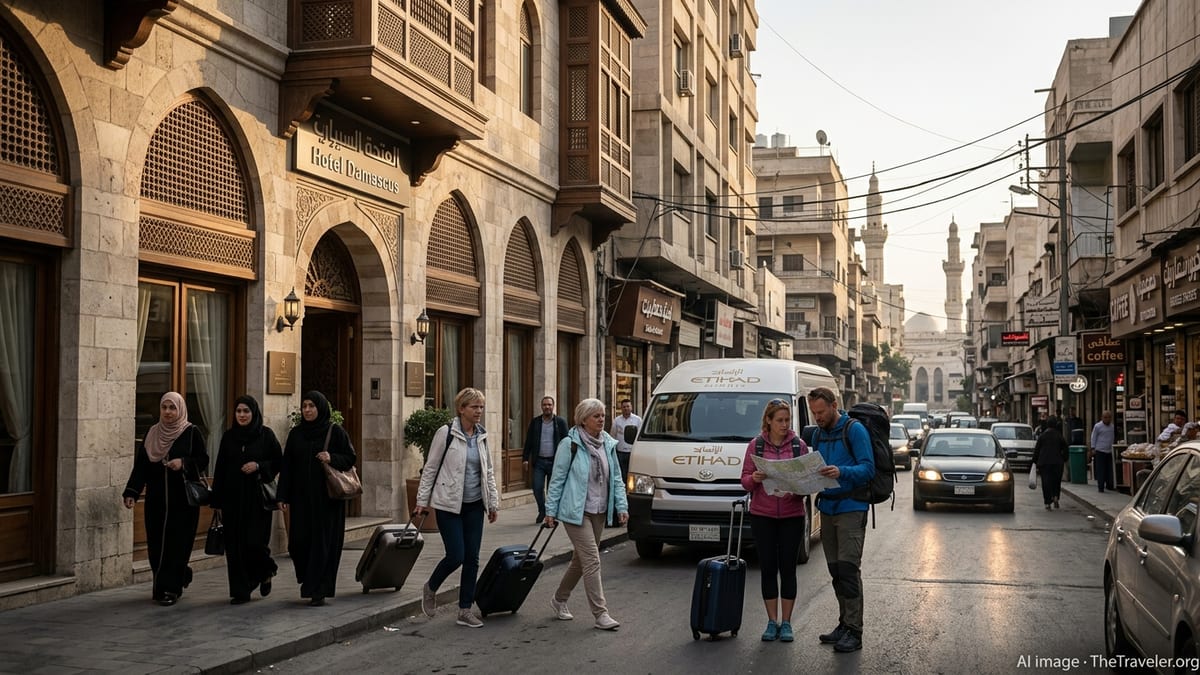
New Gulf–Syria Air Link Alters Regional Travel Map
Publicly available airline schedules show that Etihad plans to resume Abu Dhabi–Damascus services on June 12, 2026, operating four times weekly with Airbus A320 aircraft after a suspension that dates back to 2012. The route places Syria back onto a major Gulf hub network that connects Europe, Asia and the wider Middle East, significantly shortening journey times for many travelers who previously relied on convoluted multi-stop itineraries.
Industry coverage notes that Etihad joins a growing cluster of regional carriers that have returned to Damascus over the last two years, reflecting a gradual reopening of Syrian airspace and a cautious reassessment of commercial viability. While conflict-related airspace closures in early 2026 have periodically disrupted Middle East routes, forward schedules and airline statements continue to list the Damascus launch as part of Etihad’s 2026 expansion plan.
Travel analysts cited in recent aviation and business reports argue that the Abu Dhabi–Damascus link is strategically positioned to capture pent-up demand from the Syrian diaspora, religious travelers, history-focused tourists and regional business visitors. Connections via Abu Dhabi offer one-stop access from numerous European cities, including major markets in Germany, the UK and Scandinavia, while also tapping strong outbound flows from Gulf Cooperation Council countries.
Tourism-focused publications emphasize that the timing aligns with Syria’s broader efforts to rebrand itself as a cultural and religious tourism destination in the post-conflict period. The new Etihad service is widely viewed as a catalyst that could normalize Syria’s presence on booking platforms and travel agency itineraries, especially among travelers who rely on Gulf carriers for regional mobility.
European Curiosity Drives Early Demand Signals
Recent travel and regional news coverage indicates rising interest from European markets such as Germany, the UK and Norway as Syria re-enters tour operator brochures. Specialist agencies that focus on heritage, religious and adventure travel have begun promoting itineraries built around Damascus, Aleppo and key archaeological sites, typically framed as carefully curated, small-group experiences subject to dynamic security assessments.
According to tourism analysis and booking-platform commentary, German travelers are emerging as an important early segment, driven by a mix of historical interest, diaspora ties and a broader trend toward visiting lesser-known destinations. The Abu Dhabi–Damascus connection allows German passengers to use Etihad’s European gateways to reach Syria with a single transit, which is frequently highlighted as a convenience and safety consideration.
In the UK and Nordic markets, including Norway, Syria is still marketed as a niche and often experimental destination, but there are signs of renewed curiosity. Travel media and social platforms show a growing volume of content from early return visitors documenting Old Damascus, traditional souks and religious sites, often paired with stopovers in Abu Dhabi or other Gulf cities to create multi-destination journeys.
European tour planners quoted in industry forums suggest that the reliability and perceived service quality of a major Gulf carrier can help overcome lingering hesitation about infrastructure and logistics inside Syria. The Etihad route is often described as a practical anchor that makes it easier to package Syria alongside established Middle Eastern destinations such as the United Arab Emirates, Jordan or Lebanon when conditions permit.
Gulf Visitors and Diaspora Fuel Hotel Occupancy
While European interest is gradually building, recent regional coverage points to Gulf travelers and returning Syrians as the primary drivers of the current hospitality upswing. Visitors from the United Arab Emirates, Saudi Arabia, Kuwait and Qatar are increasingly visible in Damascus and other major cities, with many combining family visits and business with short leisure stays that focus on dining, shopping and cultural sightseeing.
Reports from Arabic-language media and regional business outlets describe a marked rise in intra-Arab tourism since late 2024, particularly during major religious and holiday periods. Easier access from Gulf hubs, combined with softer visa procedures and targeted marketing campaigns, has translated into fuller hotels and guesthouses in central Damascus, especially around the Old City and commercial districts.
Industry analysts note that this wave of demand is coming not only from classic leisure tourists but also from entrepreneurs exploring post-conflict business opportunities. Gulf-based investors have been scouting real estate, hospitality and retail projects in and around Damascus, a trend that hotel consultants say is supported by higher occupancy and room-rate data in the city’s limited stock of internationally branded properties.
Etihad’s launch of the Abu Dhabi–Damascus route is expected to reinforce these trends by offering Gulf residents a straightforward, high-frequency connection that links family visits and religious trips with the broader global network. Travel observers argue that every incremental seat into Damascus from a Gulf hub increases the likelihood that friends and relatives of the Syrian diaspora will schedule trips that combine personal visits with short tourist stays, further lifting demand for hotel rooms.
Hotel Groups Move In as Syria Upgrades Hospitality Sector
Hospitality companies are responding to the evolving tourism landscape with new investments and renovation programmes. Regional hotel operator Safir Hotels & Resorts, for example, announced plans in 2025 to develop or manage properties in Damascus, Bloudan and Deir ez-Zor, signaling early confidence in Syria’s long-term tourism potential and in the gradual return of international visitors.
Government-aligned media and policy documents describe a broader National Tourism Strategy for 2026 to 2030 that prioritizes the refurbishment of one- and two-star hotels alongside higher-category developments. A recently launched programme focuses on upgrading basic facilities, service standards and digital booking capabilities across the budget segment, with the aim of ensuring that smaller properties can benefit from the anticipated influx of regional and European guests.
Business press coverage from the Gulf highlights active discussions between Syrian authorities, local developers and foreign operators over new hotel projects in Damascus. Analysts see a dual-track pipeline emerging: on one side, international or regional brands targeting premium and upper-midscale segments; on the other, domestic investors reviving heritage buildings and independent guesthouses to cater to culturally minded travelers from Turkey, Europe and the Gulf.
Consultants quoted in these reports stress that hotel development is closely tied to air connectivity. The confirmation of Etihad’s Abu Dhabi–Damascus operations is frequently cited as a positive signal for lenders and investors, who view sustained service from a major Gulf carrier as a proxy for improving stability and predictable visitor flows, even within a still-fragile environment.
Balancing Tourism Optimism With Ongoing Risk
Despite the clear momentum, coverage across aviation, security and travel-industry outlets underscores that Syria’s tourism rebound remains contingent on regional stability. Airspace closures and temporary suspensions of flights in early 2026, driven by broader Middle East tensions, have served as reminders that access to Damascus can still be disrupted at short notice.
Risk advisories from governments in Europe and North America continue to urge caution, with many maintaining restrictions or warnings on non-essential travel to parts of Syria. Tour operators catering to Turkish, German, UK and Norwegian clients frequently frame itineraries as flexible and subject to last-minute itinerary changes, relying on real-time assessments of security and infrastructure.
Nevertheless, the combination of Etihad’s forthcoming Abu Dhabi–Damascus route, the renewed participation of other regional carriers, and an expanding hotel pipeline suggests that a new chapter is opening for Syria’s tourism and hospitality sector. Industry observers describe the current phase as a test of whether carefully managed, connectivity-led growth can translate into sustainable demand across multiple source markets, from Gulf neighbors to curious Europeans.
For now, bookings tied to the June 2026 launch indicate that Turkish, German, British, Norwegian and Gulf travelers are prepared to be early adopters of Syria’s re-emergent tourism landscape, helping to power a historic hotel and hospitality boom that only recently seemed unthinkable.