

More news on this day
Etihad Airways’ planned launch of direct Abu Dhabi–Damascus flights in June 2026 is emerging as a pivotal moment for Syria’s tentative tourism revival, with rising hotel demand and slowly returning international visitors signaling a fragile but notable shift for the country’s travel industry.
Get the latest news straight to your inbox!
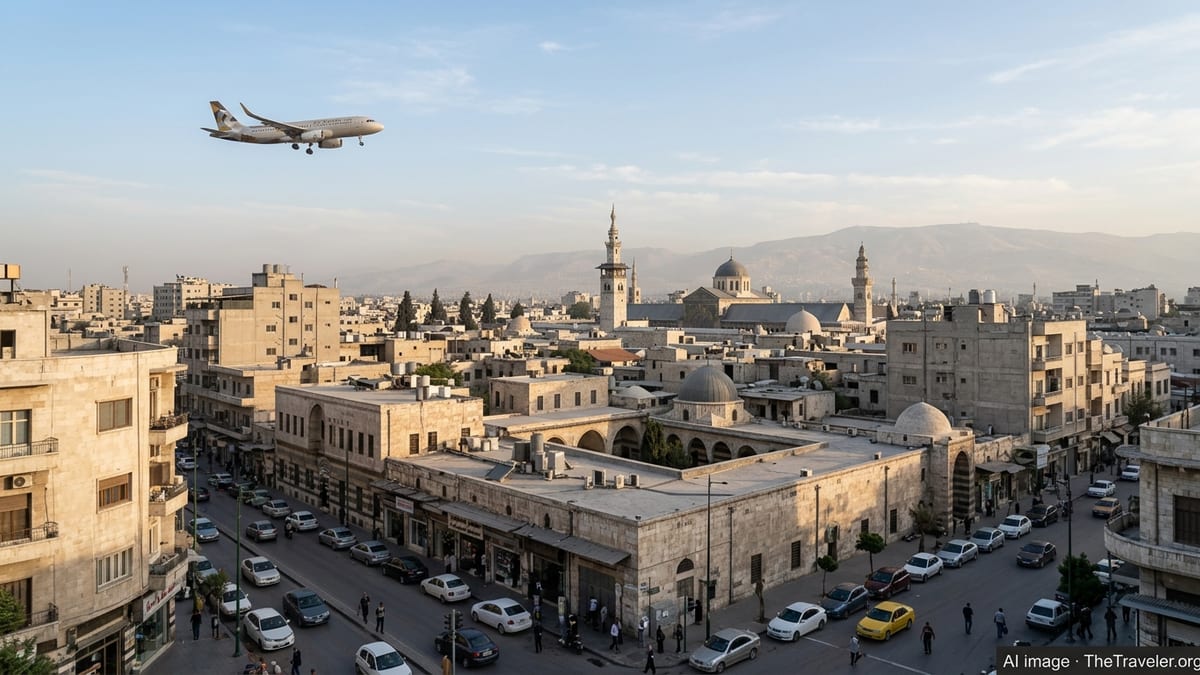
A New Gulf–Syria Air Corridor After Years of Isolation
Publicly available schedules indicate that Etihad Airways plans to resume direct services between Abu Dhabi’s Zayed International Airport and Damascus International Airport from June 12, 2026, after a 14-year suspension of the route. The carrier is expected to operate several flights per week using Airbus A320 aircraft, restoring a non-stop Gulf connection that had been cut since 2012 due to conflict and security concerns.
According to recent aviation industry coverage, the new route is being positioned as a response to growing demand for travel between the United Arab Emirates, other Gulf Cooperation Council states, and Syria. The flights are also expected to plug Damascus back into Etihad’s broader global network, offering one-stop connections from Syria to key long-haul markets in Europe, Asia, and North America via Abu Dhabi.
Travel analysts note that the decision aligns with a wider regional pattern of carriers cautiously rebuilding capacity to Damascus as security perceptions evolve and sanctions frameworks are reconfigured. Low-cost and regional airlines in Kuwait and the UAE have already begun adding or restoring connections to Syrian cities, creating a modest but growing web of air links that would be further strengthened once Etihad enters the market.
For Syrian travelers, the route promises shorter journey times and fewer transfers, especially for those visiting family in the Gulf or connecting onward for work and study. For inbound visitors, it offers a more straightforward gateway into Damascus at a time when the city is being promoted as a focal point of the country’s tourism recovery.
Hotel Occupancy Climbs as Investors Reassess Damascus
Reports from Syria’s tourism authorities and regional business media point to sustained growth in visitor arrivals through 2025, with more than 3.5 million people entering the country over the first 11 months of the year. This trend has translated into what local officials describe as “strong” hotel occupancy rates across several governorates, including the capital.
Separate coverage in Gulf-based newspapers highlights a notable uptick in interest from hotel investors and operators looking at Damascus and Aleppo. Abu Dhabi headquartered groups and international chains are reported to be in discussions over potential management agreements and new-build projects, signaling confidence that visitor flows can support higher-standard accommodation in the medium term.
Domestic initiatives are also under way. State media in Syria has outlined a new programme to upgrade one- and two-star hotels as part of a broader tourism strategy running from 2026 to 2030. The effort is aimed at lifting basic service levels, standardising quality, and better aligning budget properties with evolving expectations from both local and foreign guests.
Hospitality consultants following the market caution that a full recovery in Syria’s hotel sector could still take five to ten years, given the need for parallel improvements in infrastructure, aviation capacity, visa facilitation, and workforce training. Nonetheless, the combination of rising occupancy, emerging international interest, and improved air connectivity anchored by routes like Etihad’s planned service is seen as an early sign of a more durable upturn.
Slow Return of Global Travelers to Damascus
While the bulk of Syria’s visitor growth still comes from regional and diaspora traffic, data shared in recent international coverage suggests a notable rebound in arrivals from non-Arab countries. Arrivals from these markets during the first 11 months of 2025 reportedly surged compared with the previous year, though from a very low base, underscoring the slow and uneven nature of the recovery.
Travel trend analyses indicate that early-return segments are led by heritage and religious travelers, niche cultural tourism groups, and adventurous independent visitors. Damascus’s Old City, the Umayyad Mosque, nearby religious sites, and traditional markets remain the core draws, supported by a small but growing number of tour operators once again featuring Syria in regional itineraries.
Global tourism bodies have noted that the Middle East overall has outpaced many regions in restoring international arrivals to near pre-crisis levels, with improved air connectivity cited as a key driver. Syria’s trajectory diverged during the war years, but current figures indicate that it is now gradually tracking closer to broader regional patterns, albeit with significant constraints still in place.
Analysts emphasise that the introduction of an Abu Dhabi–Damascus route by a major Gulf carrier carries symbolic weight for international travelers assessing whether and how to return. A recognisable global airline brand, integrated into a large connecting hub, can help normalise perceptions of travel to Damascus, provided that security conditions remain stable and regulatory environments continue to evolve.
Infrastructure, Safety Measures and Policy Shifts Under Scrutiny
Despite the recent momentum, industry observers stress that Syria’s tourism recovery remains highly contingent on improvements in infrastructure and safety frameworks. Publicly available government documents and international analyses highlight pressing needs at Damascus International Airport, including runway, terminal, and systems upgrades to handle higher traffic volumes and modern aircraft standards more efficiently.
There are also parallel efforts aimed at strengthening visitor safety. Official announcements have described the rollout of a dedicated tourist police force, trained to operate in key heritage areas and hospitality districts in cities such as Damascus. The initiative is intended to reassure visitors, support tour operators, and provide a more visible security presence around heavily visited sites.
On the policy front, commentary from regional economic outlets points to ongoing discussions about easing entry procedures and modernising visa systems to keep pace with competitors in the Middle East. Simplified e-visa platforms, clearer travel advisories, and cooperation with foreign embassies are seen as essential steps if Syria hopes to convert curiosity into confirmed bookings from long-haul markets.
For airlines, including Etihad, airspace dynamics in the wider region remain a variable. Recent disruptions affecting several Gulf carriers underscore how quickly schedules can change in response to regional security developments. Any sustained growth in Syria-bound tourism will depend on an operating environment where carriers can maintain reliable and economically viable services.
Economic Stakes for Syria’s Tourism-Led Recovery
Tourism is being framed by Syrian decision-makers and international observers alike as a potential pillar of the country’s broader economic recovery. Published interviews with senior tourism officials suggest that the sector requires tens of billions of dollars in investment to rebuild hotels, restore archaeological and heritage sites, expand regional airports, and upgrade transport links between key destinations.
Recent reporting indicates that hotels owned by the Ministry of Tourism have already recorded a sharp increase in profits compared with earlier years, driven in part by higher room rates and improved occupancy. Private-sector properties in Damascus and along key religious and heritage corridors are also understood to be benefitting from the current upswing in demand, although detailed performance data remain limited.
Etihad’s planned route fits into this landscape as both an economic and symbolic development. By reconnecting Damascus to a major Gulf hub, the airline is expected to expand the pool of potential visitors, facilitate business travel tied to reconstruction and hospitality projects, and support outbound Syrians seeking employment, education, or medical treatment abroad.
Travel economists caution that the road ahead is complex: lingering sanctions in some jurisdictions, infrastructure gaps, and shifting regional geopolitics all pose risks to sustained growth. Yet with visitor numbers climbing, hotel bookings reportedly strengthening, and new air links on the horizon, the Abu Dhabi–Damascus connection is increasingly seen as a key indicator of Syria’s re-emergence on the global tourism map.