

More news on this day
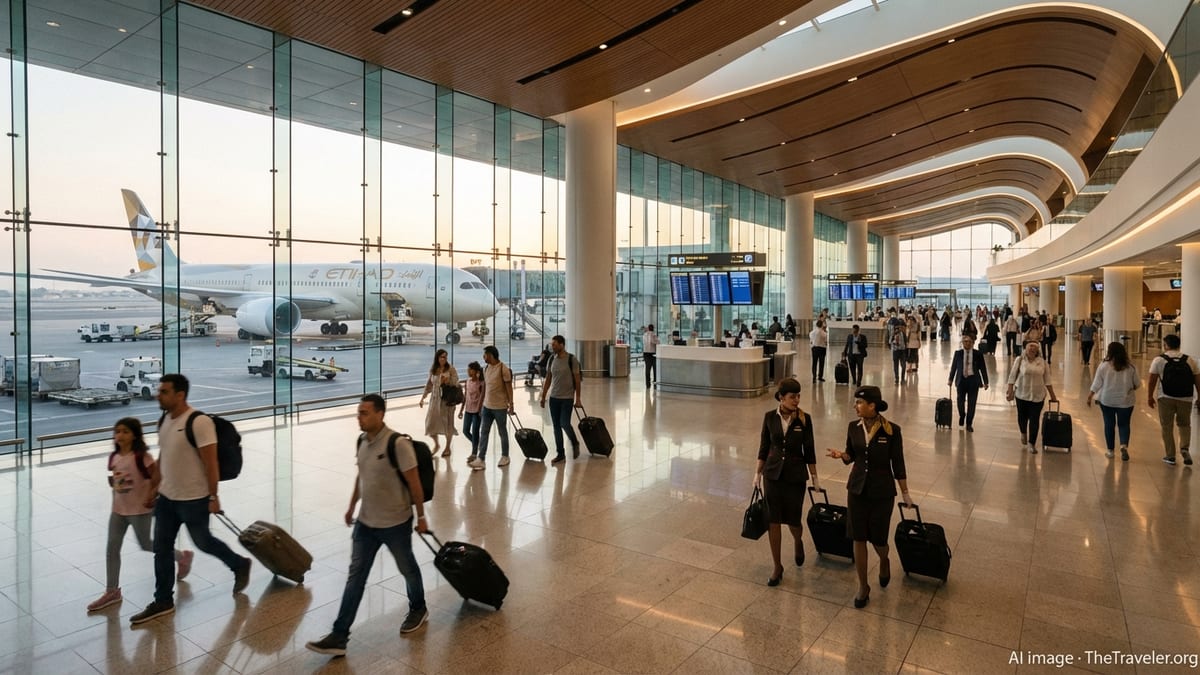
Etihad Airways is accelerating its transformation into a larger global carrier with a massive recruitment drive that will see the Abu Dhabi based airline hire up to 3,000 people annually as it adds aircraft, routes and frequencies across its network.
Massive Hiring Plan Underpins Ambitious Growth Targets
Etihad executives confirmed this week that the airline expects to recruit between 2,500 and 3,000 employees every year over at least the next five years, following a year of intense hiring in 2025. The carrier added more than 3,200 new staff last year and promoted around 2,200 employees as it scaled up operations and restored capacity across key markets.
The new recruitment wave will focus heavily on frontline positions. In 2025, Etihad hired around 1,600 cabin crew and nearly 400 pilots, a pattern it aims to maintain as it grows its fleet and schedule. Leadership says the hiring plan is calibrated to accommodate a projected increase in aircraft of roughly 20 jets per year, aligning staff growth directly with capacity expansion.
These moves are part of Etihad’s Journey 2030 strategy, which targets a doubling of its fleet and a network of more than 125 destinations by the end of the decade. The airline carried around 13 million passengers as it emerged from restructuring and now aims to reach close to 38 million annual travelers by 2030, positioning Abu Dhabi as one of the fastest growing aviation hubs worldwide.
Etihad’s recruitment push comes on the back of its strongest financial performance to date, with the airline recently reporting a record profit for 2025. Management argues that sustained profitability is giving it the confidence to invest simultaneously in people, fleet and product, moving decisively from consolidation into growth.
Expanding Fleet and New Routes Reshape the Network
The hiring drive is closely tied to a rapid fleet build up. Etihad is taking delivery of about 20 new aircraft annually in 2025 and 2026 and has confirmed additional wide body orders, including Boeing 787 and 777X jets that will begin joining the fleet from 2028. Industry estimates suggest the carrier is operating around 110 aircraft and is on track to reach 200 to 220 planes by 2030.
On the network side, Etihad has moved quickly to restore and grow connectivity. Over the past year it has added or announced around 30 new routes, taking its destination count into the 80s and edging toward the milestone of 100 cities by 2026. Recent launches include Addis Ababa, Medan and Phnom Penh, strengthening links into East Africa and Southeast Asia and deepening Abu Dhabi’s role as a crossroads between Europe, Asia and the Indian Ocean region.
Further expansion is scheduled through 2025 and 2026, with new services planned to Central Asia and the Caucasus, as well as additional frequencies on high demand routes such as Nairobi, Casablanca and Johannesburg. Seasonal services to leisure destinations, including the planned return of Zanzibar flights in summer 2026, reflect the airline’s growing focus on both tourism and visiting friends and relatives traffic.
The combination of more aircraft and more routes is expected to deliver greater schedule flexibility and reduced connection times via Abu Dhabi’s Zayed International Airport. For travelers, the expansion should translate into broader choice across Africa, Asia and Europe and potentially more competitive fares on newly contested city pairs.
Recruitment Drive Opens Doors for Global Talent
Etihad’s human resources strategy is evolving alongside its fleet and network plans. The airline’s workforce now represents more than 150 nationalities, and executives say maintaining this diversity is central to its brand as a global carrier. As it scales up, Etihad is targeting talent across cabin crew, pilots, engineers, ground operations and corporate roles, with a particular emphasis on guest facing teams.
In addition to external hiring, the airline continues to invest heavily in internal development. In 2025 it delivered around 1,500 cabin crew promotions and nearly 150 pilot promotions, strengthening leadership depth in the cockpit and cabin. Training programs are being expanded to support new aircraft types entering the fleet and to maintain consistent service standards as headcount rises.
For job seekers, the recruitment drive translates into one of the largest single aviation hiring efforts in the Gulf region. Etihad has been hosting open days in Abu Dhabi and beyond, including targeted sessions for employees affected by other carriers’ cutbacks, as it competes for scarce aviation skills in a tightening global labor market.
The airline is also intensifying efforts to attract and develop Emirati talent through cadet pilot schemes, graduate programs and leadership tracks. Executives say Emirati participation is expected to increase steadily through 2030, aligning with national objectives to expand high skill employment opportunities for UAE citizens.
Network Partnerships and Hub Strategy Extend Global Reach
While new routes and more aircraft are central to Etihad’s growth plan, partnerships are playing a growing role in extending its global reach. A recent joint venture with Ethiopian Airlines, for example, links Etihad’s Abu Dhabi hub to more than 55 destinations across 33 African countries while giving Ethiopian customers easier access to Asian and Middle Eastern cities via Abu Dhabi.
Such arrangements allow the airline to deepen connectivity without deploying its own aircraft on every sector. By coordinating schedules and sharing traffic, Etihad can improve aircraft utilization and offer smoother itineraries to passengers. This is particularly important in regions like Africa, where building an extensive network from scratch would require significant additional investment.
The hub strategy remains at the core of these moves. As new bilateral partnerships and codeshares are layered on top of organic route growth, many more travelers are expected to use Abu Dhabi as a one stop gateway between secondary cities in Europe, Asia, Africa and the Indian subcontinent. Airport authorities in the emirate see this as a catalyst for tourism, trade and wider economic diversification.
Industry analysts note that Etihad’s recruitment drive is closely synchronized with these network ambitions. More destinations and higher frequencies require larger crews, additional maintenance and ground handling teams and expanded back office support, all of which the airline is now hiring at scale.
What Etihad’s Expansion Means for Global Travelers
For travelers, Etihad’s intensified hiring and growth strategy is likely to be felt in several ways over the coming years. As the fleet expands and new aircraft types join, passengers can expect more modern cabins, a wider choice of schedules and increased capacity on popular routes linking Europe and North America with Asia, the Middle East and Africa.
The airline’s investment in safety and operational technology, including participation in industry data sharing initiatives to manage turbulence and optimize flight paths, is designed to deliver smoother and more reliable journeys. Combined with the recruitment of additional pilots, cabin crew and technical specialists, Etihad aims to safeguard punctuality and service quality as volumes rise.
Etihad’s sharpened focus on seasonal and secondary destinations should also benefit leisure travelers. Routes to emerging holiday hotspots in Africa and Asia, supported by competitive fares and tailored schedules, will broaden the range of long haul trips available via Abu Dhabi beyond the traditional big city gateways.
As the recruitment drive gathers pace through 2026 and beyond, Etihad’s hiring halls, training centers and simulator facilities are set to become some of the busiest in the region. For the global travel market, that surge in people and planes points to more connectivity and choice, and cements Abu Dhabi’s place among the leading hubs reshaping international air travel.