

More news on this day
Etihad Airways has begun a limited restart of flights from Abu Dhabi after an unprecedented regional airspace shutdown, offering a cautious lifeline to stranded travelers while leaving global itineraries in flux.
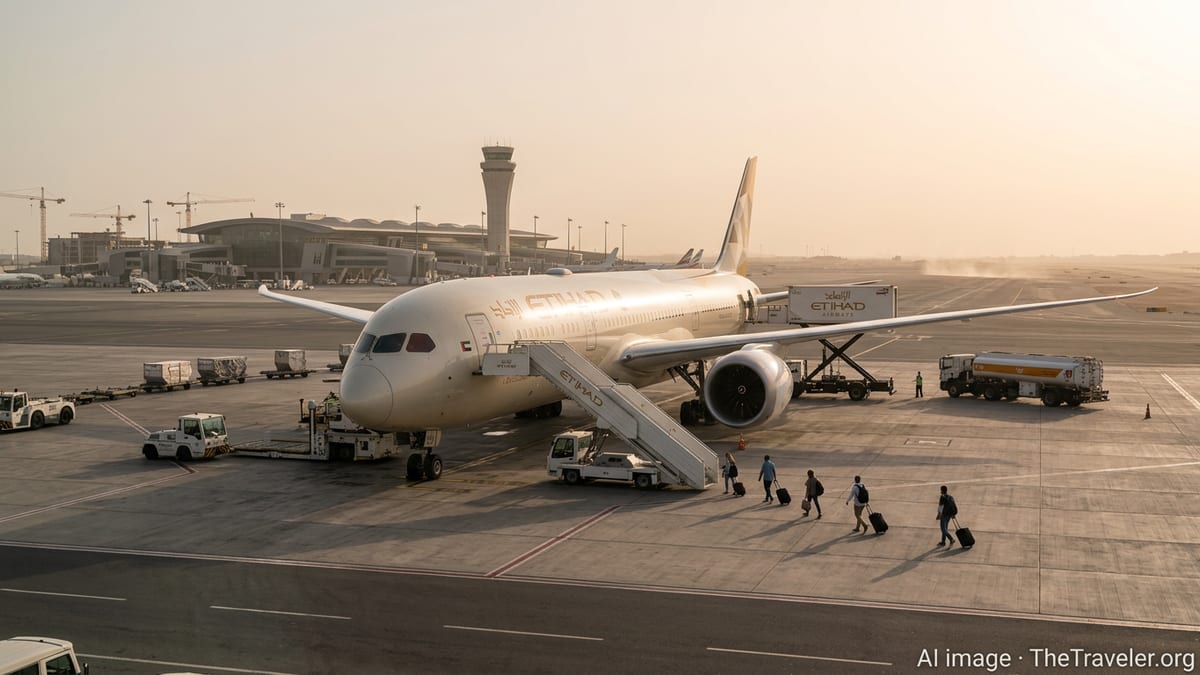
What Etihad Has Announced So Far
Etihad Airways confirmed it is resuming a restricted commercial schedule from March 6, 2026, operating to and from Abu Dhabi’s Zayed International Airport following days of suspended services during the regional security crisis. The restart, coordinated with aviation and security authorities, follows extensive risk assessments of routes and overflight corridors across the Middle East.
According to the carrier’s latest operational updates, the airline is initially focusing on a core network of key destinations, gradually ramping up from a couple of dozen cities to around 70 routes served with “special” or limited flights. The timetable is being described as dynamic, with frequencies and destinations subject to rapid change as airspace restrictions ease or tighten.
For now, all operations remain significantly below normal levels. The airline has said the limited schedule will run at least through March 19, with all other regular services to and from Abu Dhabi still suspended. Many departures are being treated as special or repatriation-style flights, rather than a full restoration of its global hub model.
Crucially, Etihad has urged travelers not to go to the airport unless they have a confirmed booking on one of the newly reinstated services or have been contacted directly. Airport access in the UAE remains controlled as authorities seek to prevent overcrowding while managing security and air traffic constraints.
Why Flights Were Grounded Across the Region
The abrupt halt in Etihad’s regular operations came after a rapid escalation in conflict involving Iran, Israel and other regional actors triggered widespread airspace closures across the Gulf and broader Middle East. Aviation authorities moved quickly to shut or severely restrict key corridors normally used by long-haul carriers linking Europe, Africa and the Americas with Asia and Australia.
In the UAE, Abu Dhabi’s Zayed International Airport, along with airports in Dubai and Sharjah, saw commercial activity largely frozen as missile and drone threats were assessed and air defense systems activated. For several days, Etihad’s scheduled network was effectively grounded, with only a handful of repositioning, cargo and emergency repatriation flights operating under strict approvals.
The knock-on impact was global. Thousands of flights across multiple airlines were canceled or diverted, stranding tourists, business travelers, migrant workers and transit passengers on multiple continents. For many, Abu Dhabi and Dubai serve as critical connection points; when those hubs stopped, entire itineraries collapsed, and alternative routings quickly filled or became prohibitively expensive.
Even as limited flights now resume, authorities stress that the situation remains fluid. Routes are being reconfigured to skirt sensitive airspace, flight times are longer due to detours, and last-minute cancellations remain a real possibility as the security picture evolves day by day.
What This Means If You Have Upcoming Travel
For anyone with tickets involving Abu Dhabi, the return of Etihad’s limited schedule is both a relief and a warning. It creates new options to get moving again, but it also signals that travel through the region will not be business as usual for at least several weeks.
Etihad has introduced additional flexibility for affected passengers. Travelers holding tickets issued on or before February 28, 2026, for original travel dates up to March 21 can rebook without change fees onto Etihad-operated flights through mid-May. The airline is prioritizing passengers whose trips were canceled during the shutdown, meaning available seats on early departures may be scarce.
Critically, the new schedule through Abu Dhabi is concentrated on a select set of high-demand destinations. If your city is not on that list, you may find yourself routed via alternative hubs or facing longer waits for rebooking. Even if your route appears to be operating, you should be prepared for schedule revisions, extended layovers and potential overnight stays if connections unravel.
Travelers are being repeatedly advised to rely on official flight-status tools and airline communications rather than airport rumor. With airport access still controlled, turning up at the terminal without a revalidated booking or confirmation from Etihad could mean being turned away at the door.
How to Adjust Your Itinerary Now
In practical terms, the crisis and Etihad’s measured restart require travelers to become far more proactive planners. If you are due to fly via Abu Dhabi in the coming weeks, start by confirming whether your specific flight number and date appear in Etihad’s current limited schedule. If they do not, contact the airline or your travel agent to discuss rebooking options while waiver policies are still in place.
Where possible, consider building extra buffers into your journey. That might mean accepting an earlier departure date, longer connection times, or even a short stopover if it significantly reduces the risk of misconnection. The traditional strategy of tight, back-to-back connections through Gulf hubs is especially risky during a phased restart with volatile airspace conditions.
Travel insurance that covers disruptions related to conflict and airspace closures can also play a role, though coverage varies widely. Some policies may assist with unexpected accommodation costs or alternative transport if flights are canceled at short notice. Others exclude conflict-related disruptions entirely, underscoring the importance of reading policy terms carefully before relying on them.
For travelers able to defer nonessential trips, patience may be the safest strategy. Aviation analysts expect a gradual normalization of routes and frequencies if the security situation stabilizes, but warn that traffic flows, preferred corridors and even some traditional connection patterns could look different for months.
The Bigger Picture for Gulf Hubs and Global Routes
Etihad’s cautious return underscores how central Gulf carriers and their hubs have become to the architecture of modern air travel. When Abu Dhabi, Dubai and neighboring airports effectively went dark, the global network felt the shock almost instantly, with disruptions rippling as far as North America, Europe, South Asia and Oceania.
The current crisis is likely to prompt a deeper rethink of routing strategies and contingency planning. Airlines are already experimenting with alternative paths that loop further south or west to avoid sensitive airspace, adding flying time and fuel costs but reducing exposure to conflict zones. Some of those temporary routes could become semi-permanent if geopolitical risks remain elevated.
For Etihad specifically, the restart phase is also a reputational test. How efficiently the airline communicates with passengers, honors rebooking and refund commitments, and scales up operations while maintaining safety will shape traveler confidence in using Abu Dhabi as a hub once the immediate crisis passes.
For now, the message to passengers is clear: Etihad is back in the sky, but on very different terms. Anyone planning to transit through Abu Dhabi in the coming weeks should treat their itinerary as provisional, stay closely tuned to official updates and be prepared to pivot quickly as the situation evolves.