

More news on this day
British Airways has lost its final legal battle against European Union regulators, after the bloc’s highest court upheld an €84.4 million fine over the airline’s role in a long-running air cargo price-fixing cartel that reshaped competition oversight in global freight markets.
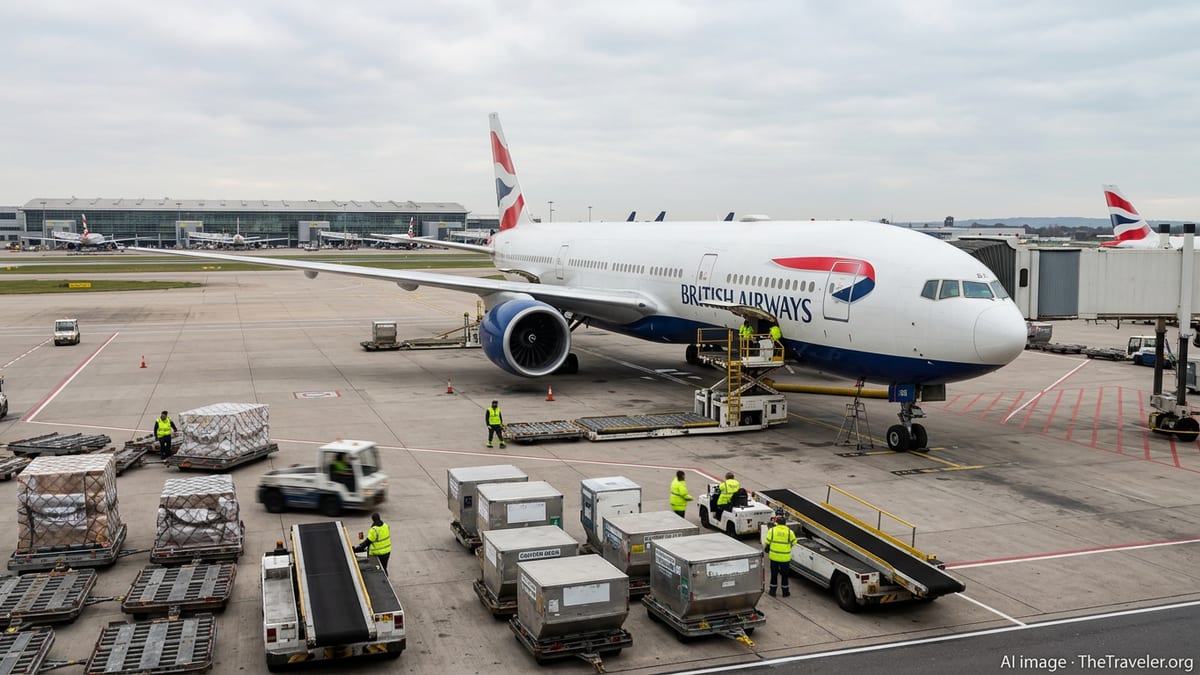
Final Ruling Caps Two-Decade Legal Saga
The judgment, delivered by the Court of Justice of the European Union on 26 February 2026 and made public in recent days, confirms that the European Commission acted lawfully when it penalised British Airways for coordinating elements of air freight pricing with rival carriers serving routes linked to the EU.
The case dates back to a 2005 investigation triggered by a leniency application from Lufthansa, which disclosed a cartel involving multiple international airlines and received full immunity from fines. In 2010, the European Commission imposed almost €800 million in penalties on 11 carriers for fixing fuel and security surcharges and jointly refusing to pay commissions on those surcharges to freight forwarders.
British Airways initially faced a fine of around €104 million as part of that decision. Although the General Court annulled the original ruling on procedural grounds in 2015, the Commission reissued a corrected decision in 2017, largely maintaining its findings and reimposing fines that were later adjusted. For British Airways, subsequent legal challenges yielded only a partial reduction, cutting the penalty to €84.4 million.
With the Court of Justice now rejecting the carrier’s final appeal, the decision is definitive, bringing a long chapter of litigation in Luxembourg to a close and confirming that the reduced fine remains payable.
Cartel Conduct and Impact on Air Cargo Markets
The cartel centred on fuel surcharges, security surcharges and the treatment of commissions in the air freight sector between the late 1990s and mid-2000s, a period marked by volatile fuel prices and heightened security costs. According to EU regulators, airlines including British Airways coordinated these surcharge levels rather than allowing them to be set independently in response to market conditions.
Investigators found that carriers exchanged commercially sensitive information and aligned responses on how surcharges would be applied on shipments to and from the European Union. By agreeing common approaches and refusing to pay commissions on the surcharges, the airlines reduced competitive pressure on one another and limited the ability of freight forwarders to negotiate better terms for customers.
Although the cartel concerned business-to-business cargo services rather than passenger tickets, the ruling is being closely watched in the wider travel industry. Air freight is a critical revenue stream for long-haul airlines, and surcharge practices can influence overall route economics, aircraft deployment and ultimately the cost structures that underpin global connectivity.
Competition specialists say the case illustrates how opaque fee structures and parallel pricing behaviour in aviation can attract regulatory scrutiny, even when core base fares or rates are not explicitly fixed.
Court Backs Broad Reach of EU Competition Law
A central plank of British Airways’ appeal was that the European Commission lacked jurisdiction over parts of the alleged conduct because the cartel covered air freight services inbound to the EU from third countries. The airline argued that activities taking place largely outside European territory should fall beyond the effective reach of EU competition law.
The Court of Justice rejected that position, endorsing what is known as the qualified effects doctrine. Judges held that EU rules apply when conduct outside the bloc has foreseeable, immediate and substantial effects within the internal market, a threshold they deemed met in this case given that the surcharges were built into prices for services destined for customers in the EU and European Economic Area.
The court also dismissed arguments that regulators had failed to show concrete consumer harm, finding that a robust demonstration of likely restrictive effects on competition is sufficient. The ruling follows a similar outcome for Air France-KLM, which recently saw its own appeal rejected and now faces a payment of more than €360 million linked to the same air cargo investigation.
Legal analysts note that the latest judgments reinforce Brussels’ ability to police global supply chains and aviation alliances when pricing practices distort competition on trade lanes serving the EU, even if the coordination itself occurred abroad.
Implications for Airlines, Alliances and Travelers
For British Airways and its parent group, the financial hit from the €84.4 million penalty is manageable against the backdrop of a broad international network and recovering travel demand. The reputational legacy of being tied to a cartel case stretching over 20 years, however, is a lingering reminder of how long competition disputes can shadow an airline’s brand.
The judgment also sends a clear message to carriers engaged in joint businesses, code-shares and cargo alliances that information-sharing and pricing coordination must be carefully ring-fenced within competition law boundaries. Regulators in Brussels are expected to continue probing complex commercial arrangements that blur the line between cooperation and collusion, particularly where surcharges, ancillary fees or capacity decisions are negotiated collectively.
For shippers and logistics providers, the closure of this case is likely to be seen as a confirmation that regulators remain attentive to the structure and transparency of freight pricing. Many forwarders have already diversified across airlines and expanded use of digital booking tools to compare real-time rates, helping to reduce the risk that coordinated surcharges can quietly creep back into the market.
While the ruling does not directly alter passenger fares or consumer protections, it fits into a broader landscape in which European authorities are tightening oversight of aviation practices, from environmental disclosures to passenger rights. Travelers may not feel an immediate effect, but the overall message to airlines is that the margin for coordinated behaviour in any corner of their business continues to narrow.
Broader Enforcement Wave in European Aviation
The British Airways decision forms part of a wider wave of enforcement actions that have rippled through the European aviation sector. Alongside the air cargo cartel, courts and regulators have recently scrutinised issues ranging from low cost carriers’ online sales practices to proposed reforms of passenger compensation rules, underlining the high level of regulatory attention on the industry.
For competition authorities, the air cargo saga demonstrates the effectiveness of leniency tools that encourage whistleblowers to disclose secret cartels. Lufthansa’s initial approach to the Commission unlocked an investigation that ultimately resulted in hundreds of millions of euros in fines across multiple carriers, even if procedural missteps required the decision to be rebuilt and defended over many years.
For airlines operating in and out of Europe’s busy hubs, the clear takeaway is that historical conduct can remain under the spotlight for a long time. As the Court of Justice’s latest ruling closes the book on British Airways’ final appeal, it also sets a precedent likely to influence how regulators worldwide assess jurisdiction, cross-border effects and the treatment of surcharges in global transport markets.
In a sector where both passenger and cargo traffic are central to route viability, the outcome further cements the European Union’s role as one of the most assertive competition watchdogs in international aviation, with consequences that extend well beyond its own airspace.