

More news on this day
EuroParcs has introduced Klarna-powered flexible payment plans across several European markets, adding pay-later and installment options at checkout for guests booking stays at its holiday parks.
Get the latest news straight to your inbox!
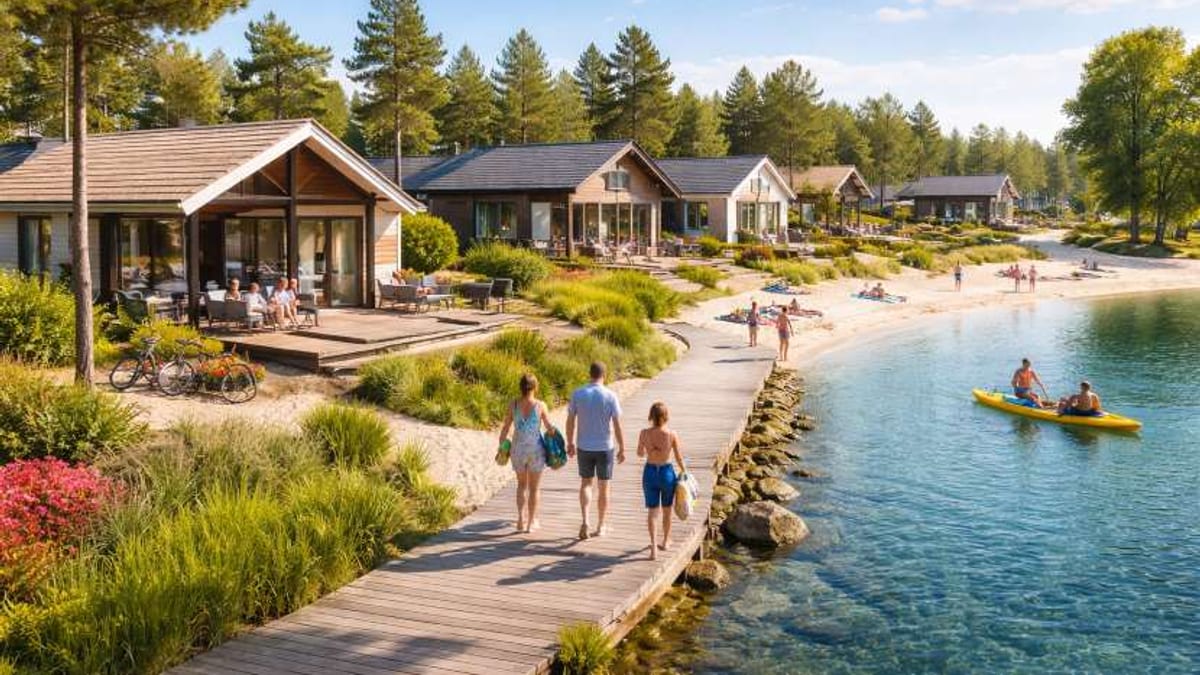
Image by Latest International / Global Travel News, Breaking World Travel News
New Financing Options for Holiday Park Guests
EuroParcs, a major provider of holiday parks across Europe, is expanding its payment options by integrating Klarna’s buy now, pay later services into its booking journey. Publicly available information indicates that the rollout is aimed at giving guests more flexibility at the point of reservation, reducing the need to pay the full accommodation cost upfront.
The partnership makes EuroParcs part of a broader travel and leisure trend in which operators are adopting Klarna’s pay-in-instalments and pay-later products, commonly used in retail. Similar Klarna integrations have been introduced by package holiday brands and theme parks, where customers can split the total bill into multiple interest-free payments instead of paying in one go.
While specific commercial terms between EuroParcs and Klarna have not been disclosed, the collaboration is expected to help the group capture demand from price-sensitive families and younger travellers who are increasingly used to flexible checkout options in other sectors.
How Klarna’s Flexible Payments Typically Work
Klarna’s services are designed to let customers spread the cost of purchases over time without added interest when payments are made on schedule. Across European merchants that already work with Klarna, popular options include paying in three equal instalments over roughly 60 days or settling the balance within 30 days of purchase, with automatic debits from a linked card.
In the travel segment, several tour operators and accommodation providers now allow guests to use Klarna to cover either the full booking amount or the remaining balance closer to departure. These models usually involve an initial instalment at the time of booking, followed by one or two further payments collected automatically at agreed intervals.
EuroParcs’ new Klarna-backed plans are expected to follow comparable structures, giving guests a clearer overview of future payment dates and avoiding traditional consumer loans or credit card interest for short-term financing. Guests will still need to meet Klarna’s eligibility checks, which can vary between markets and are based on criteria such as residency, age and financial status.
Where in Europe Guests Can Use Klarna
EuroParcs operates a network of parks in the Netherlands, Belgium, Germany, Austria and other destinations, with stays ranging from lakeside lodge breaks to larger holiday resorts near national parks and cities. Klarna has an established presence across many of these same European markets, supporting local currencies and regulations.
In comparable holiday brands, Klarna’s pay later and pay-in-3 options are commonly offered to residents of countries including the Netherlands, Belgium, France, Germany and Austria, often with limits on booking size and timing. Based on these existing patterns, EuroParcs’ Klarna rollout is expected to focus first on core Eurozone markets where both companies already have strong operations.
For cross-border holidaymakers, Klarna’s multi-market footprint means that guests from one supported European country can often use the same account to book accommodation in another, subject to Klarna’s standard checks. That could make it easier for international visitors to lock in high-demand school holiday or event weekends at EuroParcs locations without immediate full payment.
Implications for Budget-Conscious Travellers
The introduction of Klarna at EuroParcs arrives at a time when many European households are looking for ways to manage holiday costs more carefully. Spreading payments across several weeks or months can allow families to secure accommodation earlier, even before all travel funds have been set aside.
Consumer advocates note that interest-free instalment products can be useful budgeting tools when used responsibly and when the total holiday cost is affordable. At the same time, they highlight that buy now, pay later services are a form of credit that can lead to missed payments if not managed carefully. Klarna and other providers stress that on-time payments are critical, and late or missed instalments may incur fees or affect future borrowing options.
EuroParcs’ deployment of Klarna sits alongside traditional payment methods such as debit and credit cards and standard deposit-based bookings. This mix gives guests a choice between paying upfront, paying a partial deposit, or using Klarna to spread the full amount over several instalments, depending on their personal budgeting preferences.
Competitive Pressures in the Holiday Park Market
The move also reflects growing competition across the European holiday park and short-stay accommodation market. Operators ranging from traditional campsite groups to resort-style villages are investing in both digital booking tools and flexible pricing models to stand out to consumers.
By adopting Klarna’s payment technology, EuroParcs aligns itself with a broader wave of travel brands that are treating the checkout experience as a key point of differentiation. Flexible payment plans can influence where travellers ultimately book, particularly when overall prices between destinations are similar.
Analysts observing the sector suggest that such partnerships may become standard across midrange and premium holiday parks, in the same way that flexible finance has become commonplace in electronics and fashion retail. For EuroParcs, the Klarna integration is positioned as a way to lower friction at the moment of purchase, potentially increasing conversion rates and filling more pitches, cabins and holiday homes across its European portfolio.