

More news on this day
Thousands of air passengers across Europe are facing widespread disruption as hundreds of flights are delayed or cancelled at major hubs in the United Kingdom, Germany, Spain, France, Italy and several other countries, with publicly available data indicating around 1,476 delays and 400 cancellations affecting carriers including Lufthansa, Air France, Ryanair and KLM.
Get the latest news straight to your inbox!
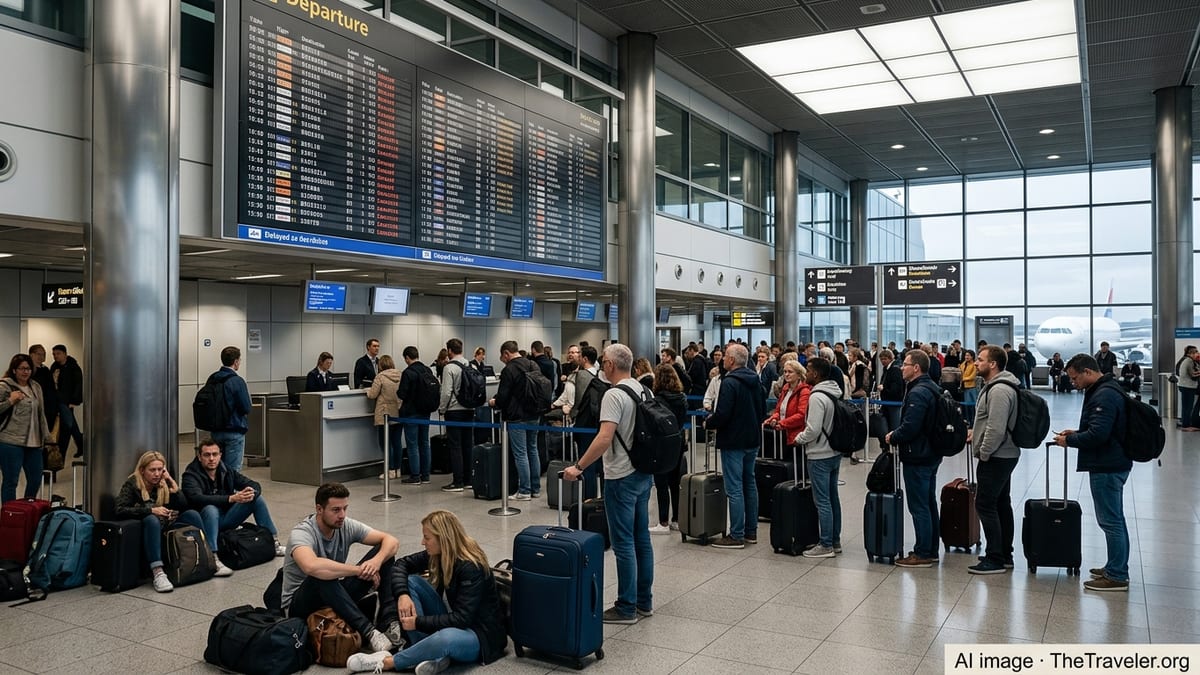
Major Hubs From Berlin To Paris Struggle With Backlogs
Air traffic tracking dashboards on Thursday showed mounting delays at some of Europe’s busiest airports, including Berlin, Paris, Brussels, Vienna and Zurich, as airlines worked through a growing backlog of passengers. The disruption has rippled across both short-haul and long-haul networks, affecting connecting services far beyond the continent.
In Germany, Lufthansa’s schedules at Berlin and other key airports have been heavily affected, with knock-on delays from earlier operational issues compounding already tight turnaround times. In France, Air France services into and out of Paris are experiencing significant timetable changes, leading to crowded departure halls and long rebooking queues.
Low-cost and network carriers are being hit simultaneously. Ryanair flights serving secondary airports that feed into major hubs have reported frequent late departures, while network partners such as KLM are dealing with disrupted rotations that make it harder to get crews and aircraft to where they are needed on time.
Vienna and Zurich, both important connecting hubs in central Europe, have also reported queues and disruption across multiple airlines, underlining how a concentration of delays at a few large airports can quickly cascade across the region.
Combination Of Weather, Capacity And Knock-On Effects
Recent meteorological reports point to unsettled weather across parts of Western and Central Europe, including high winds, heavy rain and occasional snow that have periodically reduced runway capacity and slowed airport operations. When visibility falls or crosswinds increase, air traffic controllers often reduce the rate at which aircraft can land and depart, creating bottlenecks that are felt throughout the day.
At the same time, ongoing structural constraints remain in the European aviation system. Industry analyses have repeatedly highlighted shortages in air traffic control staffing and ground handling resources in several countries, which can magnify the impact of even relatively minor weather events. When a busy morning wave of flights is disrupted, it often leaves airlines struggling to recover their schedules for the rest of the day.
Publicly available information on recent performance at European hubs also shows that a series of earlier disruptions this winter, including storms and technical outages, have left some carriers with aircraft and crew out of position. That makes networks more vulnerable to sudden disruptions and limits the flexibility to deploy spare capacity or additional rotations when problems arise.
The result is that a delay in one part of the system can quickly spread, with a late inbound aircraft causing subsequent late departures and, in some cases, outright cancellations when mandatory crew duty limits are reached.
Impact On Passengers: Missed Connections And Overnight Stays
The immediate impact for travellers has been missed connections, extended waits inside terminals and a scramble for scarce alternative routes. At major transfer hubs such as Paris, Vienna and Zurich, passengers on multi-leg itineraries have found that a delayed first sector often leads to an unplanned overnight stay when onward flights are already full or have departed.
Travel forums and social media posts describe crowded transfer desks and long lines at customer service counters as passengers seek rebooking, meal vouchers and hotel accommodation. Those with flexible tickets or access to airline apps have in some cases been able to secure alternative flights more quickly, while others face hours in line simply to receive updated itineraries.
Budget-conscious leisure travellers are particularly exposed when flying low-cost carriers, which typically do not interline with other airlines. When a Ryanair or similar point-to-point flight is cancelled, passengers may have to purchase completely new tickets on other airlines to continue their journeys, often at elevated last-minute prices.
For business travellers and those with time-sensitive commitments, the timing of the disruption is especially problematic. Reports indicate that some passengers are weighing overland alternatives such as rail or long-distance buses between cities like Brussels, Paris, Frankfurt and Amsterdam to avoid further uncertainty in the air.
Rights And Options Under European Passenger Protections
The current wave of disruption is again drawing attention to Europe’s passenger protection framework. Under EU and UK regulations that mirror Regulation 261, travellers on eligible flights may be entitled to assistance such as meals, refreshments and accommodation during long delays, along with re-routing at the earliest opportunity or reimbursement in the event of cancellations.
Compensation in cash may also be available in certain circumstances, depending on the length of the delay, the distance of the flight and whether the disruption is deemed to be within the airline’s control. Severe weather and some air traffic control restrictions are generally treated as extraordinary circumstances, which can limit eligibility even when delays are lengthy.
Consumer advocacy groups regularly advise passengers to keep boarding passes, booking confirmations and receipts for out-of-pocket expenses, and to submit claims directly through airline websites once travel is complete. Several third-party services and national enforcement bodies also provide guidance on how to determine whether a specific delay or cancellation falls within the scope of the rules.
Given the scale of the current disruption, observers expect a surge in compensation claims and refund requests over the coming days and weeks, adding administrative pressure to airlines already focused on restoring normal operations.
Outlook For Recovery Across European Networks
Operational updates published by several carriers indicate that recovery efforts are likely to continue into the coming days, especially on complex hub-and-spoke networks. It can take multiple rotations for airlines to reposition aircraft and crew, so schedules may remain fragile even after weather conditions improve or immediate bottlenecks are resolved.
Airports and airlines are encouraging travellers to monitor flight status carefully before departing for the airport and to allow extra time for check-in, security and border controls. With capacity on many routes already tight, available seats on alternative flights can sell out quickly, particularly on popular city pairs linking hubs such as Berlin, Paris, Brussels and Zurich.
Industry analysts note that Europe’s aviation system continues to operate close to capacity during peak periods, leaving limited margin for error when unexpected disruptions occur. Until additional staffing and infrastructure are in place across key air traffic control centers and ground operations, similar episodes of widespread delays and cancellations are likely to recur during periods of adverse weather or technical strain.
For now, passengers across the continent face an uncertain and often frustrating experience, as airlines and airports work flight by flight to bring operations back on track and clear the backlog created by nearly 1,500 delays and hundreds of cancellations in a single day.