

More news on this day
Morocco’s aviation sector opened 2026 with its strongest January on record, handling more than 3.13 million passengers as routes linking Europe, Africa, the Middle East and the Americas collectively propelled double digit growth across the country’s airport network.
Get the latest news straight to your inbox!
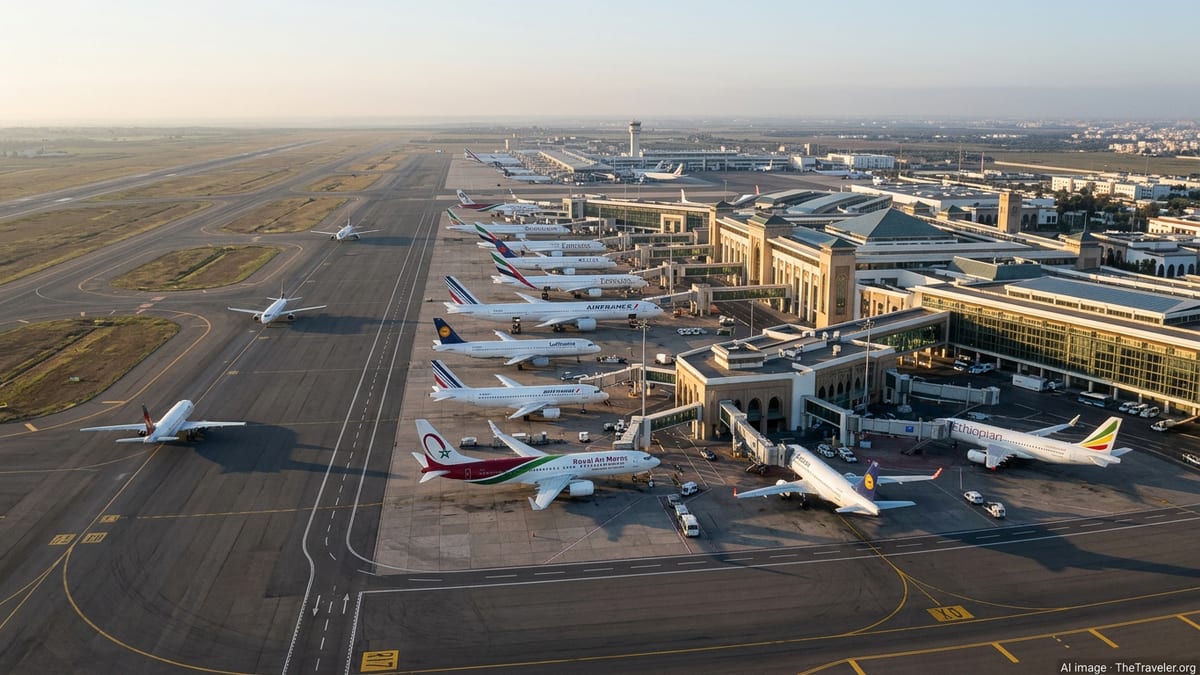
Record-Breaking Start to 2026 at Morocco’s Airports
Fresh figures from Morocco’s National Airports Office show that national airports welcomed just over 3.13 million passengers in January 2026, an increase of around 14.7 percent compared with the same month a year earlier. It is the first time January traffic has surpassed the three million mark, and it comes only weeks after the network closed 2025 with a record 36.3 million passengers handled over the full year.
The latest data confirms that the strong momentum seen in 2024 and 2025 is carrying into 2026, despite a more uncertain global backdrop. After years of recovery and expansion, Morocco’s airports are no longer simply regaining lost traffic; they are consistently setting new benchmarks in both international and domestic flows.
Officials point to the combined effect of rising leisure demand, Morocco’s growing appeal as a year round destination and the country’s expanding role as a transit and business hub for North and West Africa. The sustained performance in a traditionally quieter winter month is seen as an encouraging signal for airlines and tourism operators planning capacity for the rest of the year.
Behind the headline numbers, January’s traffic mix underscores how broadly based the recovery has become. While Europe remains the backbone of Morocco’s international aviation market, robust demand from across Africa, the Middle East and the Americas is increasingly shaping growth patterns and network decisions.
Europe Leads but Other Regions Surge Ahead
Europe once again accounted for the lion’s share of international passenger flows to and from Morocco in January, supported by dense low cost and legacy carrier networks linking the country with major markets such as France, Spain, the United Kingdom, Italy and Germany. Passenger traffic on European routes grew by just over 13 percent year on year, consolidating the region’s position as Morocco’s primary aviation partner.
However, the strongest growth rates were recorded on other intercontinental corridors. Traffic with the Americas expanded by more than 30 percent in January, helped by ramped up transatlantic capacity and growing interest in Morocco among North and South American travelers. Routes to and from Africa posted an increase of nearly 29 percent, reflecting Morocco’s ambition to serve as a gateway for business and intra regional tourism on the continent.
Flights connecting Morocco with the Middle and Far East also registered a solid performance, with passenger volumes climbing by about 16 percent. These gains are supported by a mix of direct services and one stop itineraries via Gulf and Turkish hubs, which channel traffic from Asia toward Morocco’s main tourist and commercial centers.
Industry analysts note that the geographic diversification of traffic is reducing Morocco’s dependence on any single market and providing a cushion against regional shocks. The breadth of January’s growth suggests that the country is benefiting both from strong demand in its traditional European catchment and from structural shifts in long haul travel patterns linking Africa, the Middle East and the Americas.
Casablanca, Marrakech and Tangier Anchor Network Expansion
Morocco’s three leading airports, Casablanca Mohammed V, Marrakech Menara and Tangier Ibn Battouta, remained the main engines of growth in January. Together with Agadir Al Massira and Rabat Salé, they now account for close to nine out of every ten passengers using the national airport system, underscoring the concentration of traffic in a handful of strategic gateways.
Casablanca, the country’s primary intercontinental hub and home base of Royal Air Maroc, continued to dominate long haul and connecting traffic, particularly on European, African and North American routes. The airport is central to the national carrier’s multi year growth plan, which foresees a substantial expansion of the fleet and network in preparation for the 2030 World Cup and longer term tourism objectives.
Marrakech, Morocco’s busiest purely leisure focused airport, is seeing the benefits of new city pairings from European secondary cities and additional winter capacity from tour operators. The facility recently crossed the symbolic threshold of ten million annual passengers and is under pressure to keep up with demand through operational improvements and future infrastructure projects designed to ease congestion during peak seasons.
Tangier has emerged as one of the fastest growing airports in the country, fueled by tourism on the northern coast and a strong base of industrial and logistics activity in the surrounding region. In January 2026 it posted a near 20 percent jump in passenger numbers compared with a year earlier, highlighting how secondary markets are increasingly sharing in the benefits of record national traffic.
Airports 2030 Strategy Underpins Capacity and Service
The January performance is widely viewed as a validation of Morocco’s Airports 2030 strategy, a nationwide investment and modernization program launched by the National Airports Office to prepare infrastructure for projected demand. The plan prioritizes terminal expansions, runway upgrades and digital systems aimed at easing bottlenecks, shortening processing times and supporting a higher quality passenger experience.
Recent record numbers have put pressure on existing facilities at several airports, particularly those that have seen traffic significantly outstrip original design capacity. Authorities have responded with short and medium term measures ranging from process redesign and additional check in capacity to the introduction of smarter security screening and revamped airside operations.
In parallel, longer horizon projects are being advanced to ensure that airports can continue to absorb new routes and higher frequencies from both Moroccan and foreign airlines. These include new terminal developments at key hubs and capacity enhancements at regional airports that are poised to handle more traffic as tourism disperses beyond the country’s traditional hotspots.
Officials stress that maintaining service quality during periods of rapid growth is as important as increasing raw capacity. The Airports 2030 strategy therefore places strong emphasis on passenger comfort, accessibility and digital services, with initiatives such as real time information tools, upgraded lounges and redesigned public areas aimed at reinforcing Morocco’s image as a modern and welcoming gateway.
Tourism Boom and Global Connectivity Shape the Outlook
Behind the numbers, Morocco’s airports are riding a broader tourism boom. International arrivals have been climbing on the back of sustained marketing campaigns in Europe and the Americas, expanded air service agreements and the country’s growing reputation for cultural, coastal and desert tourism. The co hosting of the 2030 FIFA World Cup is expected to provide an additional catalyst for investment and route development over the coming years.
Aviation observers say that January’s 3.13 million passenger milestone offers a glimpse of how Morocco is positioning itself in the global air transport map. By combining competitive leisure offerings with strengthening business links across Africa, the Middle East and the Atlantic, the country is seeking to anchor itself as a year round, multi segment market for international carriers.
The route decisions being taken today suggest that this strategy is gaining traction. Airlines are adding capacity not only into the major hubs but also into emerging secondary cities, encouraged by rising load factors and the prospect of further demand growth as infrastructure projects come on line. For Morocco’s airports, the immediate challenge will be to manage this influx while preserving operational resilience through future seasonal peaks.
With Europe, Africa, the Middle East and the Americas all contributing to January’s gains, stakeholders see a window of opportunity to lock in new partnerships, promote additional city pairings and deepen the country’s integration into global air networks. How effectively they capitalize on that momentum over the remainder of 2026 will go a long way in determining whether the latest records become a new normal for Morocco’s airports.