

More news on this day
Europe–Asia flight prices have surged to their highest levels in a decade after fresh conflict in the Middle East forced airlines to close key Gulf hubs, reroute around blocked airspace and grapple with soaring fuel and insurance costs, leaving passengers facing eye-watering fares, packed cabins and mounting delays.
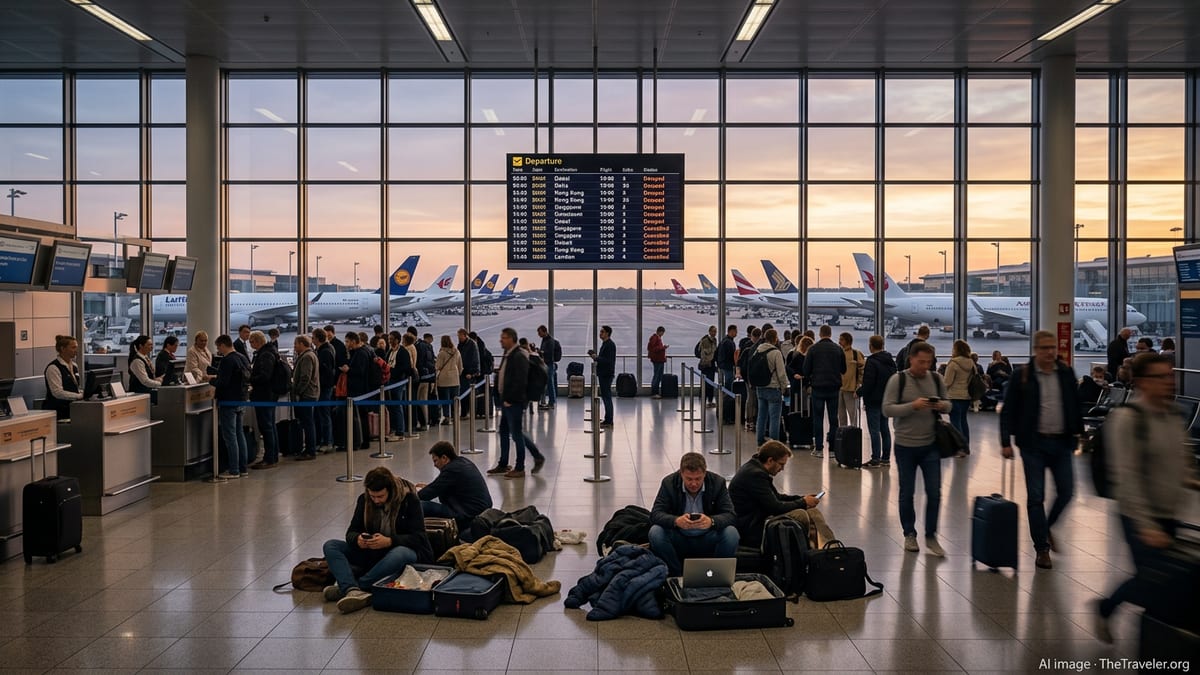
How the Middle East Conflict Is Reshaping Europe–Asia Routes
The latest escalation in the U.S. and Israel’s war against Iran has triggered rapid airspace closures across parts of Iran, Iraq, Israel, Syria and several Gulf states since February 28, 2026. Major hubs in Dubai, Abu Dhabi and Doha, usually central to Europe–Asia connectivity, have seen widespread cancellations and temporary shutdowns as airlines avoid potential missile and drone activity over the Gulf.
Long established corridors linking Europe to South and Southeast Asia via the Gulf have been abruptly severed. Carriers that once funneled huge volumes of traffic through Emirates, Qatar Airways and Etihad now have to replan networks overnight, shifting capacity to alternative hubs or suspending routes entirely. The result is a severe capacity squeeze on some of the world’s busiest long haul markets.
Compounding the disruption, much of Russian airspace remains closed to many Western airlines due to earlier sanctions, eliminating one of the main northern bypasses between Europe and Asia. That leaves a handful of congested southern and central routes still available, dramatically reducing flexibility and driving up both operating costs and ticket prices.
Industry analysts say the combination of closed Gulf hubs, restricted northern corridors and surging fuel prices after the Strait of Hormuz crisis has created a “perfect storm” for Europe–Asia aviation, with shockwaves likely to ripple through schedules and fares for weeks, if not months.
Skyrocketing Fares and Sold-Out Cabins
The immediate impact for travelers has been brutal. In searches conducted in early March, economy one-way quotes on key Asia–Europe routes have routinely appeared in the 2,000 to 3,000 dollar range, levels more typical of premium economy or even business-class advance fares. Some rerouted tickets have been reported above 7,000 dollars for one-way economy on short-notice departures as remaining seats vanish.
On popular trunk routes, such as Hong Kong or Singapore to London, airline websites in recent days have shown entire stretches of dates with no economy seats available at all. Where a typical one-way fare might have hovered around 700 to 900 dollars outside peak periods, current prices are several times higher on near-term dates, only easing later in March if conflict conditions stabilize.
Similar patterns are emerging on China–Europe services. Routes from Shanghai and other coastal cities to major European capitals, already constrained by Russian airspace restrictions, have seen some economy fares spike by four to five times their normal levels. Capacity that once flowed smoothly via Gulf hubs is now being squeezed through fewer, more circuitous pathways.
Even travelers connecting between secondary European cities and destinations in India, Thailand or Vietnam are feeling the pinch. With Gulf options severely reduced, demand is flooding onto a narrower set of alternatives via Turkey, Saudi Arabia and Southeast Asia, where remaining seats are quickly snapped up and dynamic pricing algorithms respond by pushing fares sharply higher.
Longer Flights, More Delays and Operational Strain
Europe–Asia flights that are still operating often look very different from the schedules passengers booked weeks ago. Detours to avoid closed Middle Eastern airspace are adding two to four hours to many long haul journeys, particularly those that once crossed Iran and the Gulf or connected through Dubai and Doha.
Some carriers are routing flights south over Egypt, Saudi Arabia and the Arabian Sea before tracking toward India and Southeast Asia. Others are squeezing into crowded corridors through Central Asia and the Caucasus, where congestion and air traffic control constraints can cause airborne holding and knock-on delays throughout the day.
Longer flight times mean higher fuel burn at precisely the moment global oil prices have spiked following tensions around the Strait of Hormuz. Airlines are also facing sharply increased war risk insurance premiums for any services that still transit near conflict zones. Executives in India and the Gulf report that additional insurance alone can add the equivalent of hundreds of dollars to the cost of each long haul ticket.
For passengers, the operational strain translates into missed connections, last-minute schedule changes and crowded terminals as airlines consolidate departures. Overnight layovers are becoming more common as tightly synchronized connection banks in Gulf hubs are replaced by patchwork routings via Europe, Turkey or Southeast Asia, increasing both travel time and out-of-pocket costs.
Winners, Losers and Shifting Hubs
Not every carrier is equally exposed. Gulf airlines that built their business models on acting as super-connectors between Europe and Asia are among the hardest hit, forced to suspend or drastically reroute a wide swath of services. For them, the combination of lost transfer traffic and rising operating costs is especially painful.
By contrast, some Asian and European airlines that can route flights along more southerly or northerly tracks without transiting the Gulf are seizing an opportunity. Carriers such as Turkish Airlines, as well as those based in Thailand, Singapore and Vietnam, are reporting strong demand as passengers look for itineraries that avoid Middle Eastern airspace altogether.
Major hubs in Bangkok, Singapore and Ho Chi Minh City are seeing a surge in connecting traffic, with more Europe-bound passengers using Southeast Asia as a bridge instead of Dubai or Doha. In Europe, Istanbul and select Southern European airports are emerging as key waypoints, redistributing flows that once overwhelmingly funneled through the Gulf.
Still, the reshuffle brings its own constraints. Airport slots, ground handling capacity and crew availability in these alternative hubs were never designed to absorb a sudden influx of rerouted long haul traffic. As a result, even the “winners” are grappling with tight capacity and schedule reliability issues, limiting how far they can expand to soak up displaced demand.
What Passengers Can Do Right Now
For travelers planning or holding tickets on Europe–Asia routes in March and into spring, experts say the most important step is to assume disruption and build in extra time. Long haul connections that once felt safe with two or three hours between flights may now be risky if routings change or flights are delayed en route around conflict zones.
Passengers whose flights are canceled are generally entitled to rebooking or refunds under airline policies and, within the European Union and United Kingdom, under local passenger rights regulations when departing from or flying with European carriers. However, given the unprecedented squeeze on capacity, rebooking may mean accepting significantly longer routings or traveling several days later than planned.
Industry consultants recommend avoiding overly complex itineraries through multiple hubs whenever possible and checking booking engines for routings via relatively less affected gateways such as Istanbul, select Saudi Arabian airports or major Southeast Asian hubs. Travelers with flexibility might find slightly lower fares and more stable schedules by departing a few days later or choosing midweek travel rather than peak weekend departures.
Those who must travel urgently should prepare for higher prices in the near term. With fuel costs elevated and airlines incurring extra overflight fees and insurance charges on every rerouted sector, analysts warn that even once the initial shock of cancellations eases, a structural step-up in average fares on Europe–Asia routes is likely as long as Middle Eastern airspace remains volatile.