

More news on this day
European travelers planning summer holidays are being urged to brace for higher fares, tighter capacity and potential fuel rationing as disruption around the Strait of Hormuz squeezes jet fuel supplies into the continent’s airports.
Get the latest news straight to your inbox!
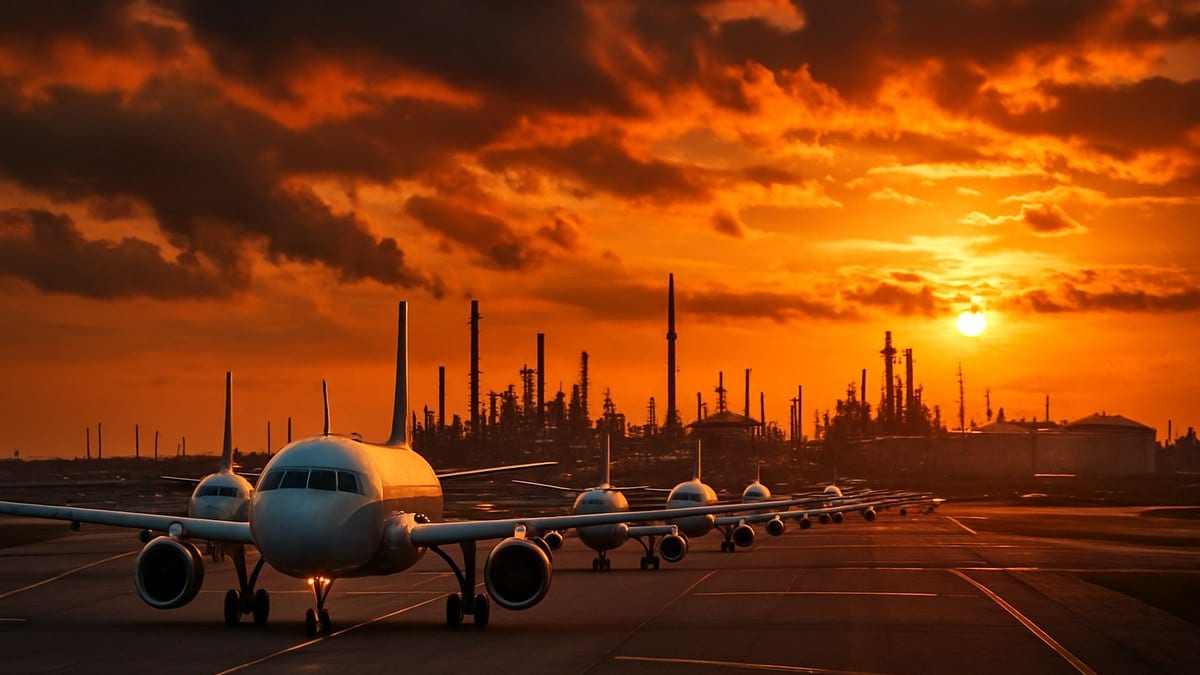
Hormuz Disruption Turns Into Aviation Fuel Shock
The effective closure of the Strait of Hormuz since early March 2026 has removed a significant share of global seaborne jet fuel from the market, with knock-on effects now moving rapidly toward Europe’s aviation sector. Industry data highlighted by trade analysts indicates that around one fifth of worldwide jet fuel shipments typically move through the narrow Gulf waterway, alongside major flows of crude oil and liquefied natural gas.
Europe is particularly exposed because a substantial portion of the kerosene feeding its refineries and airports originates from the Persian Gulf. Research circulated by energy consultancies in recent weeks suggests that roughly a quarter to a third of Europe’s jet fuel demand is normally met by Middle Eastern supply, either as refined product or as crude destined for European plants. With tankers diverted, delayed or idled, that flow has been sharply curtailed just as airlines ramp up flying programs for the peak tourist season.
The geopolitical backdrop is adding to the strain. The war involving Iran, the United States and Israel has triggered wider energy market turmoil, lifting benchmark crude prices and sending European jet fuel prices sharply higher. Trade press coverage notes that one key European jet fuel price gauge has jumped more than 70 percent since hostilities began, approaching levels last seen during the 2022 energy crunch.
While Europe’s diversified refinery network and fuel storage have so far prevented an outright shortage, analysts caution that the situation could deteriorate rapidly if Hormuz traffic does not resume in a stable and predictable way over the coming weeks.
Airports Warn of ‘Systemic’ Shortages Within Weeks
The sharpest alarm has come from Airports Council International Europe, which represents hundreds of airports across the continent. In a recent communication to European Union policymakers, the group warned that, unless flows through the Strait of Hormuz are restored soon, European airports could face what it described as a “systemic shortage” of jet fuel within about three weeks.
Publicly available information on that warning indicates that the concern is not only about higher prices, but about physical availability of fuel at key hubs and regional gateways. Some airports in Italy have already introduced restrictions on refueling, according to regional media reports, limiting uplift for certain services and urging airlines to tanker additional fuel from better supplied locations.
Industry commentary suggests that, if the squeeze intensifies, airports might be forced to prioritize certain flights, such as long haul or strategically important routes, while short haul services could see tighter caps on fuel loads or face schedule thinning. Any such measures would likely ripple out to passengers through reduced frequencies, time-table reshuffles and longer connection times.
Airport operators are also emphasizing the broader economic risk. Public statements and letters seen by media outlets argue that reduced air connectivity would weigh on tourism, trade and regional development at precisely the moment when many European economies are still absorbing previous energy shocks.
Airlines Juggle Prices, Capacity and Fuel Hedging
European airlines are responding on several fronts as they enter the crucial April to October travel window. Carriers with extensive fuel hedging programs are partially shielded from immediate price spikes, but hedges cannot solve the problem of physical delivery. Industry analysis appearing in financial and aviation press indicates that some low cost and leisure operators, particularly in southern Europe, have begun trimming schedules or consolidating frequencies on weaker routes.
Media coverage from Spain and Italy points to instances of spring flight cancellations linked to higher fuel costs and uncertainty over supply. Some airlines are reportedly contacting affected passengers to offer rebooking or refunds, while quietly warning that further adjustments are possible if the conflict around Hormuz drags on.
For now, most large network carriers are avoiding drastic cuts to their summer timetables, relying instead on fare increases, fuel surcharges and careful capacity management. Price comparison platforms and travel agencies are already reporting noticeably higher average ticket prices on popular Mediterranean and long haul leisure routes than at the same point last year, reflecting both fuel costs and strong demand after several disrupted travel seasons.
Industry analysts note that, if fuel deliveries to major hubs were significantly curtailed, airlines might resort to more extreme measures such as re-routing aircraft for refueling, increasing technical stops, or reallocating capacity away from fuel-constrained airports toward better supplied regions. Each of these steps would add complexity and cost, further pressuring fares and reliability.
Search for Alternative Supplies Exposes Structural Weaknesses
The Hormuz disruption is prompting a scramble to secure alternative jet fuel supplies for Europe, revealing structural constraints in the global refining and shipping system. Trade intelligence firms tracking tanker movements report that incremental barrels are being sourced from the United States Gulf Coast, West Africa and refineries on the Red Sea, but warn that these flows are unlikely to fully replace lost Middle Eastern supply in the near term.
Analysts highlight that many refineries outside the Gulf region are geared more toward diesel and gasoline production than aviation fuel, limiting how quickly they can boost kerosene output. Where additional volumes are available, they often have to travel longer routes, tying up tanker capacity and raising freight and insurance costs. These longer supply chains make the European jet fuel market more vulnerable to further disruptions and keep price pressure elevated.
International aviation bodies have long warned that concentrated dependence on a few strategic chokepoints for both crude oil and refined products leaves airlines and airports exposed during geopolitical crises. The current situation is reinforcing those concerns, adding urgency to discussions about diversifying supply routes and stockpiling more aviation fuel within Europe.
Sustainable aviation fuel, frequently promoted as a long term tool for decarbonizing air travel and enhancing energy security, is not yet available at the scale needed to offset a major shortfall in conventional kerosene. Market research cited by specialist outlets indicates that, even with planned capacity expansions, sustainable aviation fuel still accounts for only a small fraction of total jet fuel consumption across the continent.
What Summer Travelers Should Expect in Europe
For passengers planning trips between April and the late summer holidays, the emerging jet fuel crunch translates into a higher risk of price volatility and operational disruption. Travel industry reports suggest that many airlines are applying dynamic pricing to manage demand against uncertain capacity, meaning fares on routes linked to fuel constrained airports could rise further as peak season approaches.
Timetable changes are another likely outcome. As carriers adjust to fluctuating fuel deliveries, travelers may see earlier or later departures than originally advertised, temporary suspension of lightly used services, or shifting of flights between nearby airports. Consumer advocates are advising passengers to check bookings regularly, allow extra time for connections, and pay close attention to notifications from airlines and booking platforms.
Despite the challenges, aviation experts quoted in recent coverage stress that Europe is not facing a sudden halt to air travel. Instead, the risk is of a more uneven and less predictable summer season, in which some regions experience tight fuel conditions and schedule constraints while others continue relatively normally.
Much now depends on how quickly and reliably traffic through the Strait of Hormuz can normalize under the evolving ceasefire arrangements. Until there is sustained clarity on that front, Europe’s airlines, airports and travelers will remain on alert for further turbulence in the jet fuel market as the summer of 2026 approaches.