

More news on this day
Air travelers across Europe are facing a fresh wave of disruption as 1,149 flights are reported delayed and 31 cancelled, affecting major hubs in France, Germany, Austria and neighbouring countries, with carriers including KLM, Wizz Air and Finnair among those hit at airports such as Paris and Vienna.
Get the latest news straight to your inbox!
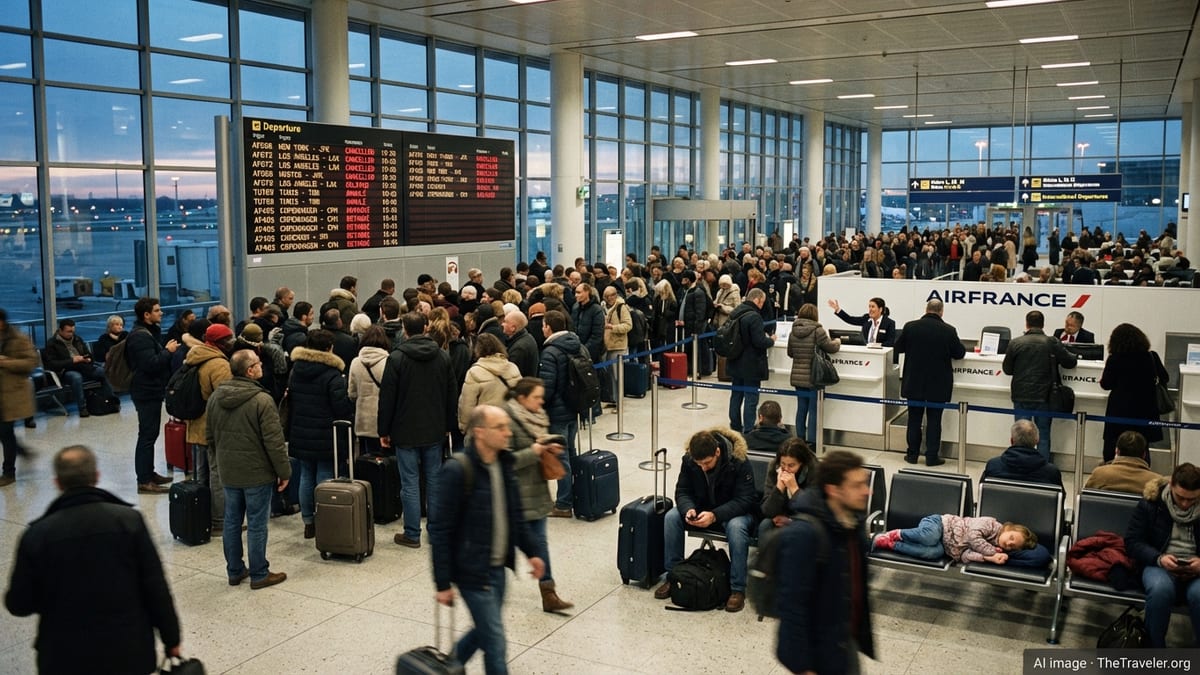
Widespread Delays Across Key European Gateways
Publicly available operational data compiled by travel and aviation trackers indicates that European air traffic has entered another period of strain, with 1,149 flights delayed and 31 cancelled in a single day across the continent. The disruption is concentrated around large hubs in France, Germany and Austria, but the knock-on effects are being felt on regional and connecting services across Europe.
Recent reporting on European air travel performance shows that delays and cancellations have become a recurring issue in early 2026, with several days already marked by hundreds of affected flights at once. Figures from independent disruption monitors for March, for example, highlight similar patterns of congestion and schedule slippage across Paris, Frankfurt and other major gateways as airlines struggle to keep operations running on time in a tightly interconnected network.
The latest wave of disruption appears to reflect the same combination of factors that has dogged European aviation in recent months, including high traffic volumes, staffing constraints and localized capacity issues in air traffic control. With many carriers running near-full schedules at peak times, even minor technical or weather-related slowdowns at one hub can quickly cascade into widespread delays elsewhere.
Paris, Vienna and Other Hubs See Knock-On Effects
Among the hardest-hit airports are Paris Charles de Gaulle and Vienna International, two critical transfer points for both intra-European and long-haul connections. Data published by travel analytics platforms over recent weeks has repeatedly flagged Paris among the top European airports for same-day delays and cancellations, underscoring its vulnerability when congestion or weather intensifies in surrounding airspace.
Vienna has also featured in recent disruption tallies, reflecting its role as a key Central European hub. Reports on earlier large-scale delay days this year show Vienna listed alongside airports such as Amsterdam, Brussels and Prague when regional traffic flows become unbalanced. When a cluster of hubs slows down simultaneously, connecting passengers face missed onward flights and lengthy rebooking queues, even if their departure airport is running relatively smoothly.
Today’s figures suggest a similar pattern, with the initial concentration of delays in France, Germany and Austria feeding outward to secondary airports as aircraft rotations slip behind schedule. Airlines often attempt to protect long-haul departures and late-night curfew-sensitive flights first, which can push shorter European hops into longer waits on the tarmac or at the gate.
KLM, Wizz Air, Finnair and Others Under Operational Pressure
The disruption is affecting a broad mix of full-service and low-cost airlines. Operational summaries and travel-industry coverage from recent days list KLM, Wizz Air, Finnair and other European carriers among those frequently encountering large numbers of delayed flights when pressure on the network rises.
Earlier in March, compiled data showed KLM logging over one hundred delays on a particularly difficult day for European aviation, while Wizz Air and Austrian Airlines reported dozens of late departures and arrivals of their own. Finnair has also appeared in recent punctuality and disruption reports, reflecting the strain on northern European routes that connect through hubs in Germany and Central Europe.
Airline performance reports for previous months demonstrate that many of these carriers typically post solid on-time statistics in more stable conditions. However, the current environment of repeated system-wide disruptions means that even airlines with historically strong punctuality can see their metrics deteriorate quickly when they are exposed to congested hubs or shared airspace bottlenecks.
Travelers Face Missed Connections and Rebooking Challenges
For passengers, the practical impact of 1,149 delays and 31 cancellations in a single European operating day is significant. Long queues at check-in and transfer desks, congested security lines and crowded departure halls have become familiar scenes whenever disruption spikes. Travelers using hubs at Paris and Vienna in particular are at higher risk of missed connections when arrival delays compress already tight transfer windows.
Recent consumer-rights guidance circulating across European travel platforms emphasizes the importance of gathering documentation when flights are disrupted. Boarding passes, booking confirmations and written or digital proof of delays are being highlighted as essential for passengers who may later seek compensation or refunds under European air passenger regulations for qualifying delays and cancellations.
Analysts note that rebooking options can quickly narrow on busy routes, especially in peak periods or on days when multiple airlines are affected at once. Travelers on point-to-point low-cost carriers may find fewer same-day alternatives, while those on legacy airlines could be rerouted via different hubs, potentially adding several hours to total journey times.
What Passengers Can Do Amid Ongoing European Disruptions
While the current figures are striking, they follow a pattern of recurring travel alerts and operational advisories that have shaped European flying since early this year. Passenger advocacy groups and travel advisers recommend that anyone scheduled to fly to or through France, Germany, Austria or neighbouring countries monitor their flight status closely on the day of travel.
Checking airline apps and departure boards before setting out for the airport, allowing extra time for check-in and security, and being prepared with alternative routing options are among the strategies commonly advised in recent guidance. Some carriers publish real-time disruption dashboards that enable travelers to track broader patterns of delays across their network, which can provide early warning of systemic issues before they are reflected at the gate.
Given the scale of today’s delays and cancellations, travel specialists expect residual knock-on effects to linger into subsequent rotations, particularly for early-morning departures that rely on aircraft and crews repositioned overnight. Passengers planning complex itineraries or tight same-day connections in Europe over the coming days may wish to build in longer buffers or consider more direct routings where possible.