

More news on this day
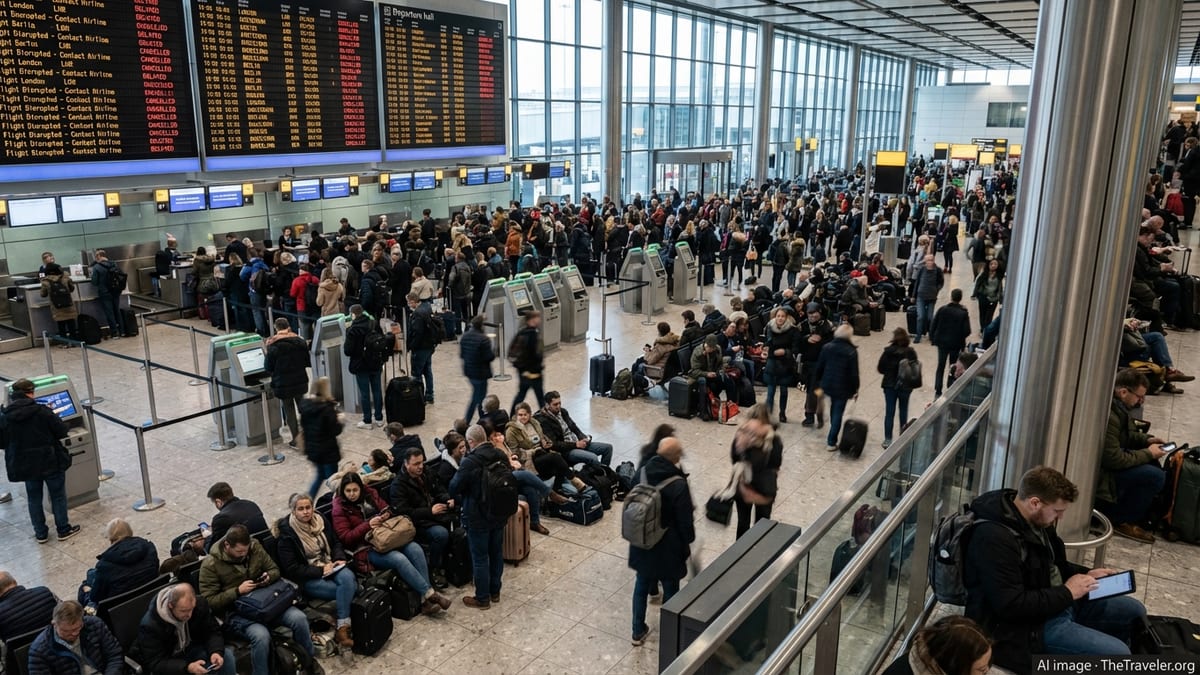
Air travel across Europe is facing fresh disruption today as 1,530 flights are delayed and 57 cancelled across the Netherlands, Spain, the United Kingdom and several other countries, snarling operations for major airlines including Finnair, Lufthansa and British Airways at busy hubs such as London and Berlin.
Wide-Ranging Delays Across Northern and Western Europe
The latest figures from European air traffic monitoring show a broad-based slowdown in flight operations, with delays now impacting services across multiple national networks rather than being confined to one country or storm cell. While the overall number of cancellations remains relatively contained at 57, the 1,530 delayed flights are creating rolling knock-on effects for connections, crew rotations and aircraft positioning.
In the United Kingdom, London’s major airports are again under pressure as aircraft arrive late from continental Europe, compressing already tight turnaround times. British Airways has reported a series of short-haul disruptions as inbound aircraft from Germany, Scandinavia and Spain miss their scheduled slots, forcing gate changes and late departures on onward legs.
Germany is also feeling the strain, with Berlin and other key airports handling late-running services from affected hubs in the Netherlands and the UK. Lufthansa has been juggling aircraft and crew across its European network, with passengers on cross-continent itineraries facing missed connections and rebookings, particularly at peak morning and late-afternoon waves.
Further north, Finnair services have experienced delays where flights feed into or rely on congested European hubs. Although Helsinki remains relatively stable operationally, ripple effects from partner and feeder services have extended journey times for passengers transiting between Northern Europe and major cities such as London, Berlin and Madrid.
Airport Hotspots: Amsterdam, Barcelona, London and Berlin
Amsterdam Schiphol continues to be one of the most affected airports, with a high concentration of delayed departures and arrivals rippling out across the continent. As one of Europe’s busiest transit hubs, even modest slowdowns at Schiphol can quickly cascade into missed slots and aircraft queues, particularly during morning and evening peaks when banks of connecting flights are tightly timed.
In Spain, airports including Barcelona and other major coastal gateways have reported mounting delays as winter weather systems and congestion elsewhere in Europe disrupt schedules. Services linking Spain to the Netherlands, the UK and Germany have been among those most prone to late departures, as aircraft arrive behind schedule and turnaround operations are compressed.
London’s primary international airports are meanwhile grappling with a mix of delayed inbound flights and constrained airspace capacity. While outright cancellations have been limited, extended taxi times, stacking in holding patterns and weather-related spacing requirements have all contributed to a build-up of delays. For passengers, this has translated into longer boarding gate waits and a higher risk of missed onward connections, especially for those connecting from European short-haul flights to long-haul departures.
Berlin and other German airports have registered a steady flow of late-running arrivals from the UK and the Nordic region, as well as from Spanish holiday destinations. With many of these flights operated by network carriers such as Lufthansa and their codeshare partners, the disruption has affected both point-to-point travelers and those on complex itineraries using Berlin and other German hubs as transfer points.
Weather, Congestion and Operational Challenges Combine
The latest disruption comes during a period when European aviation has already been tested by a series of winter storms, bouts of freezing rain and high crosswinds. Recent weather systems have forced air traffic controllers to increase spacing between aircraft, reduce runway capacity at times and temporarily suspend ground handling activity when conditions have become unsafe for ramp workers.
On top of weather, Europe’s tightly interlinked network has left airlines with little room to absorb additional strain. Aircraft utilization remains high, and any late arrival can quickly translate into a late departure on the next leg. When multiplied across hundreds of daily rotations, this dynamic explains why 1,530 flights are currently delayed even though only 57 have been cancelled outright.
Operational challenges are also adding to the pressure. Several carriers are still working with leaner staffing levels in some ground and cabin roles compared with pre-pandemic peaks, leaving less flexibility to recover quickly after disruption. Crews can also “time out” under duty regulations if delays are prolonged, forcing airlines to cancel or retime flights at short notice to remain compliant with safety rules.
Industry analysts note that recent industrial action in some European countries has further complicated the picture, as earlier strike days and localized stoppages continue to reverberate through schedules. Even when strikes are not directly affecting today’s operations, aircraft and crews may not be where planners intended them to be, increasing the likelihood of ad hoc changes.
Impact on Major Airlines and Passenger Experience
For carriers such as Finnair, Lufthansa and British Airways, today’s pattern of disruption is particularly challenging because it undermines the reliability of meticulously timed connecting banks. A delay of 30 to 60 minutes on multiple inbound flights can quickly force re-accommodation for hundreds of passengers who miss their onward legs, creating queues at transfer desks and extra pressure on call centers and digital support channels.
Finnair passengers transiting between Northern Europe and cities like London and Berlin have faced extended travel times as knock-on delays feed through the network. In some cases, travelers have been rerouted via alternative hubs or held overnight when last-wave connections became unworkable, especially where long-haul flights were involved.
Lufthansa and British Airways have both been managing rolling schedule adjustments including aircraft swaps and tactical cancellations on low-load or duplicate frequencies. While this approach can help protect core services and minimize system-wide chaos, it inevitably leaves some customers facing last-minute changes, shortened connection windows or overnight stays in transit cities.
Across the board, passengers at affected airports report crowded terminals, longer security and boarding queues and departure boards dominated by “delayed” notices. For travelers heading to business meetings, events or tightly timed holiday plans, even relatively short delays have been enough to disrupt itineraries, with some forced to abandon same-day returns or pay for additional accommodation and ground transport.
What Travelers Should Do If Flying Today
Airlines and airports across Europe are urging passengers to monitor their flights closely and to arrive well prepared for potential disruption. Travelers are being advised to check airline apps and text or email alerts regularly on the day of travel, as schedule changes may be made within hours or even minutes of departure time in response to air traffic control restrictions or weather developments.
Experts suggest that passengers with connecting itineraries build in as much buffer as possible, particularly when changing planes at busy hubs in the Netherlands, Spain, the UK or Germany. Where journeys involve separately booked tickets on different carriers, travelers should be aware that protection may be limited if a delay on the first segment causes a missed onward flight.
Those already at the airport are encouraged to stay close to their gate once a boarding time has been posted, as crews may attempt to recover some lost time by boarding quickly if an earlier slot becomes available. Keeping essential items, medications and chargers in cabin baggage is also recommended, in case aircraft are held on the ground or passengers are unexpectedly rebooked onto later services.
With winter weather, tight capacity and a complex web of cross-border connections all in play, aviation authorities warn that disruptions may continue intermittently over the coming days. For now, anyone flying through major European hubs including London, Berlin, Amsterdam and Barcelona should brace for a day of slower journeys and crowded terminals, and build flexibility into their travel plans wherever possible.